

For everyday carry, a petrol Zippo wins on nostalgia and field repairability. For cigars and precision work, a butane torch or an official Zippo butane insert wins on clean flavor and jet control. For cold, wet outdoor conditions, the wick-and-fluid Zippo still outlasts most soft-flame butane lighters. The two fuels are not interchangeable, but a Zippo case fitted with a genuine butane insert lets collectors carry one iconic shell for nearly every task.
TL;DR:
- Zippo lighters work better in freezing temperatures and wet conditions, whereas butane torches perform best in windy and dry environments.
- Regular Zippo refills are needed every few days due to naphtha evaporation, but sealed butane canisters last months without refueling.
- Using a Zippo with an official butane insert offers reliable, clean-burning performance similar to dedicated butane torches.
- Cold weather hampers butane vaporization, making flame sputtering common, while Zippos remain dependable until fully dry.
- Carrying both a classic Zippo and a butane torch covers most outdoor and precision lighting needs effectively.
Table of Contents
- Zippo Vs. Butane Lighter: The Core Tradeoffs
- How Do Zippo and Butane Lighters Perform in Wind and Cold?
- What Does It Cost to Maintain Each Lighter Long-Term?
- Can You Put Butane in a Zippo?
- How Do You Choose Between Zippo and Butane?
- Why We Build for Both Fuel Types
- Which Allurecart Lighter Matches Your Use Case?
- Sources
Zippo Vs. Butane Lighter: The Core Tradeoffs
The rivalry between a naphtha-fueled Zippo and a pressurized butane lighter comes down to how each fuel is stored and released. Zippo fluid, a light petroleum distillate, soaks into cotton wadding inside the case and burns as a soft, glowing flame drawn through a wick. Butane is a compressed liquefied gas that stays sealed under pressure until it’s released through a valve and ignited as a jet or torch flame. That single distinction, wick versus valve, explains almost every difference in how these two lighters behave in your hand.
The flame itself tells the story. A Zippo’s open flame runs cooler and flickers with the wind, which is exactly the aesthetic that has made it a pop-culture fixture since the 1930s. A butane torch burns hotter and holds its shape almost like a blowtorch, which is why cigar lounges and kitchens favor it for even, controlled ignition.
Here’s how the two stack up on the factors that actually matter day to day:
- Fuel behavior: Zippo fluid evaporates through the case seams even when unused; butane stays sealed until you release it, so it holds its charge longer in storage.
- Flame character: Zippo flames are soft, yellow, and low-heat; butane flames are blue, tight, and considerably hotter at the tip.
- Flavor and odor impact: Naphtha carries a faint petroleum scent that can bleed into a cigar’s first few draws or taint delicate food; butane burns clean and nearly odorless, which is why chefs and cigar enthusiasts lean toward it.
- Storage habits: A petrol Zippo left unused for a few weeks will run dry and need a fresh fill; a sealed butane canister keeps its charge for months.
- Failure modes: Zippos fail wet or bone dry; butane lighters fail when the nozzle clogs or the gas can’t vaporize in the cold.
None of this makes one fuel objectively “better.” It makes them suited to different jobs, and that’s the entire premise worth understanding before you buy either one.
How Do Zippo and Butane Lighters Perform in Wind and Cold?
A Zippo’s chimney design, that ring of slotted metal around the wick, was built to block crosswinds without a lid or shield. It holds up in a moderate breeze far better than a basic disposable butane lighter, which is part of why it became a staple for smokers who lit up outdoors long before “windproof” was a marketing term. But a dedicated torch, with its narrow, pressurized jet, still beats the chimney design in genuinely gusty conditions. Testing on torch, chimney, and arc-style lighters confirms that dual and triple-jet butane torches outperform soft flames outright in high wind, while chimney Zippos remain dependably solid in anything short of a real gale.
Cold is where the fuels split hardest. Butane’s boiling point sits just below freezing, so once the lighter itself drops near or below that mark, the liquid inside struggles to vaporize and the flame sputters or won’t catch at all. A petrol Zippo has no such threshold; naphtha stays liquid and combustible well into freezing temperatures, which is why hikers, hunters, and anyone working outdoors in winter still default to the classic wick lighter.
- Warm a stalled butane lighter in a front pocket or closed fist for a minute before trying again.
- Keep a Zippo’s flint dry; moisture, not cold, is its more common winter failure point.
- For precision tasks like toasting a cigar foot or caramelizing sugar, a torch’s tight flame beats a Zippo’s open one every time.
- If you split your time between the trail and the cigar lounge, carrying one of each covers both weaknesses.
Pro Tip: If you’re stuck with a sluggish butane torch outdoors, don’t waste fuel trying to force ignition. Cup it in your palm for sixty seconds first. The gas needs body heat to vaporize, not more sparking.
What Does It Cost to Maintain Each Lighter Long-Term?
Ownership costs diverge fast once you look past the sticker price. Here’s what actually happens over a year or two of regular use:
- Petrol Zippos need frequent refueling. Naphtha evaporates through the case even when the lighter sits untouched, so expect to top it off every few days to a couple of weeks depending on use and storage.
- Butane lighters hold their charge better between refills, but the fuel quality matters enormously. Cheap, poorly refined butane clogs jets and degrades performance over time, while triple-refined butane keeps nozzles clean and extends the life of internal seals.
- Wicks and flints wear out on a predictable cycle. A Zippo flint typically lasts a few weeks of daily use, and a wick can go a year or more, both easily swapped at home with a $2 part.
- Torch jets need more delicate care. Clogged nozzles from low-grade butane often require a professional cleaning or a full insert swap rather than a five-minute fix.
- Repairability favors the Zippo long-term. Field repairs on a Zippo come down to a wick, flint, or wadding swap with basic tools, while a torch’s precision jets often demand a trip back to the manufacturer.
Zippo’s lifetime warranty and universal parts availability make it one of the more serviceable everyday tools you’ll own. A quality butane torch can last just as long, but only if you feed it clean fuel and treat the jet with some care.
Can You Put Butane in a Zippo?
Not in a standard Zippo insert, and doing so is genuinely dangerous. The classic Zippo case is built around a felt-lined wick and absorbent wadding designed for liquid naphtha; there’s no pressure seal or valve system to contain a compressed gas. Pouring butane into a standard Zippo risks a gas leak or an uncontrolled flare rather than a working flame.
The legitimate bridge is Zippo’s own butane conversion. The Yellow Flame Butane Insert drops into the classic case and replaces the wick assembly with a sealed, pressurized chamber and a proper valve, letting you keep the iconic shell while running on gas.
- Fill only with the manufacturer’s recommended butane, never a generic off-brand can.
- If the flame sputters after refilling, the tank likely needs a few minutes to settle. Bleed trapped air by pressing the fill valve briefly before igniting.
- Avoid immediate re-ignition after refueling. Vapor lock is the most common issue, and it resolves with patience, not extra sparking.
- Never attempt a third-party “Frankenstein” conversion using unofficial parts; it voids warranty coverage and risks inconsistent ignition.
In hands-on testing, Zippo’s official butane insert held up reliably across roughly 200 cigar lightings, producing a flame near 2,300°F and backed by a two-year warranty on the insert itself. That’s a meaningful data point if you want the Zippo aesthetic without giving up butane’s clean burn.
How Do You Choose Between Zippo and Butane?
Run through a short checklist before you commit to either fuel system, because the wrong pick usually shows up as a lighter that fails exactly when you need it most.
- Environment first. Cold and wet conditions favor petrol; dry, wind-exposed settings favor a torch.
- Taste sensitivity. If you smoke cigars or cook seriously, butane’s clean burn matters more than you’d expect on the first few draws.
- Maintenance tolerance. Are you comfortable swapping a flint every few weeks, or would you rather refill a sealed canister every couple of months?
- Precision needs. Culinary tasks and cigar foots benefit from a tight torch flame; casual lighting doesn’t need that level of control.
Before buying, ask about warranty terms, whether replacement fuel and parts are easy to find locally, and how repairable the specific model actually is. Red flags include bargain-bin butane with no refinement rating, lighters with sealed nonrefillable tanks, and any insert claiming universal compatibility without the manufacturer’s name on it.
Pro Tip: If your use case splits evenly between outdoor carry and cigar nights, don’t force a single-lighter compromise. Carrying a classic Zippo alongside a dedicated torch, or a Zippo fitted with an official butane insert, solves more problems than any one lighter can on its own.
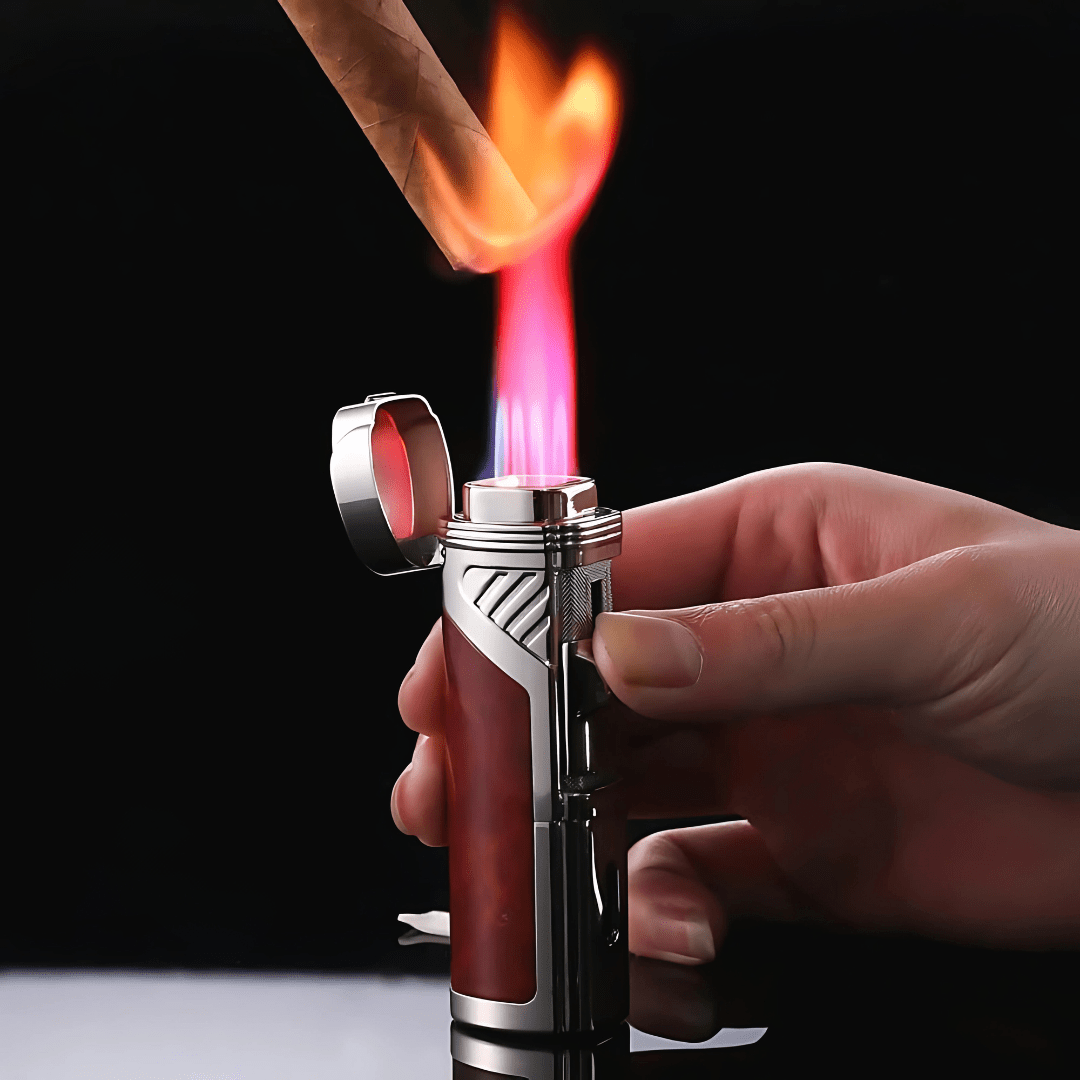
Why We Build for Both Fuel Types
Some lighter manufacturers design across both fuel systems because the honest answer to “Zippo or butane” is usually “it depends on what you’re lighting.” Catalogs can span classic petrol-style cases with wick and flint mechanics alongside torch-style and windproof designs built for precision and rough weather. That range exists so your choice comes down to the task in front of you, not a limitation in what’s available on the shelf.
— Allurecart
Which Allurecart Lighter Matches Your Use Case?
If the checklist above left you leaning toward a specific style, Allurecart’s catalog maps directly onto those needs. The Vintage Trench Lighter suits collectors and everyday carry fans who want that classic wick-and-flint feel with a weathered, storied look, ideal if you’re drawn to the wind-resistant chimney design without any gas-torch complexity.
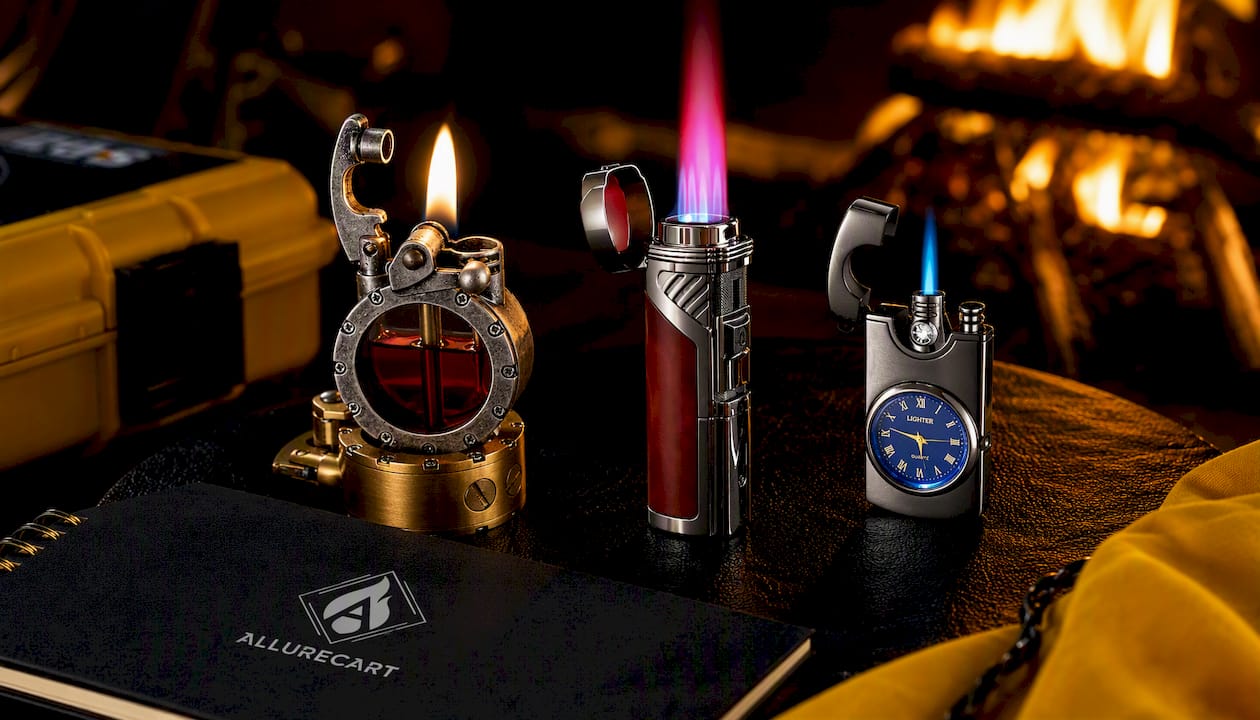
For cigar nights or kitchen precision, the JET LIGHTER delivers the tight, hot torch flame that flavor-sensitive tasks demand, no more scorched wrapper leaf or singed sugar crust from an unpredictable soft flame. If your priority is compact, wind-resistant carry for hiking, camping, or daily pocket use, the Windproof Watch Lighter gives you a small footprint with the reliability to handle a stiff breeze. Every order over $70 ships free worldwide, so building out a two-lighter setup, one classic, one torch, costs nothing extra to get to your door. Browse the full lineup and pick the flame that matches your next lighting task.
Sources
- Zippo knowledge base: Yellow Flame Butane Insert
- Review: Official Zippo Butane Lighter Insert | Cigar Aficionado
- Zippo fluid vs butane: what’s the difference | TheDetroitBureau
- Windproof lighter guide: Torch, Zippo & Arc compared — MunchMakers blog