

Choose steampunk if you want warm brass, exposed gears, and the satisfying click of a wheel-and-flint mechanism you can watch work. Choose cyberpunk if you want matte black or chrome surfaces, neon accents, and ignition tech that feels pulled from a near-future street corner. Steampunk lighters suit collectors and daily users who like visible craftsmanship; cyberpunk lighters suit anyone who wants a sleeker, high-tech piece for everyday carry or a display shelf.
TL;DR:
- Flint wheel ignition is characteristic of steampunk lighters and offers ease of maintenance but requires periodic refills.
- Cyberpunk lighters favor matte black or chrome finishes with LED or plasma arcs, providing wind resistance and a sleek, modern look.
- Outdoor daily users should prioritize wind-resistant mechanisms like torches or plasma arcs, while collectors prefer intricate finishes and materials.
- Brass and copper steampunk lighters develop appealing patina with age, whereas cyberpunk finishes may chip but are more resistant to fingerprints.
- Always verify fuel or power source availability and mechanism details before purchasing, especially for collectibles or outdoor use.
Table of Contents
- Steampunk vs Cyberpunk Lighters: Visual and Material Differences
- Ignition Mechanisms: Flint Wheels, Piezo, and Plasma Arcs
- Choosing Between Steampunk and Cyberpunk by Lifestyle
- Maintenance and Longevity for Each Style
- What Makes a Lighter Worth Collecting or Gifting
- Allurecart’s Steampunk and Mechanical Lighter Collection
- Why Aesthetic Choice Matters Beyond Looks
- Find Your Style in Allurecart’s Collection
- Sources
- FAQ
Steampunk vs Cyberpunk Lighters: Visual and Material Differences
Steampunk lighters lean into the Victorian workshop, favoring brass, copper, and aged bronze finishes with exposed gears, rivets, and leather wrapping. The palette runs warm: sepia, antique gold, deep browns. Cyberpunk lighters do the opposite. They favor matte blacks, brushed chrome, and synthetic surfaces accented with neon color pops, sometimes paired with LED indicators built into the body. The difference in palette, texture, and mood between the two aesthetics comes down to era and attitude: one romanticizes the industrial past, the other imagines a synthetic future.
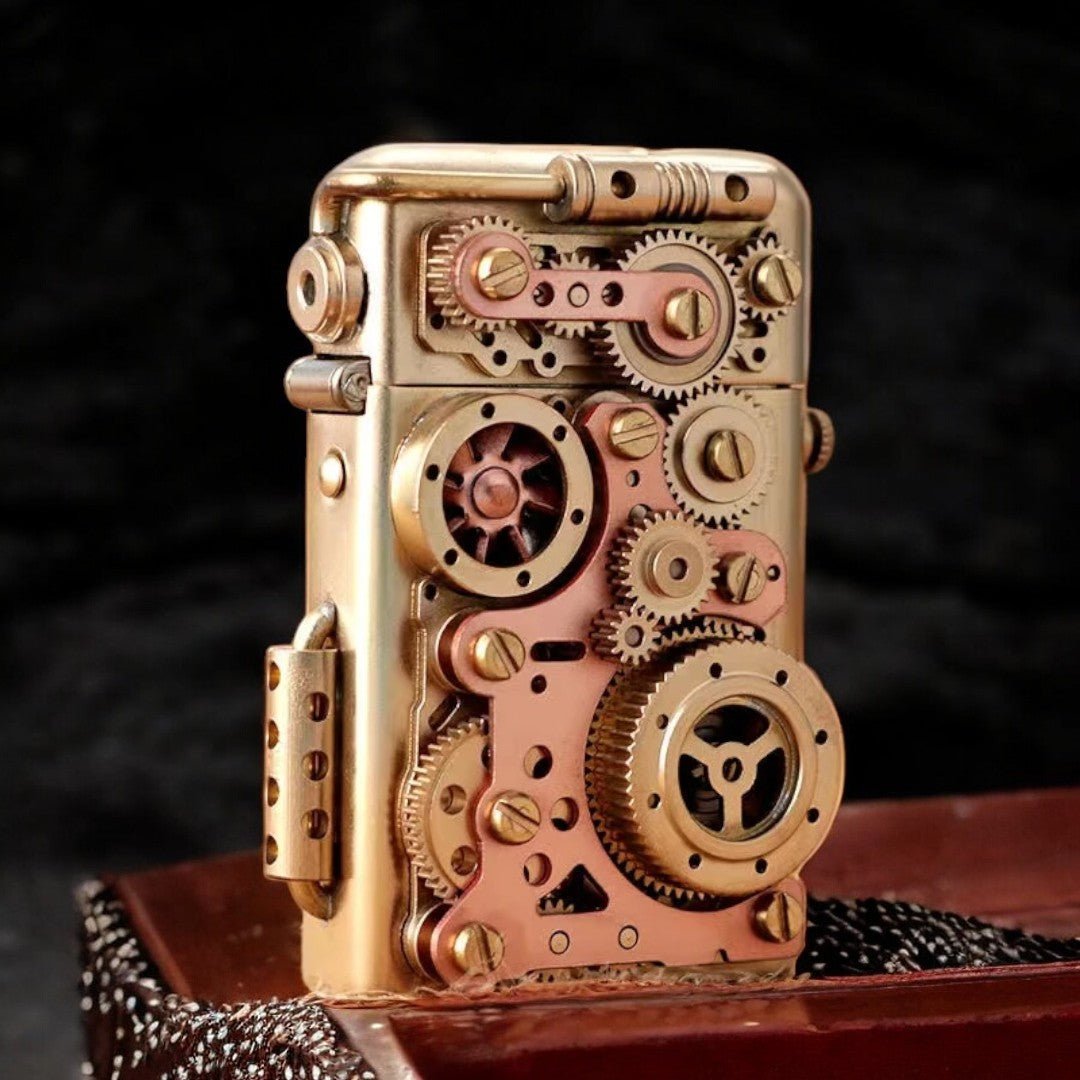
Finish matters more than most buyers expect. Brass patinas over time, which many steampunk fans consider part of the charm since it deepens the antique look with handling. Matte black cyberpunk finishes resist fingerprints better but can chip or scratch to reveal a lighter metal underneath, which some owners see as a flaw and others treat as battle-worn character.
When you’re shopping from product photos alone, look for:
- Visible screws, gear teeth, or hinges (a steampunk signal)
- Smooth seamless housings or geometric etching (a cyberpunk signal)
- Leather, wood, or bone accents versus polymer or anodized metal accents
- Warm amber or copper tones versus cool blue, purple, or green LED glow
Ignition Mechanisms: Flint Wheels, Piezo, and Plasma Arcs
Four mechanism types dominate the market, and each pairs naturally with one aesthetic more than the other.
- Flint wheel ignition strikes a flint against a serrated steel wheel to spark the fuel. Steampunk designs almost always use this mechanism because the visible wheel, spring, and flint housing double as design elements you can see working.
- Piezoelectric ignition uses a spring-loaded crystal to generate a spark at the push of a button. It shows up in both aesthetics but suits cyberpunks sealed, minimal housings especially well.
- Butane torch mechanisms produce a hotter, more wind-resistant flame and often sit inside sleeker metal bodies, making them a natural fit for cyberpunk styling.
- Plasma or arc lighters replace flame entirely with an electric arc, recharged by USB. Their glowing coil and charge indicator light read as pure cyberpunk, even when the housing is plain.
Mechanism choice affects real-world performance, not just looks. Flint-wheel and torch lighters need periodic refills but are simple to fix if a part wears out. Plasma and arc models resist wind well outdoors and skip fuel entirely, though a dead battery leaves you with no backup flame. A mainstream cyberpunk-themed lighter built for wind resistance in a matte black housing shows how function and futuristic looks often ship together in this category.
Choosing Between Steampunk and Cyberpunk by Lifestyle
Your daily habits should drive the decision more than the photo does. Run through this checklist before buying:
- Primary use: pocket carry every day, or mostly for display?
- Weather exposure: frequent outdoor use favors torch or arc mechanisms with strong wind resistance.
- Weight and bulk: brass steampunk pieces run heavier; slim cyberpunk designs pocket easier.
- Refill method: butane, lighter fluid, or USB recharge, and how easy that fuel is to find locally.
- Price tier: entry pieces versus limited-edition collector runs.
A commuter who lights up outdoors daily wants wind resistance and easy refills over intricate gearwork. A collector building a themed shelf display cares more about finish and story than pocket practicality. A cosplayer matching a costume usually prioritizes visual accuracy over mechanism type. A gift buyer should match the aesthetic to the recipient’s known taste rather than guessing.
Before checkout, confirm the seller’s return policy, whether replacement flints or fuel are easy to source, and if any warranty covers the ignition mechanism.
Pro Tip: Match the mechanism to how you’ll actually use the lighter, not just how it looks in photos. A gorgeous flint-wheel steampunk piece that sits in a humid pocket all day will need more upkeep than a sealed arc lighter kept mostly on a shelf.
Watch for red flags when buying online: vague product descriptions that skip mechanism type, no mention of refill method, and stock photos that don’t match the listed materials.
Maintenance and Longevity for Each Style
Ownership costs diverge fast once you get past the initial purchase. Steampunk lighters built around brass and exposed mechanics need occasional polishing to manage patina and light oiling on moving parts to keep the wheel action smooth. Cyberpunk lighters with matte or LED-accented housings need less physical upkeep but depend entirely on their power source or fuel type staying available.
- Butane and lighter-fluid models need refills every few weeks to months, depending on use.
- Battery-powered arc lighters need periodic USB charging and eventually a battery that may not be replaceable.
- Brass and copper surfaces benefit from a soft cloth and occasional metal polish.
- Matte and anodized finishes need only a dry wipe, since polish can strip the coating.
- Mechanical parts (wheels, springs, hinges) are usually repairable at home; sealed electronic modules typically are not.
How you treat a lighter also shapes its resale or collector value later. A well-maintained brass piece often gains character with age, while a scratched-up plasma unit tends to just look worn.
What Makes a Lighter Worth Collecting or Gifting
Desirability beyond basic function comes down to a handful of concrete signals: limited production runs, hand-finished details, premium materials, and a design that tells a story rather than just striking a spark. Steampunk pieces earn collector interest through intricate gear stacking, engraved plates, and materials that age with character. Cyberpunk pieces earn it through bold, clean design language and finishes that photograph well under any light.
Before buying for a collection, check provenance claims, packaging quality, and whether product photos match the actual item description rather than a generic stock render. For gifting, steampunk suits recipients drawn to history, mechanical curiosity, or vintage style. Cyberpunk suits recipients into gaming, sci-fi, or minimalist modern design.
- Limited editions and numbered runs raise long-term value
- Hand-finished brass or hand-polished chrome signals more attention than mass production
- Original packaging and included documentation matter more to serious collectors than casual buyers
Allurecart’s Steampunk and Mechanical Lighter Collection
Allurecart’s catalog gives you concrete examples of how these design languages translate into real, working products. The STEAMPUNK LIGHTER leans fully into brass gearwork and visible mechanical detail, built for buyers who want the wheel-and-flint experience on display, not hidden. The MECHANICUS LIGHTER pushes further into ornate mechanical styling, suited to collectors who want a shelf piece with story built into every plate and rivet. The Mechanical Metal Rocker Lighter offers a sturdier, gift-ready build for buyers who want mechanical character without the most delicate detailing.
- STEAMPUNK LIGHTER: best for daily flint-wheel use and steampunk aesthetics
- MECHANICUS LIGHTER: best for display and gifting to serious collectors
- Mechanical Metal Rocker Lighter: best for durability-focused gifting and everyday mechanical appeal
Orders over $70 ship free worldwide.
Why Aesthetic Choice Matters Beyond Looks
Allurecart builds toward both aesthetics because the choice between steampunk and cyberpunk is never purely visual. A lighter you actually carry needs a mechanism that matches your habits, not just a finish that matches your taste. Our honest advice: match the ignition type to your real use case first, then let the aesthetic guide the final pick. Always confirm refill availability and return terms before you commit to any collectible piece.
— Allurecart
Find Your Style in Allurecart’s Collection
Allurecart gives design-minded buyers something most novelty lighter sellers don’t: a catalog built specifically around distinct aesthetics rather than one generic look stretched across a product line. If steampunk’s brass and gearwork spoke to you, the STEAMPUNK LIGHTER and MECHANICUS LIGHTER are built for exactly that daily-carry-or-display decision covered above.
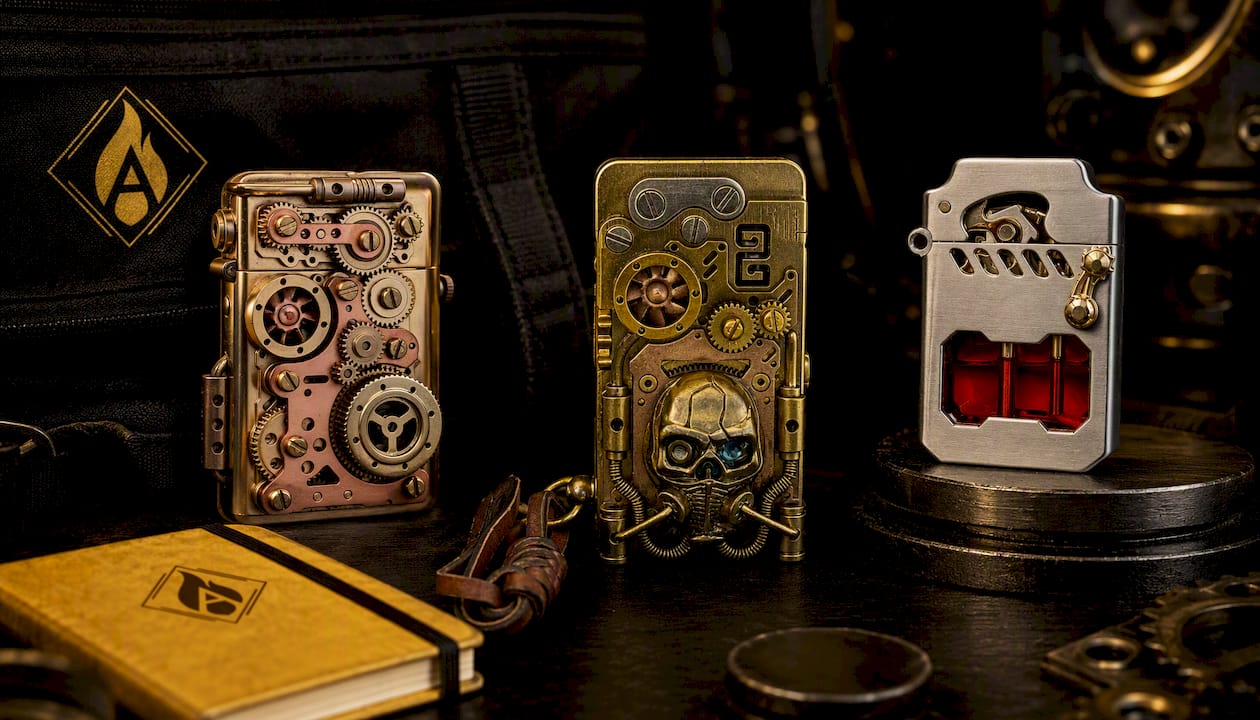
Prefer something sturdier for gifting or rougher daily use? The Mechanical Metal Rocker Lighter covers that ground without losing mechanical character. Buyers who want to browse the full range of themes, including steampunk, modern minimalism, and novelty designs, can start at the full collection. Need refills or spare parts down the line? Check the accessories page before you buy so you know exactly what upkeep looks like. Orders over $70 ship free worldwide, and every product page lists the ignition mechanism up front so you’re not guessing at checkout. Pick your style, confirm the refill type, and check out.
Sources
The ArtStyles comparison of cyberpunk and steampunk supports the palette and material distinctions used throughout this guide. The Zippo cyberpunk lighter listing illustrates how mainstream brands pair cyberpunk visuals with wind-resistant performance. Shopify’s e-commerce guidance informs the advice on checking product pages before buying collectibles online.
FAQ
What Is the Difference Between Steampunk and Cyberpunk?
Steampunk draws on Victorian-era industrial design, favoring brass, gears, and leather in warm tones. Cyberpunk draws on near-future digital and street culture, favoring chrome, neon, and synthetic surfaces in cooler, sharper tones.
What Is a Steampunk Lighter?
A steampunk lighter is a lighter styled with brass or bronze finishes, exposed gears, rivets, and often a visible flint-wheel mechanism you can watch spark. Allurecart’s STEAMPUNK LIGHTER is a working example, built around that mechanical, visible-ignition design.
Did Steampunk or Cyberpunk Come First?
Steampunk grew out of Victorian-inspired science fiction that predates the cyberpunk movement, which emerged later as a distinct subgenre focused on near-future digital themes. Both have since developed into full aesthetic categories that extend well beyond literature into fashion, decor, and product design like lighters.
How Do Steampunk and Cyberpunk Differ From Solarpunk?
Steampunk and cyberpunk both draw on retro or near-future industrial and digital imagery, while solarpunk imagines a greener, more optimistic future built around sustainable technology and natural materials. These subgenres of speculative fiction each carry distinct visual and thematic signatures, and lighter designs rarely borrow from solarpunk the way they do from the other two.
Which Style Should I Choose for Daily Carry?
Pick based on mechanism reliability first: flint-wheel steampunk designs are simple to maintain and refill, while torch or arc-based cyberpunk designs often resist wind better outdoors. Both styles work fine for daily carry as long as the mechanism matches how and where you’ll actually use it.