

For daily use, cigars, camping, or anything you’ll light more than a few times a week, a refillable lighter wins on cost and waste within a year. Disposables still make sense for rare or emergency use where losing a $2 lighter costs nothing. The tradeoffs come down to three things: how much you’ll spend over time, how much plastic you’ll throw away, and how much maintenance you’re willing to do.
TL;DR:
- Refillable lighters are more cost-effective over time for daily use, especially in heavy or frequent lighting scenarios.
- Environmentally, refillables generate significantly less plastic waste than disposables, with only fuel canisters or replaceable parts needing disposal.
- Windproof torch and arc lighters outperform soft flames outdoors, making them ideal for camping, culinary tasks, and windy conditions.
- Proper maintenance, including refueling, cleaning, and replacing only worn parts, extends the lifespan of refillable lighters considerably.
- Casual users with infrequent needs are better served by cheap disposables, while aficionados and frequent outdoor users benefit from durable, refillable models.
Table of Contents
- Refillable vs Disposable Lighters: The Key Differences
- How Much Do Refillable and Disposable Lighters Cost Over Time?
- What’s the Environmental Impact of Disposable vs Refillable Lighters?
- Which Flame Type Performs Best for Each Use Case?
- How Do You Maintain and Safely Carry a Lighter?
- How Do You Choose Between Refillable and Disposable?
- Why a Well-Built Refillable Beats a Drawer Full of Disposables
- A Daily-Carry Choice That Reflects What You Value
- Find a Refillable Lighter Built to Last
- Sources
- FAQ
Refillable vs Disposable Lighters: The Key Differences
The choice splits cleanly along usage patterns, not personal preference. Here’s how the two categories stack up across the factors that actually matter:
- Best for: Refillables suit daily smokers, cigar enthusiasts, campers, and cooks; disposables suit occasional lighting, emergency kits, and situations where losing the lighter is likely.
- Upfront cost: Disposables run roughly $1 to $4 each, while torch and arc refillables typically cost $10 to $40 depending on build quality.
- Long-term cost: Refillables often cost less per year for moderate to heavy users, since butane and arc models generally recoup their higher purchase price through repeated refills rather than repeat disposable purchases.
- Environmental impact: Disposables generate a new plastic shell with every purchase; refillables generate periodic fuel canister waste and occasional part replacement.
- Maintenance: Disposables need none. Refillables need refueling, flint or wick swaps, and jet cleaning.
- Portability: Both fit a pocket, though arc and torch refillables tend to run slightly bulkier than a slim disposable.
- Wind resistance: Torch and arc flames beat the open soft flame of most disposables in outdoor conditions.
For casual, once-a-month lighting, grab a disposable and don’t think twice. For daily carry, cigars, camping, or cooking, a refillable earns its price back fast.
How Much Do Refillable and Disposable Lighters Cost Over Time?
The math depends entirely on how often you strike a flame. A disposable at $2 to $3 feels cheaper in isolation, but that number resets to zero every time the fuel runs out and you toss it. A refillable’s higher entry price gets diluted every time you top it off instead of buying a replacement.
Recurring costs differ by fuel type. Butane refills run a few dollars for a can that handles dozens of fills. Zippo-style wick lighters need lighter fluid plus occasional flint and wick replacement, though that fuel evaporates faster than sealed butane, so infrequent users burn through fluid even without lighting anything. Arc lighters skip fuel entirely but need electricity, and their charging cycles have to become part of your routine or you’ll find yourself with a dead lighter at the worst moment.
Three rough scenarios show the payoff:
- Light use (under 5 lights/day): A $15 refillable pays for itself in a few months against buying disposables weekly.
- Moderate use (5 to 15 lights/day): Payback often lands within four to six weeks.
- Heavy use (15+/day): A quality refillable can pay for itself in under a month and keeps saving money every week after.
Fuel and lighter prices vary by region, so treat these as starting points and adjust for what butane and disposables actually cost near you.
What’s the Environmental Impact of Disposable vs Refillable Lighters?
Every disposable lighter that runs dry becomes permanent plastic and metal waste, since most curbside recycling programs won’t accept them due to residual fuel and small embedded metal parts. A household that burns through one disposable a month generates twelve discarded units a year, indefinitely, with no way to recover the materials.
Refillables shift that waste profile dramatically. The lighter body itself can last years or decades when it’s built with a refill port and replaceable flint and wick, which means the only recurring waste is empty butane canisters or spent fluid bottles rather than an entire discarded tool.
Cutting your footprint further comes down to a few habits:
- Choose a refillable with a metal shell and visible refill port rather than a sealed plastic body.
- Replace only the worn part (flint, wick, or O-ring) instead of the whole lighter when something fails.
- Dispose of empty butane canisters at a hazardous waste facility rather than in household trash.
Pro Tip: A lighter with a solid metal shell and screw-out valve almost always outlasts a plastic-bodied one by years, because the shell doesn’t crack under heat cycling the way cheap plastic does.
Which Flame Type Performs Best for Each Use Case?
Flame technology matters more than brand loyalty once you know what you’re actually lighting. Soft-flame disposables and basic refillables work fine indoors with no wind, but they struggle the moment a breeze shows up. Torch and jet flames burn hotter and narrower, cutting through wind that would snuff a soft flame instantly. Wick-based liquid-fuel lighters, the Zippo-style category, hold up well in cold and gusty conditions because the flame draws from a soaked wick rather than a pressurized jet. Arc, or plasma, lighters skip flame entirely and use a small electric arc that wind can’t touch at all.
Each has a catch. Arc lighters can’t reach into a deep cigar head or a recessed candle jar the way a longer flame can, and they need a charge before every trip. Wick lighters lose fuel to evaporation even when idle. Torches deliver the cleanest burn for cigars and culinary tasks where flavor matters, but they can run hot enough to scorch delicate tips if you’re not careful.
- Cigars: A butane torch for clean flavor, or a wick lighter if you prefer tradition; see how to fix common cigar burn and draw problems for best lighting techniques.
- Camping: A windproof torch or a rugged wick lighter built to handle wet, gusty conditions.
- Culinary tasks: A torch for crème brûlée, searing, or grill lighting.
- Everyday carry: A compact refillable soft-flame or slim torch that fits a pocket.
How Do You Maintain and Safely Carry a Lighter?
Refillables reward a little upkeep with years of reliable service, but skipping the basics leads to clogged jets and dead flints fast. Follow these steps every time you refill a butane torch:
- Purge any remaining gas and trapped air from the tank before adding new fuel.
- Use triple-refined butane rather than cheap off-brand cans, since impurities clog the jet over time.
- Wait a few minutes after refilling before lighting, letting internal pressure normalize.
- Check the flint for wear and swap it once sparks weaken.
- Clean the jet opening with a soft brush if the flame sputters or burns uneven.
- Charge arc lighters fully before any trip where you’ll depend on them.
Common failures trace back to skipped steps: a clogged jet from bad butane, a weak flame from trapped air, or a dry wick from fuel evaporation. On the safety side, remember that airlines allow one lighter in carry-on but restrict torch and arc lighters differently under TSA rules, and any lighter belongs stored away from kids and heat sources regardless of type.
Pro Tip: Refill on a schedule, not when the flame dies. Topping off at half-empty prevents the trapped-air problem that causes most weak first flames after a refill.
How Do You Choose Between Refillable and Disposable?
Three quick questions settle most decisions:
- How often will you actually light something? Daily or several-times-a-week use favors refillable every time.
- What’s the primary task? Cigars and cooking want a clean torch flame; camping wants wind resistance; casual use barely needs a flame at all.
- Will you actually maintain it? If refueling and flint changes sound like a hassle, a disposable removes that friction entirely.
Watch for red flags that point you toward a specific type. Constant wind or high altitude means you need a torch or arc lighter, not a soft flame. Frequent misplacing means a $2 disposable makes more sense than a $30 refillable you’ll lose anyway.
By profile: casual smokers do fine with disposables, daily smokers save money with a refillable, campers want a windproof torch or wick lighter, chefs want a torch, and collectors want a refillable with replaceable parts and real design character.
Why a Well-Built Refillable Beats a Drawer Full of Disposables
Allurecart builds refillables around exactly the tradeoffs this comparison keeps surfacing. A wheel mechanism built for reliable spark ignition and a durable metal shell both extend a lighter’s working life well past what any disposable offers. Free worldwide shipping on orders over $70 removes the friction of trying a design before committing.
Replaceable flints and wicks mean a single lighter body can outlast many disposables, and that’s before factoring in the aesthetic value of a piece designed to look as good as it functions. That combination of form and function is a common premise behind premium refillable lighter collections.
A Daily-Carry Choice That Reflects What You Value
I carry a refillable with replaceable parts, not because it’s flawless, but because I’d rather clean a jet twice a year than toss a dozen plastic shells. Maintenance is a small price for less waste and a tool that actually lasts.
— Allurecart
Find a Refillable Lighter Built to Last
Skip the drawer full of dead disposables. A refillable lighter collection can turn a daily tool into something worth carrying, with parts to replace instead of disposing of the whole lighter.
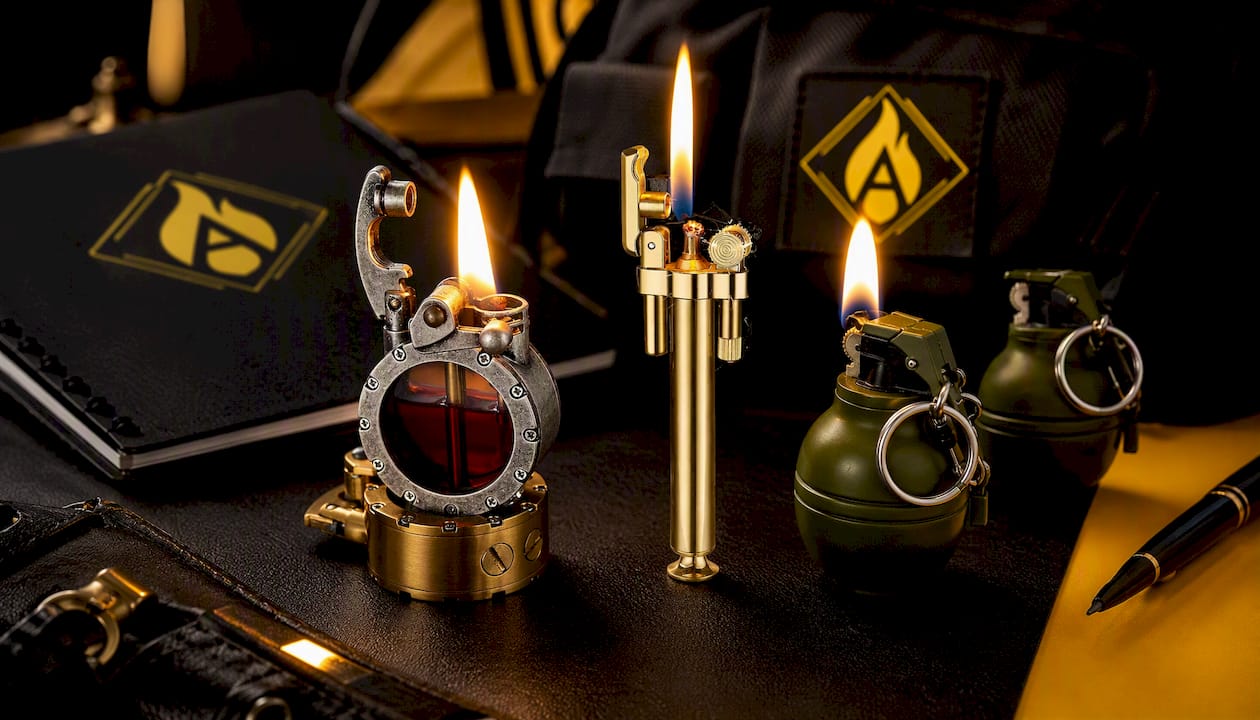
The Vintage Trench Lighter suits anyone who wants old-world durability with modern reliability, built for readers who value a story behind their gear. The RETRO LIGHTER fits everyday carry for someone who wants style without sacrificing the serviceability a refillable demands. The GRENADE LIGHTER works best as a gift or collector’s piece, with a durable metal shell built to hold up to handling and display alike.
When you buy, match your fuel to your climate: standard butane for most conditions, and check whether your model takes a screw-in flint cartridge before you need a replacement mid-trip. A small refill funnel kit makes topping off cleaner and prevents the wasted fuel that comes from missing the port. Browse the full collection at Allurecart to find the design and mechanism that fits how you actually light things.
Sources
- The Best Lighters of 2024 - Best Lighter Reviews
- The Best Camping Lighters of 2026, Tested and Reviewed
- Windproof Lighter Guide: Torch, Zippo & Arc Compared
FAQ
Are Refillable Lighters Better Than Disposable Ones?
For regular use, yes. Refillables cost less per year, produce less plastic waste, and hold up better under wind and outdoor conditions than most disposables.
Why Don’t People Use Zippo-Style Lighters as Much Anymore?
Wick lighters lose fuel to evaporation even when unused, which frustrates casual owners who don’t refill on a schedule; butane torches and arc lighters have picked up share because they hold fuel or charge longer between uses.
Are Refillable Lighters Safe to Carry and Use?
Yes, when maintained properly. Follow refill steps like purging trapped air and using refined butane, and follow TSA carry-on rules when traveling with one.
Why Aren’t Bic Lighters Designed to Be Refillable?
Disposable brands build sealed bodies intentionally, keeping manufacturing costs low and avoiding the safety complexity of a user-refillable fuel chamber, which trades long-term value for a cheaper unit price.