

If you want windproof, rechargeable convenience for candles, grills, and everyday use, a plasma (arc) lighter is usually the smarter pick. If you smoke cigars, run a torch-dependent stove, or need fire when the grid goes quiet, butane still earns its keep. The trade-off comes down to battery versus fuel, and both need a plan for travel: the TSA treats arc lighters differently than flame ones, and rechargeable options exist for both camps.
TL;DR:
- Plasma lighters are windproof and ideal for quick, exposed ignitions, but they require close proximity to the fuel source and struggle with recessed or textured objects.
- Butane lighters excel at reaching over obstacles and providing sustained heat for cigars, pipes, and torches, but are vulnerable to wind and fuel leaks.
- Rechargeable plasma lighters cost more upfront but eliminate ongoing fuel purchases, making them more environmentally friendly for frequent use over time.
- Both types are permitted in carry-on luggage for air travel, but safety features like child locks and water resistance vary by model and should be verified before purchase.
- Choosing the right lighter depends on specific tasks, with plasma better for windy outdoor use and quick ignitions, while butane suits tasks needing steady, sustained flame.
Table of Contents
- Plasma Vs Butane Lighters: How Each One Actually Ignites
- Wind, Heat, and Reliability: Where Each Lighter Wins
- What Does Each Lighter Cost Over Its Lifetime?
- Is It Safe to Travel With a Plasma or Butane Lighter?
- Which Lighter Fits Your Specific Use Case?
- How to Choose the Right Lighter: A Buyer’s Checklist
- What We’ve Learned Building Both Types of Lighters
- Get a Lighter That Matches Your Actual Use Case
- Sources
Plasma Vs Butane Lighters: How Each One Actually Ignites
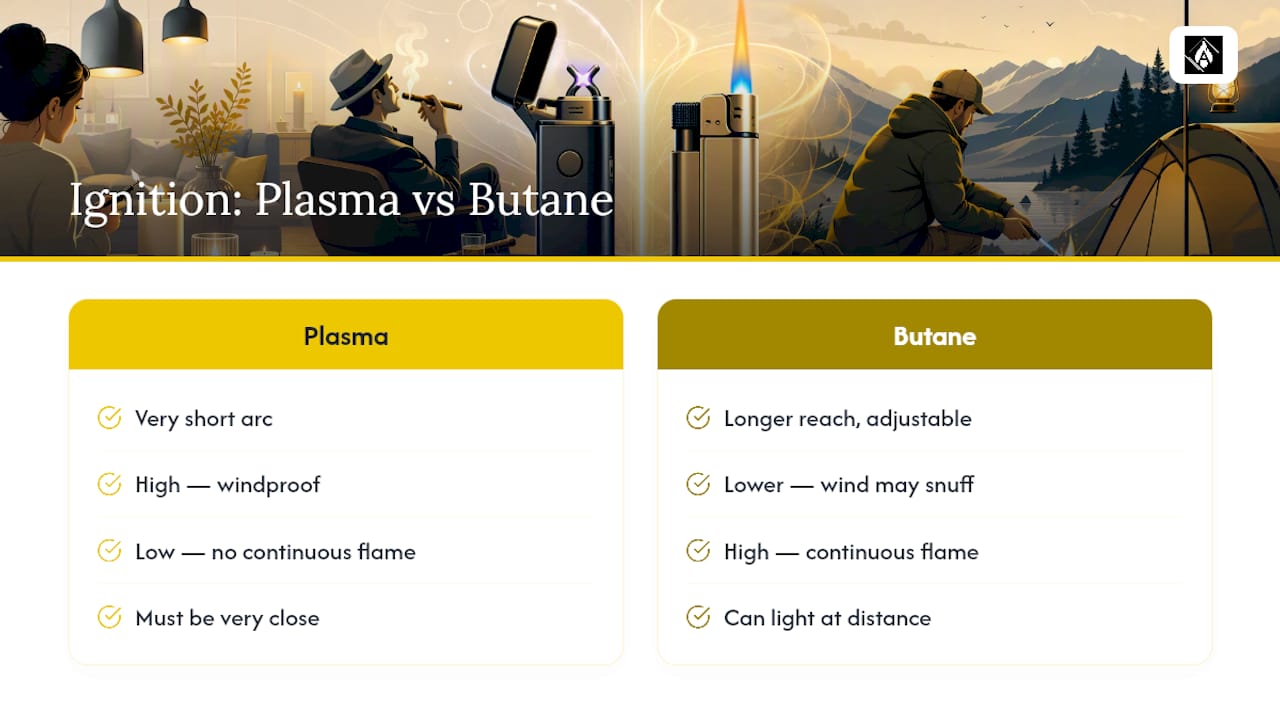
The name “plasma lighter” sounds like something out of a sci-fi prop shop, but the mechanism is refreshingly simple. A small rechargeable battery feeds a transformer, which steps up the voltage enough to arc electricity across two (or four) tiny electrodes. That arc superheats the air between them into plasma, hot enough to ignite a wick almost instantly. There’s no flame, no fuel, and technically no fire until it touches something. That’s why plasma lighters shrug off wind that would snuff out a match in seconds.
The catch is proximity. Because the arc only bridges a narrow gap between electrodes, you need to get the lighter close to whatever you’re igniting. Consumer Reports found this becomes a real limitation with recessed votive candles or tightly rolled cigars, where the arc simply can’t reach the fuel source the way an open flame can. Great for a birthday cake or a grill igniter port; frustrating for a jar candle with a two-inch-deep wick.
Butane lighters work on older, more forgiving physics. Pressurized butane gas sits in a reservoir, gets released through a metering valve, and ignites against a flint spark or piezo igniter to produce a flame you can usually adjust in height with a small wheel or slider. That flame can reach farther than any arc, bend around obstacles slightly, and stay lit for continuous heat, which is exactly what a cigar’s foot or a chef’s torch needs.
The practical difference shows up the moment you’re lighting something with texture. A cigar needs a slow, even toast across its entire circumference. A candle with a sunken wick needs reach. A grill’s back burner needs distance from your hand. Butane’s flame handles all three without you having to lean in dangerously close. Plasma wins when the target is shallow, exposed, and the environment is windy, which describes a surprising number of everyday household jobs.
Wind, Heat, and Reliability: Where Each Lighter Wins
Wind resistance is where plasma lighters make their strongest case. Because there’s no flame to disturb, gusts that would kill a butane lighter outright do nothing to an arc. Some outdoor-rated models, like the TRUE Plasma Lighter XR, advertise windproof performance up to 80 mph along with IPX6 water resistance, numbers that would be almost meaningless for a standard butane flame lighter in the same conditions.
Heat output tells a different story. Butane flames concentrate heat over a sustained area, which matters for cigars, pipe tobacco, and camp stoves that need continuous ignition rather than a quick spark. A plasma arc lights instantly but doesn’t project heat the way a torch flame does, so tasks requiring a slow, even burn generally favor butane or a dedicated jet torch.
Reliability splits along a predictable line: battery versus fuel. Reviewer estimates put many plasma lighters at roughly 100 to 300 activations per charge, with typical recharge times of a couple of hours. Butane lighters don’t have a countdown clock. As long as you can refill the tank, they’re ready. That makes butane the more forgiving option for extended off-grid stretches where an outlet isn’t in the picture.
Maintenance needs differ too:
- Plasma lighters need occasional electrode cleaning since dust and pocket lint can interfere with the arc.
- Butane lighters can suffer from clogged jets or slow fuel leaks if the valve seal wears down.
- Both benefit from keeping the ignition point dry and free of debris.
- Rechargeable models depend more on warranty coverage than fuel-based ones, since a dead battery usually means a full replacement rather than a quick refill.
Pro Tip: Test any new lighter indoors near an open window first. A plasma lighter that fires instantly every time and a butane lighter that holds a steady flame without sputtering are both telling you the internal components are properly seated, something worth confirming before you rely on it outdoors.
What Does Each Lighter Cost Over Its Lifetime?
Sticker price only tells part of the story. Plasma lighters typically cost more upfront, often landing in a moderate price range generally above basic models depending on design and features, while basic butane lighters can be picked up for a few dollars. But that gap narrows fast once you account for what happens after the first use.
A disposable butane lighter runs out and gets thrown away. A refillable butane lighter needs periodic fuel purchases, canisters that eventually end up in landfills whether you’re conscientious about disposal or not. A plasma lighter, by contrast, recharges over USB and can deliver hundreds of ignitions before that charge runs low, cutting out the ongoing cost and packaging waste of buying replacement fuel indefinitely.
The environmental math favors plasma for anyone using a lighter frequently over a year or more:
- No butane canisters, no plastic disposable bodies piling up in a drawer.
- A single battery cycle replaces what might otherwise be dozens of fuel refills.
- Recharge times for many models run as fast as roughly 1.5 hours for a full charge good for hundreds of uses.
- The tradeoff is battery lifecycle. Rechargeable lithium cells degrade over years, and eventual replacement or disposal isn’t zero-impact either.
Butane still makes sense for infrequent users. If you light a grill twice a summer, the environmental and cost math around a rechargeable device barely moves the needle. But for daily users, cooks, and hosts, plasma’s lower recurring cost and lighter footprint tend to win out over a year or two of ownership.
Is It Safe to Travel With a Plasma or Butane Lighter?
Packing either lighter type for a flight means knowing the rules before you get to security. The TSA draws a clear line between the two categories, and getting it wrong means losing the lighter at the checkpoint.
- Arc and electronic lighters are allowed in carry-on bags only, never in checked luggage, and the TSA recommends using a protective cover or safety latch to prevent the lighter from activating accidentally inside your bag.
- Standard butane lighters are generally permitted in carry-on luggage in limited quantities, but torch lighters and large fuel reservoirs face tighter restrictions, so checking current guidance before packing matters.
- Battery-powered lighters must meet standard airline battery size limits, so oversized or spare battery packs for a plasma lighter may need to travel separately or not at all.
Beyond travel, everyday handling deserves its own attention. Plasma lighters with child-lock buttons and auto-shutoff timers reduce the risk of accidental activation in a pocket or bag, and keeping them away from prolonged water exposure protects the internal electronics even on water-resistant models. Butane carries a different everyday risk profile: a worn valve seal can leak fuel slowly, and a punctured canister near heat is a real hazard, so storing butane lighters away from direct sun or hot cars isn’t optional caution, it’s basic fuel safety.
Which Lighter Fits Your Specific Use Case?
Matching the lighter to the job is where this whole comparison actually pays off. Here’s how the two stack up against the situations you’re most likely facing.
Candle lovers and windy grill sessions favor plasma almost every time. No flame means no flickering out mid-light, and the instant arc gets a wick going without you cupping your hand around it like you’re protecting a campfire ember.
Cigar smokers and anyone using a torch-dependent tool should stick with butane. The sustained, adjustable flame toasts a cigar’s foot evenly in a way a quick plasma arc can’t replicate, and pipe tobacco benefits from that same steady heat.
Outdoor and backcountry use calls for nuance. Wirecutter’s testing found arc lighters wind-resistant and clean for regular outdoor tasks, but cautioned against relying on one as your only fire source on extended trips, since battery depletion and water damage are real failure points far from an outlet. Field reviewers echo that advice: treat a plasma lighter as your convenient primary tool and keep a fuel-based backup in your pack for multi-day trips.
Quick scenario picks:
- Dinner party or backyard candles: plasma, for the clean ignition and zero butane smell near food.
- Weekend camping trip: plasma as your daily driver, butane or waterproof matches as backup.
- Everyday carry in your pocket: either works, but plasma’s rechargeable convenience edges out constant fuel refills.
- Cigar lounge or pipe session: butane, no contest.
Keep a small butane torch in reserve for the specific jobs, like cigars, that genuinely need sustained flame.*
How to Choose the Right Lighter: A Buyer’s Checklist
Before you add anything to your cart, run through what actually matters for your use case rather than getting swept up in flashy marketing copy.
- Define your primary purpose. Candles and grills lean plasma; cigars and torch tasks lean butane.
- Check activations per charge or fuel capacity. Look for a specific number, not a vague “long lasting” claim.
- Look for an IP water-resistance rating if you’ll use it outdoors, camping, or near a pool or grill.
- Confirm refill or recharge method. USB charging cables vary; some plasma models use proprietary ports.
- Read the warranty and return policy before buying, especially for rechargeable electronics that can fail outside typical wear patterns.
When you’re comparing product pages, ask these three questions directly:
- What’s the realistic number of lights per charge, and is that based on independent testing or just a marketing estimate?
- Does the water-resistance rating apply to full submersion, splashes, or nothing beyond “resistant to light rain”?
- What happens if the battery or ignition mechanism fails after the return window closes?
A red flag worth watching for: vague claims like “windproof” or “waterproof” with no IP rating or wind speed attached. If a seller can’t or won’t specify, treat the claim skeptically and look elsewhere for one that does.
What We’ve Learned Building Both Types of Lighters
This comparison does not take a side in the plasma versus butane debate, because the honest answer is that neither one wins outright. What we’ve focused on instead is making sure whichever type a customer picks, the build quality and design hold up to daily use and actually look good doing it.
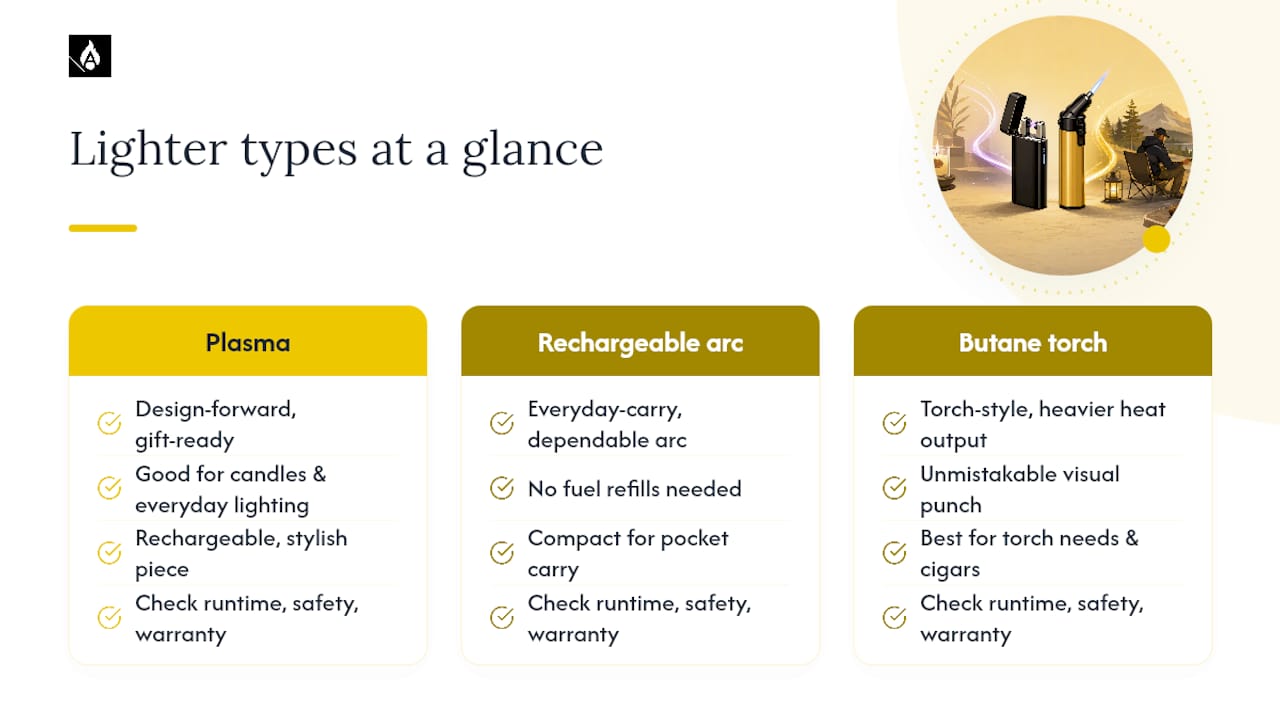
Some products lean into the plasma advantage for anyone who wants a design-forward, gift-ready piece that also happens to be genuinely useful for candles and everyday lighting. Others cover the everyday-carry rechargeable niche, built for those who want one dependable arc lighter that doesn’t need fuel refills. For torch-style needs, heavier heat output, and that unmistakable visual punch, some lighters fill the role butane traditionally owns, styled in a way a plain disposable never could.
Before buying any rechargeable lighter, check the listed runtime per charge, confirm the safety features like auto-shutoff or child locks, and read the warranty terms. Design matters, but a lighter that doesn’t perform reliably isn’t a good gift or a good tool, no matter how it looks on a shelf.
— Allurecart
Get a Lighter That Matches Your Actual Use Case
Most lighter shopping starts and ends with whatever’s sitting by the gas station register, which explains why so many people own three broken butane lighters and zero good ones. Some companies take a different approach: rechargeable, design-driven lighters built for the specific job you actually need done, whether that’s a windproof arc for candle nights or a torch-style flame with real visual character.
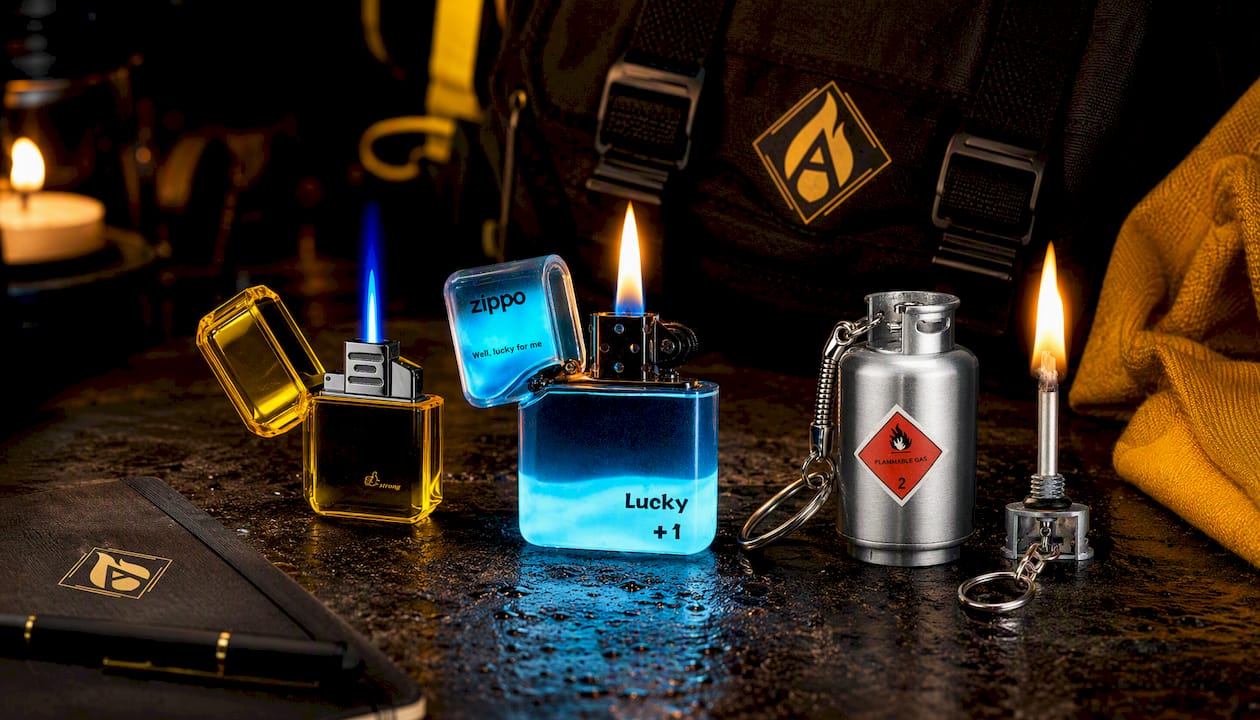
If the wind-resistant convenience described above sounds like your household, the GLOW LIGHTER delivers that plasma performance in a piece that looks intentional on a coffee table, not something you’re hiding in a junk drawer. For readers who want one dependable everyday-carry option, the LUMINO LIGHTER fits the rechargeable, low-maintenance role we covered in the use-case breakdown. And if your jobs skew toward torch-level heat, the GAS TANK LIGHTER brings that higher-output flame with styling no gas station rack will ever stock.
Browse the full collection of lighters and check the runtime, water resistance, and warranty details listed on each product page before you decide. Many sellers offer free worldwide shipping on orders over a certain amount, so pairing your primary lighter with a backup or a gift may not cost extra for shipping.
Sources
- 4 Best Plasma Lighters, Tested by Our Experts - Consumer Reports
- Lighters (Arc Lighters, Electronic Lighters, E-Lighters) | Transportation Security Administration
- Plasma Lighter XR product page
- I Was Surprised by How Much I Liked These Electric Lighters | Wirecutter