

Novelty lighters are safe to own, carry, and display when you follow a handful of non-negotiable rules: never store one above 120°F (49°C), keep it out of reach of children, purge the tank before every refill, and retire or repair any unit that leaks, smells of fuel, or won’t hold a steady flame. Get those four right, and the rest of novelty lighter safety is mostly common sense.
TL;DR:
- Keep novelty lighters out of direct sunlight, move them from cars before ambient temperatures reach 120°F, and store in a safe, ventilated case to prevent damage.
- Always purge the fuel tank before refilling, use quality butane, and allow the lighter to rest a few minutes afterward to ensure proper pressure and performance.
- Avoid modifying internal components or safety features, as alterations can cause unpredictable flames and safety hazards, which often void warranty and safety standards.
- Discontinue use immediately if there are leaks, persistent fuel odors, or ignition issues, and never attempt DIY repairs on internal parts like valves or circuits.
- Dispose of completely emptied, damage-free lighters through household hazardous waste programs, avoiding puncturing or incinerating them to prevent explosions or fire risks.
Table of Contents
- Everyday Safety Rules For Using And Storing Novelty Lighters
- Refilling, Maintenance, And Common Troubleshooting For Butane Refillables
- Long-Term Storage And Display Advice For Collectors
- When To Seek Authorized Servicing Or Safe Disposal
- Inspecting Unusual Ignition Mechanisms On Novelty Lighters
- Handling Lighters With Electrical Or Electronic Components
- Safe Disposal Methods For Novelty And Refillable Lighters
- Why Modifying A Novelty Lighter Is Never Worth It
- Allure Cart Notes: Design, Durability, And Daily Use
- How Allure Cart’s Lighters Fit Into Safe Ownership
- Sources
- FAQ
Everyday Safety Rules For Using And Storing Novelty Lighters
A grenade-shaped lighter or a steampunk pocket piece is still a pressurized fuel container with an open flame at the end of it. Treat the theme as decoration and the mechanism as what it actually is.
Lighting technique matters more than people assume. Hold the lighter away from your face and any loose fabric, sleeves, scarves, hair, before you strike it. Clear the immediate area of paper, aerosol cans, or anything flammable, and never light one near gasoline, propane, or aerosol vapors. Extinguish the flame the moment you’re done rather than letting it burn while you set the lighter down.
Transport deserves its own thought, especially for collectors who carry multiple pieces to meetups or trade shows. A few practical habits:
- Use a padded or rigid case so lighters don’t knock against keys, coins, or each other.
- Orient butane lighters upright when possible to reduce the chance of valve seepage.
- Avoid crushing pressure, deep coat pockets under a seatbelt, the bottom of a packed bag, tight card cases.
- Check airline and transit carrier rules before flying with a filled lighter, since restrictions vary by carrier and route.
Storage is where most preventable damage happens. The U.S. Consumer Product Safety Commission warns against storing lighters in environments that may exceed 120°F (49°C), since heat raises internal pressure and can cause leakage or rupture. That single number should govern where a lighter lives in your home or car.
Pro Tip: A parked car on a sunny afternoon can climb well past 120°F in under an hour, even with the windows cracked. If you carry a novelty lighter in a vehicle, move it to a bag or your pocket before you park, not after.
Keep every lighter, novelty or otherwise, away from children. These pieces are often designed to look like toys, tools, or collectibles rather than ignition devices, and that resemblance is exactly why they need to live in a drawer, cabinet, or case a child can’t open. Never let a decorative lighter double as a plaything, even briefly.
Refilling, Maintenance, And Common Troubleshooting For Butane Refillables
Most novelty lighters worth collecting run on refillable butane, which means their long-term reliability depends on how well you maintain the fuel system. Tobacconist University’s maintenance guidance lays out the core routine, and it’s worth following step by step:
- Purge first. Before adding fresh fuel, release any remaining gas and air from the tank. Skipping this step traps old fuel and moisture that can degrade performance and clog jets over time.
- Refill at the correct angle, keeping in mind the importance of choosing safe and responsible smoking accessories like tobacco-free snus and nicotine pouches as alternatives. Hold the lighter upside down against the fuel canister’s nozzle, following the manufacturer’s specific orientation, and fill in short bursts rather than one long press.
- Let it rest. Give a freshly filled lighter a few minutes before igniting it. The butane needs time to settle and reach a stable pressure.
- Use quality fuel. Cheap or impure butane leaves residue that clogs valves and burner ports, which is one of the most common causes of a weak or sputtering flame.
- Clean with air, not tools. Clear burner ports with short bursts of clean, dry air. Never probe the ports with a pin or wire, since that can bend or misalign the internal components.
If a lighter doesn’t light or burns unevenly, work through the fuel level, then the spark mechanism, then the flame adjustment wheel, in that order, before assuming something is broken.
Stop immediately if you smell raw fuel, see a visible leak, or notice a cracked or warped casing. Those are not maintenance issues you fix with a cleaning burst. They’re a sign the lighter needs professional attention or retirement.
Long-Term Storage And Display Advice For Collectors
Display pieces and daily-carry pieces need different treatment, and mixing up the two is how collections quietly deteriorate.
For anything that will sit in a case rather than a pocket, empty the fuel tank. A drained lighter eliminates vapor risk and takes pressure off the internal seals, which extends the life of O-rings that would otherwise degrade under constant tension. This is standard practice among serious collectors, and it applies whether the piece is a gas tank lighter or a delicate vintage watch lighter.
A few habits keep a collection in good shape over years, not months:
- Store pieces in a ventilated case away from direct sunlight or concentrated light sources, which can fade finishes and stress internal materials.
- Keep the display area at a stable indoor temperature, not near a radiator, window sill, or garage shelf.
- Inspect each piece every few months for odor, corrosion, or seal softness.
- Wrap individual lighters separately when packing for a move or a shipment, and consider shipping protection for higher-value pieces in transit.
When To Seek Authorized Servicing Or Safe Disposal
Some problems are worth troubleshooting yourself. Others aren’t, and knowing the difference protects both your fingers and your collection.
Get a lighter into authorized hands if you notice any of the following:
- A persistent fuel odor or a visible leak around the valve or seams
- Ignition failure that continues after purging, refilling, and cleaning the ports
- Cracked, warped, or loose casing, especially on metal-bodied pieces
- A flame that won’t adjust, flares unpredictably, or won’t extinguish fully
Do not attempt DIY valve repairs or internal modifications. Restoring an older butane lighter often means replacing degraded O-rings and cleaning clogged nozzles, work that requires the right replacement seals and careful reassembly. Forcing a valve or prying a housing open without the correct parts tends to turn a fixable lighter into scrap.
When a lighter reaches the end of its life, never puncture, incinerate, or crush it. Empty the fuel tank fully first, then dispose of it according to your local household hazardous waste guidance.
Inspecting Unusual Ignition Mechanisms On Novelty Lighters
Standard flick-wheel lighters are simple to inspect. Novelty designs are not, and that’s exactly where owners get complacent.
A pliers-shaped lighter might hide its ignition trigger inside the handle grip. A trench-lighter replica might use a windproof hood that pivots and covers the flame differently than a standard case. Push-button ignition systems, trigger mechanisms disguised as gun hammers, and lever-actuated designs styled like tools all place the spark wheel or piezo igniter somewhere non-obvious.
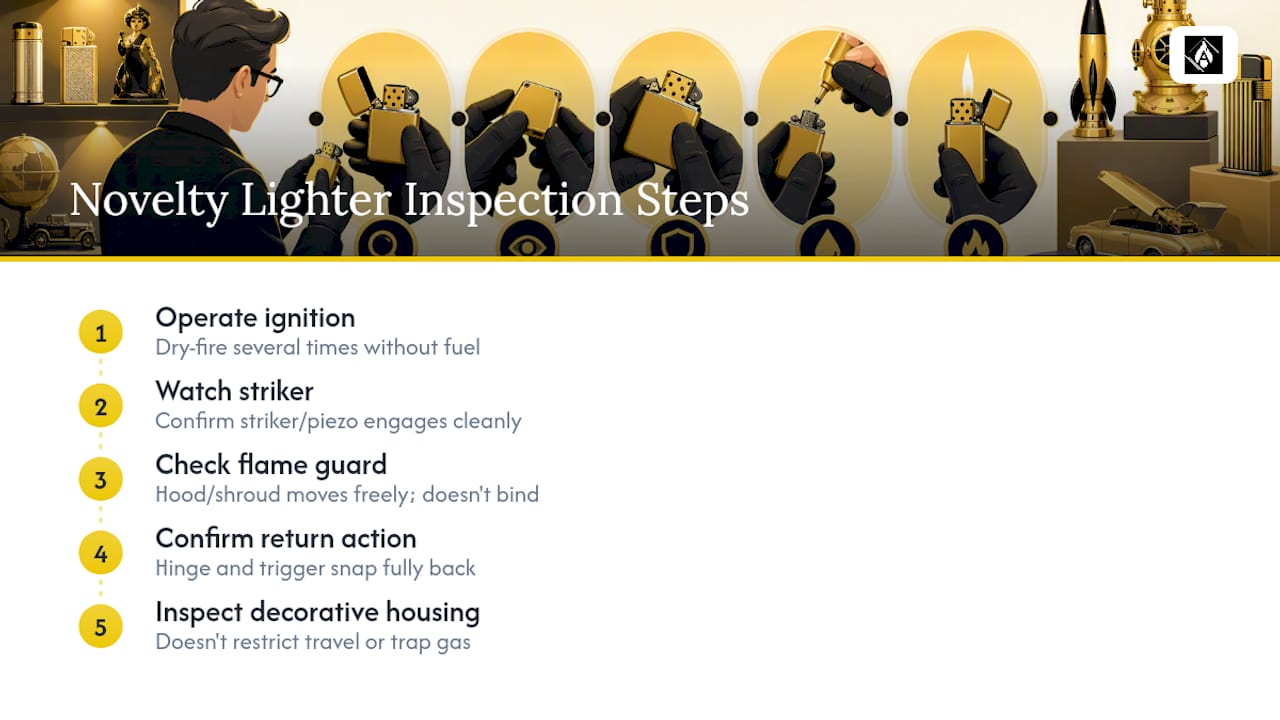
Before you rely on any new novelty piece, work the mechanism a few times empty, without fuel, and watch how the striker engages. Confirm the flame guard, hood, or shroud moves freely and doesn’t bind. Check that any hinge or trigger returns fully to its resting position, since a mechanism that sticks halfway can leave a flame exposed longer than intended. If a design uses a decorative housing over the actual ignition parts, like a shotgun-shaped novelty lighter or an ace-of-spades themed piece, make sure the housing doesn’t restrict the striker’s travel or trap gas near the seams. Unusual doesn’t mean unsafe, but it does mean the inspection takes an extra minute.
Handling Lighters With Electrical Or Electronic Components
A growing share of novelty lighters use arc or plasma ignition instead of an open flame, and a smaller number pair that ignition with USB charging or small internal batteries. These pieces carry different risks than a standard butane flame lighter.
Never charge an electronic lighter unattended overnight, and use only the cable or adapter that came with it. Mismatched chargers can overdrive the internal battery. Keep any electronic or arc-style lighter away from water and high humidity entirely, since exposed contacts and circuitry don’t tolerate moisture the way a sealed butane valve does. If the arc becomes weak, inconsistent, or the unit won’t hold a charge, that’s a battery or circuit issue, not something to troubleshoot by opening the casing yourself. Treat a failing charge cycle the same way you’d treat a fuel leak: stop using it and have it looked at by someone qualified, or retire it.
Safe Disposal Methods For Novelty And Refillable Lighters
Disposal is where a lot of good safety habits fall apart, mostly because people forget a lighter is still pressurized even when it looks empty.
Empty the fuel tank completely before disposal, ideally outdoors or in a well-ventilated space, by pressing the fill valve until no more gas escapes. Never puncture, crush, or throw a lighter into a fire or incinerator, even one you believe is empty, since trace residual butane can still ignite or cause a small container to rupture under heat. Refillable lighters that still function mechanically don’t need to be thrown away at all. Emptied and cleaned, they can often go to a repair specialist or simply retire into a display collection instead of the trash. Disposable or non-refillable novelty lighters that have reached the end of their life should go through your local household hazardous waste program rather than a standard curbside bin, since most municipal recycling streams aren’t set up to handle pressurized fuel components safely.
Why Modifying A Novelty Lighter Is Never Worth It
Every mechanical lighter is engineered around a specific fuel flow, valve tolerance, and spark gap, and novelty designs often add extra housing or moving parts on top of that baseline engineering. Altering any of it tends to backfire.
Drilling out a valve to increase flame height, bending a flame guard for a different look, or swapping in a non-matching flint or igniter assembly changes the pressure dynamics the lighter was built for. That’s how a reliable flame becomes an unpredictable one, and it’s part of why damaged or altered lighters showing uncontrolled flame behavior shouldn’t be used at all. Removing safety features like child-resistant mechanisms or flame guards for aesthetic reasons is especially risky on pieces meant for gifting, since the person receiving it may not know the modification happened. If you want a different flame color, size, or ignition style, buy a lighter built that way from the start rather than converting one. The internal tolerances on a well-made piece aren’t something a home workbench can safely replicate.
Allure Cart Notes: Design, Durability, And Daily Use
Some lighter makers build every piece around one idea: a lighter should look like a statement piece and still fire reliably every time. Providing spark-ignition consistency and shipping options helps support that balance.
For daily carry, metal-bodied designs like the antique bullet-shell lighter hold up to pocket wear far better than delicate decorative shells, which are better suited to a display case than a jacket pocket. Match the piece to how you actually plan to use it.
— Allurecart
How Allure Cart’s Lighters Fit Into Safe Ownership
Once you know the rules, the piece you choose matters just as much as how you follow them. Allurecart designs every lighter for reliable spark ignition first, then wraps that mechanism in a design worth collecting or giving as a gift.
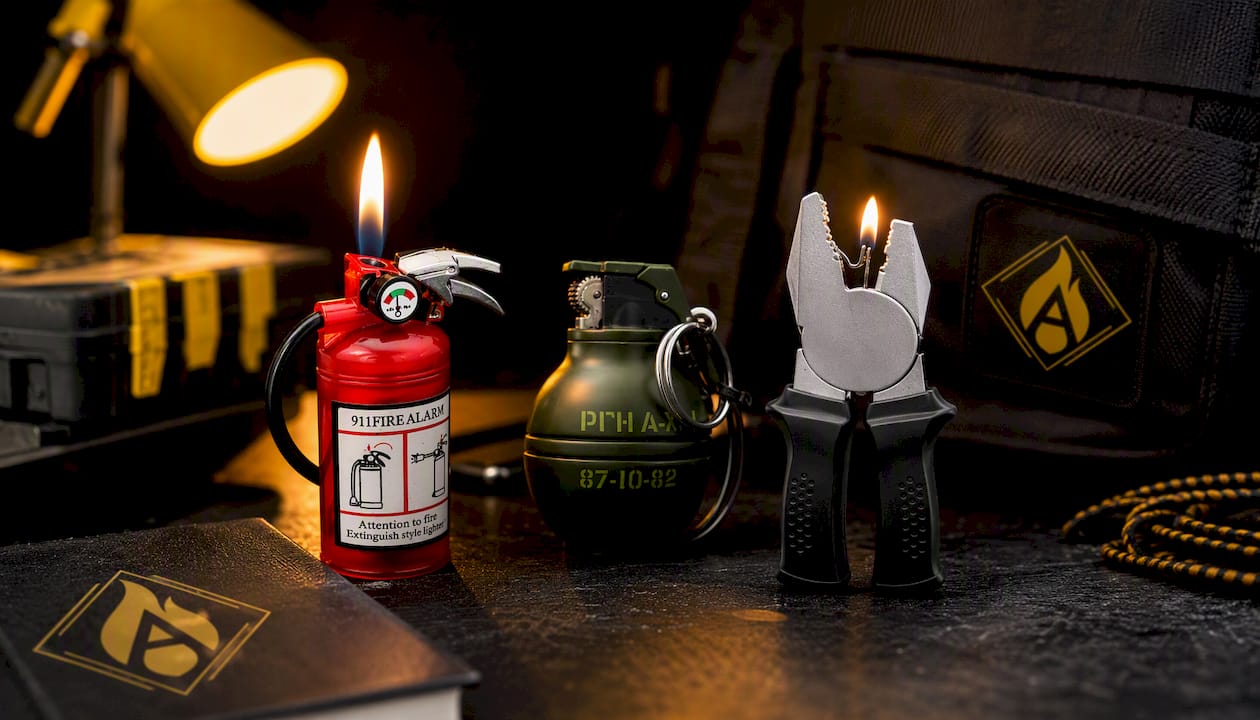
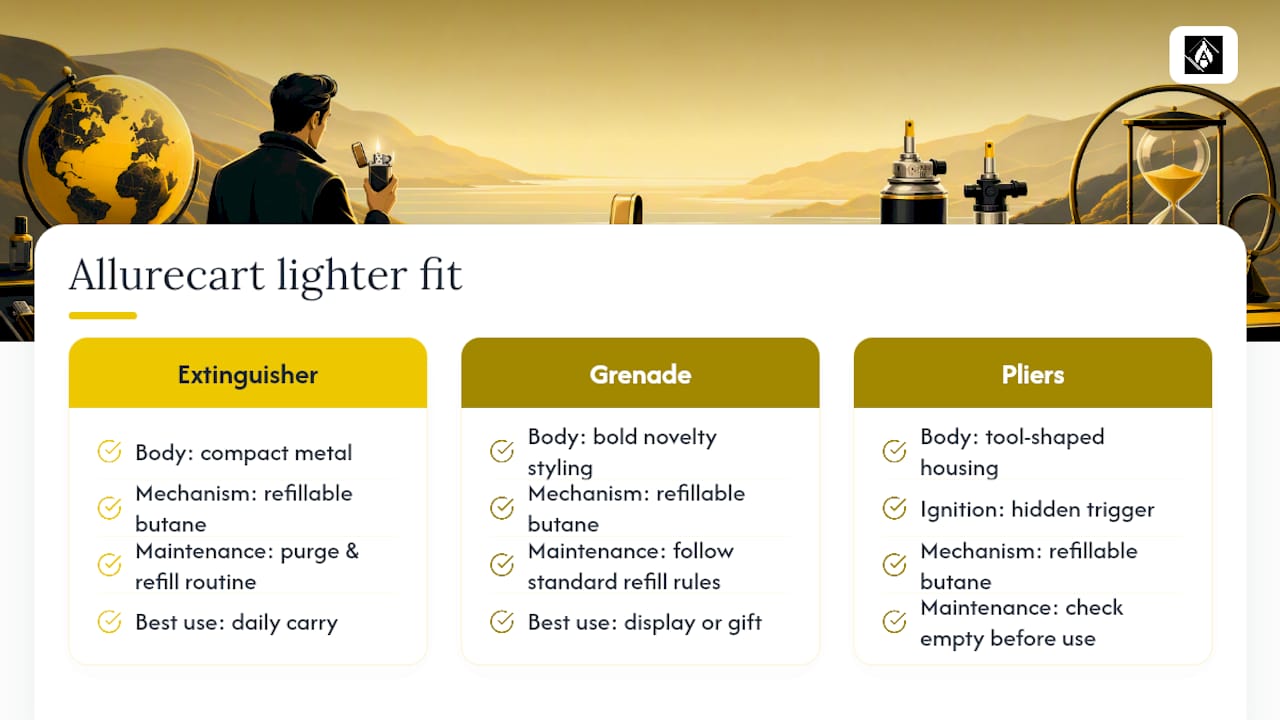
The Extinguisher Lighter pairs a compact metal body with the same purge-and-refill maintenance routine covered above, making it a practical option for daily carry. The Grenade Lighter leans into bold novelty styling while keeping a standard refillable butane mechanism underneath, so the maintenance rules you just read apply directly. The Pliers Lighter hides its ignition trigger inside a tool-shaped housing, exactly the kind of unusual mechanism worth checking empty before you rely on it.
Whichever one you choose, review the care instructions that come with your order, add shipping protection at checkout if you’re sending it as a gift, and refill only with quality butane suited for refillable lighters. Browse the full collection of novelty lighter designs and pick the piece that matches how you’ll actually use it.
Sources
The safety limits and maintenance steps in this guide come from sources built for exactly this purpose. The CPSC’s business guidance on lighters sets the storage and transport thresholds. Tobacconist University’s maintenance FAQ outlines purge-and-refill technique. RapidRepair.blog’s restoration guide covers what a repair actually involves, and when it’s beyond a DIY fix.
- U.S. Consumer Product Safety Commission — Lighters: Business guidance
- Tobacconist University — Butane lighter maintenance
- PromotionalMatches — Lighter product safety guide
- Rapidrepair
FAQ
Is It Safe To Refill A Novelty Lighter Yourself?
Yes, as long as you purge the tank first, refill at the correct angle, and let it rest before igniting. Skip any of those steps and you risk clogged valves or inconsistent flame.
Can I Repair A Leaking Novelty Lighter Myself?
Minor issues like clogged ports respond to cleaning with dry air, but a leak, cracked casing, or valve failure needs authorized repair rather than a DIY fix.
How Do I Know If A Novelty Lighter Should Be Retired?
Retire it if you notice a persistent fuel smell, a visible leak, structural cracking, or ignition failure that doesn’t resolve after purging and cleaning.
Are Metal-Bodied Novelty Lighters Safer For Daily Carry?
Metal-bodied designs generally hold up better to pocket wear and impact than fragile decorative shells, which makes them a better fit for everyday use rather than display-only pieces.