

A minimalist lighter design strips the object down to what earns its place: a clean silhouette, a restrained finish, and ignition hardware that never fights for attention. Judge any lighter against three cues: silhouette, material or finish, and how discreetly it lights. What follows shows those cues in real examples, including pieces from Allurecart’s own collection built on exactly this logic.
TL;DR:
- Minimalist lighters should have uninterrupted surfaces, flush hardware, and a restrained color palette for a clean, unobtrusive look.
- Brass and copper materials develop a patina over time, enhancing the aesthetic, while stainless steel and zinc alloy offer a more industrial minimal style.
- Shape, weight, and hinge feel influence daily carry comfort, with slender designs ideal for pockets and heavier blocks better suited for desk use.
- Ignition options like refillable butane torches or electric arc systems offer different maintenance needs, with arc lighters requiring minimal upkeep.
- Refillable, repairable designs with natural finishes or simple forms, like the retro-styled or bamboo models, foster a satisfying tactile experience over disposable alternatives.
Table of Contents
- What Defines Minimalist Lighter Design: A Visual Checklist
- Materials and Finishes That Reinforce a Minimal Look
- Form Factor, Weight, and Hinge Feel for Everyday Carry
- Ignition Types: Matching the Flame to the Design
- Four Minimalist Directions Worth Exploring
- Allurecart’s Take: Three Minimalist Case Studies
- Why Restraint in a Small Object Still Matters
- Shop the Minimalist Styles Featured Here
- Sources
What Defines Minimalist Lighter Design: A Visual Checklist
Restraint is the whole philosophy. A minimalist lighter avoids ornament for its own sake, leaves generous negative space on the body, and limits itself to one or two intentional design moves rather than five competing ones. The best examples look like they couldn’t lose a single detail without breaking.
Run any candidate through this checklist before you call it minimal:
- Uninterrupted surfaces. No busy engraving, no decorative bands that serve no function.
- Hidden or reduced hardware. Hinges, flint wheels, and fill valves sit flush or tucked, not bolted on like an afterthought.
- A single-material look, or a tasteful two-tone. One dominant finish reads calmer than three fighting materials.
- A sober color palette. Brushed metal, matte black, raw wood tones. Loud color usually signals novelty design, not minimalism.
A brushed copper trench lighter with a slim windproof grille passes easily: the grille is functional, not decorative, and the body has one continuous surface. Compare that to a chrome novelty lighter shaped like a pistol, covered in etched detail. Even if it’s well made, it belongs to a different design language entirely.
Materials and Finishes That Reinforce a Minimal Look
Metal choice does more design work than most buyers realize. Brass and copper oxidize over months of handling, developing a patina that deepens the “warm minimal” look instead of ruining it. Stainless steel and zinc alloy stay cool and uniform, better suited to a starker, more industrial minimal aesthetic.
Surface treatment matters just as much as the metal underneath:
- Brushed or satin finishes hide fingerprints, pocket scuffs, and light scratching, which keeps the piece looking intentional for years.
- Polished or glossy finishes show every fingerprint almost immediately and can tip a design from minimal into merely shiny.
- Plated or coated surfaces look sharp out of the box but wear unevenly once the coating thins at contact points, sometimes revealing a different base metal underneath.
Pro Tip: If you want a lighter that ages into its look rather than out of it, choose raw brass or copper over a plated finish. Patina reads as character; peeling plating reads as damage.
Collectors chasing a lived-in aesthetic tend to favor uncoated brass for this reason. It rewards handling instead of punishing it.
Form Factor, Weight, and Hinge Feel for Everyday Carry
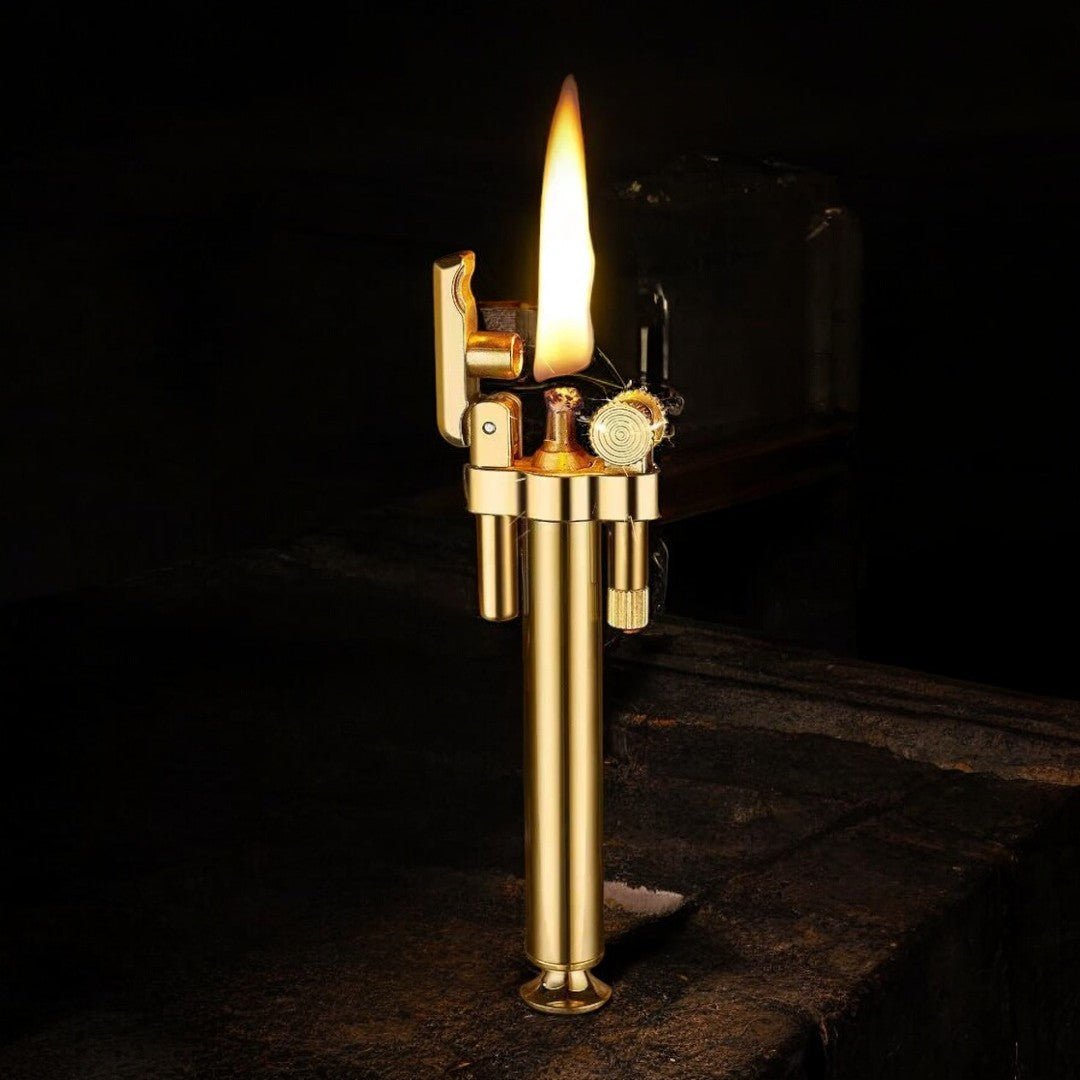
Shape and weight decide whether a minimalist lighter actually gets carried or just admired on a shelf. An ultra-thin trench-style body slides into a shirt pocket without a visible bulge, while a solid block form sits heavier in the hand and reads more like a desk object or a collectible than an everyday-carry piece.
A few practical points to weigh before buying:
- Weight distribution changes how “solid” a lighter feels. A bottom-heavy design feels more substantial even at the same total weight as a top-heavy one.
- Hinge action tells you about build quality fast. A lid that snaps shut with a clean, single motion signals tighter tolerances than one that wobbles or needs two hands.
- Balance affects one-handed use. A lighter that tips awkwardly when flipped open with a thumb undercuts the whole point of a sleek, quick-access design.
If you want something that disappears into a pocket, go slender. If you want something that feels satisfying to hold and click shut on a desk, a heavier block form serves that better.
Ignition Types: Matching the Flame to the Design
The ignition mechanism shapes both the silhouette and the maintenance routine, so it deserves as much thought as the finish. Gear roundups covering 2025 point out that collectors still favor reliable, refillable soft-flame or naphtha lighters for the traditional experience, while flameless electric arc options are gaining ground for indoor and household use.
Here’s how the three main technologies compare on upkeep:
- Naphtha fluid, soft-flame. Classic wick-and-flint mechanism. Needs periodic wick trimming and flint replacement, and the fluid evaporates even when the lighter sits unused.
- Butane, torch or soft flame. Refillable canister system that holds fuel longer than naphtha and resists wind well in the torch configuration, prized for cigar use and outdoor lighting.
- Electric arc. Flameless, odor-free, and recharged over USB-C rather than refilled. Rechargeable arc lighters commonly list around 1,000 ignitions per charge, which covers months of daily use before it needs a plug.
Pro Tip: Pick your ignition by what you actually do most. Candles and incense favor a quiet electric arc; cigars and outdoor use favor windproof butane torch; purists chasing tactile ritual still gravitate to naphtha wick designs despite the extra upkeep.
Arc lighters need almost no maintenance beyond an occasional wipe of the contact nodes, while wick lighters reward owners who don’t mind a five-minute tune-up every few weeks.
Four Minimalist Directions Worth Exploring
Minimalism isn’t one look. It splits into a few distinct directions, each pulling from a different design instinct.
- Brass minimal. A solid block silhouette in raw brass that earns a warm patina with handling, the metal doing all the visual work with zero added ornament.
- Ultra-thin trench. Slim, windproof, built for the pocket rather than the display shelf. A thin windproof copper trench lighter with a compact multi-hole grille shows how far this style can be pared down while still resisting wind.
- Steampunk-minimal. Visible mechanical elements like a hinge pin or flint wheel left exposed on purpose, treated as the one intentional detail instead of piled on top of decorative etching.
- Modern arc. Matte, pared-down housing built around a USB-C charging port instead of a fuel valve, often the coolest and most industrial of the four in feel.
Small choices move a piece between these directions faster than people expect. Swap a round aperture for a slim rectangular one and a design tips from “vintage minimal” toward “modern minimal” instantly. Hinge profile does similar work, deciding whether a lighter reads as retro engineering or contemporary hardware.
Allurecart’s Take: Three Minimalist Case Studies
Allurecart builds its catalog around exactly the principles above, and three pieces map cleanly onto the checklist.
- RETRO LIGHTER. A retro-styled minimalist lighter built around a single continuous metal surface and a hinge that snaps flush, suited to anyone who wants a vintage silhouette without vintage clutter.
- BULLET SHELL LIGHTER. The bullet shell lighter leans into a compact metal body with a cylindrical form that stays pocketable, a good fit for collectors who value a distinctive shape over decorative surface detail.
- BAMBOO LIGHTER. The bamboo lighter swaps metal for a natural wood finish, proving the single-material principle applies just as well outside brass and steel.
| Product | Standout minimalist trait | Best suited for |
|---|---|---|
| RETRO LIGHTER | Uninterrupted metal surface, flush hinge | Everyday carry with a vintage feel |
| BULLET SHELL LIGHTER | Compact cylindrical silhouette | Collectors and pocket carry |
| BAMBOO LIGHTER | Single-material natural finish | Buyers who want warmth over metal |
Each piece is refillable, which matters more than it sounds. Design write-ups on minimalist lighters consistently point to refillability as the detail that keeps a piece in rotation instead of in a drawer.
Why Restraint in a Small Object Still Matters
There’s something disproportionately satisfying about flipping open a well-made lighter, the kind of small tactile ritual that has nothing to do with function and everything to do with how an object is built. A refillable wick lighter built for longevity earns that ritual by aging well instead of by trying too hard on day one. Choose a design you can refill or repair. It will still feel good in your hand a decade from now, long after a disposable version has been replaced three times over.
— Allurecart
Shop the Minimalist Styles Featured Here
If any of the silhouettes above caught your eye, Allurecart’s catalog carries the actual pieces this article was built around. The RETRO LIGHTER and BULLET SHELL LIGHTER cover the metal-forward minimalist directions, while the BAMBOO LIGHTER offers the natural-material route for anyone who wants warmth over brushed steel.
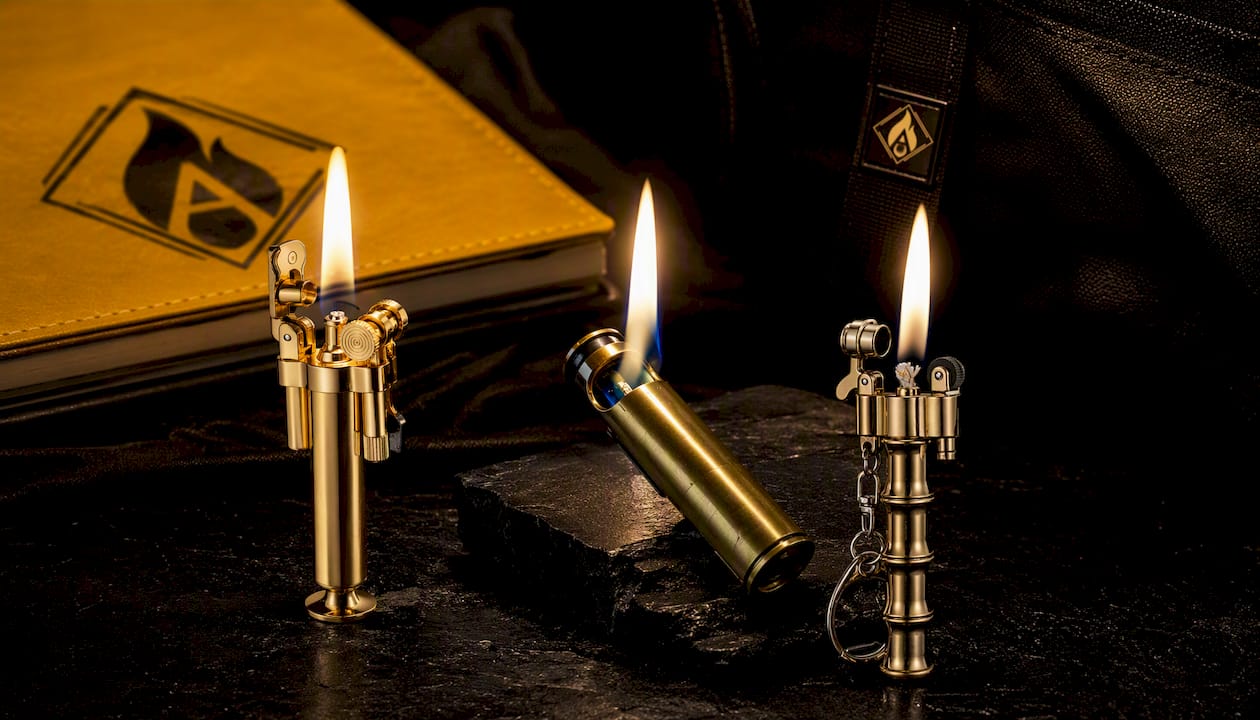
Every piece embodies the same refillable, repairable build philosophy discussed throughout this guide. Browse the full collection and pick the silhouette that matches how you actually want to carry a flame.
Sources
- Best lighters of 2025 to carry a flame wherever you go — Men’s Journal
- Swingtop Lighter — Craighill
- Rechargeable lighter — Studio Brune