

For most cigar enthusiasts, a quality butane torch or jet lighter is the better everyday choice: it’s fast, wind resistant, and consistent across ring gauges. Cedar matches earn their place for flavor-pure, ceremonial smokes, where the ritual and the faint cedar aroma become part of the experience. The right answer depends less on tradition versus convenience than on where you’re smoking and what you’re smoking.
TL;DR:
- Matches and cedar spills provide the cleanest flavor, especially when sulfur burns off, making them ideal for ceremonial and flavor-sensitive cigars.
- Torch and jet lighters excel outdoors and for large ring gauges due to their wind resistance and even, quick ignition.
- Proper lighting technique, such as slow rotation and keeping flames a quarter-inch away, is more critical than the tool itself in avoiding scorched wrappers.
- Refillable torches have a lower environmental impact over time compared to disposable lighters or frequent match consumption.
- Using matches or a soft flame indoors for calm, deliberate toasting provides better control, but patience and technique outweigh tool choice in most cases.
Table of Contents
- Matches vs Lighters for Cigars: Comparing Flavor, Wind, and Speed
- How to Light a Cigar Properly With Each Method
- When Should You Use Matches Instead of a Lighter?
- How Allurecart’s Lighters Match Real Smoking Situations
- The Environmental Cost of Matches vs Lighters
- Ritual Matters, But Technique Wins
- Find the Right Lighter for How You Actually Smoke
- Sources
- FAQ
Matches vs Lighters for Cigars: Comparing Flavor, Wind, and Speed
The debate over matches vs lighters for cigars comes down to six practical factors, and no single method wins across all of them. Choosing the best way to light cigars means matching the tool to the moment, not picking a permanent side.
Flavor impact. Cedar and sulfur-free wood matches, ideally around 3.5 inches long, burn cleanly and rarely leave a chemical aftertaste once the initial flame settles, according to Cigar Aficionado. Cedar spills and quality matches avoid the faint butane or petroleum note some smokers detect from lower-grade lighter fuel, which is why purists gravitate toward them for flavor purity, per Cigars. A well-maintained butane torch, refilled with clean fuel, comes close, but the margin still favors wood.
Wind resistance and outdoor reliability. Torch and jet lighters produce a concentrated flame built to survive breeze, patio wind, and altitude, while matches struggle the moment air moves, according to Vdg-cigars. Soft-flame lighters sit in between: gentle indoors, unreliable the second you step onto a porch.
Speed and convenience. A torch lights on the first try nearly every time. Matches often need two or three strikes per cigar, especially once you factor in letting the sulfur burn off before the flame touches tobacco.
Scorch risk. Torch flames run hot enough to blister a wrapper if held too close or too long, while matches and soft flames offer more forgiving heat, but only if you keep the cigar moving.
Ring gauge suitability. Large ring gauges (60 and up) benefit from a torch’s concentrated heat, which toasts the entire foot evenly and reduces mid-smoke relights, an edge confirmed by Vdg-cigars’ comparative testing.
Maintenance and cost. A torch needs occasional butane refills and periodic cleaning of the jet nozzle. A box of cedar matches costs little but gets consumed steadily, especially if you’re lighting robustos and toros that need multiple strikes.
- Flavor purity: matches and cedar spills edge out lighters
- Wind performance: torch and jet lighters dominate
- Large ring gauge: torch flame wins on even toasting
- Cost over time: matches are cheap per box but consumed faster
- Scorch risk: highest with torches held too close, lowest with a patient soft flame
How to Light a Cigar Properly With Each Method
Technique separates a well-toasted foot from a scorched one, regardless of which tool you’re holding. Here’s how to handle each.
Lighting with cedar matches:
- Strike an extra-long cedar or sulfur-free match and let the initial burst of sulfur and combustion chemicals burn off for two or three seconds before it nears the cigar.
- If the flame feels thin, light a second match alongside the first to widen the flame, a trick Cigar Aficionado recommends for even toasting.
- Hold the match slightly downward so the flame feeds up the stick rather than burning out prematurely, and rotate the cigar’s foot just above the flame without letting it touch.
- Once the foot glows evenly, draw gently while rotating to establish a full, even burn line.
- If carbon builds up on the matchstick and the flame turns smoky, tap the tip against an ashtray to clean it, or simply light a fresh match rather than fighting a dying one.
Lighting with a soft-flame lighter: Keep the flame lower and farther from the foot than you would with a torch. Toast the tobacco first with slow rotation, then draw. Avoid holding the flame in one spot too long, since soft flames burn cool but linger, and lingering is what smolders a wrapper.
Lighting with a torch or jet lighter: Sweep the flame in a slow circular motion around the foot, rotating the cigar every few seconds so no single quadrant gets more than two or three seconds of direct heat. Keep the flame roughly a quarter inch away rather than jamming the cigar into the fire.
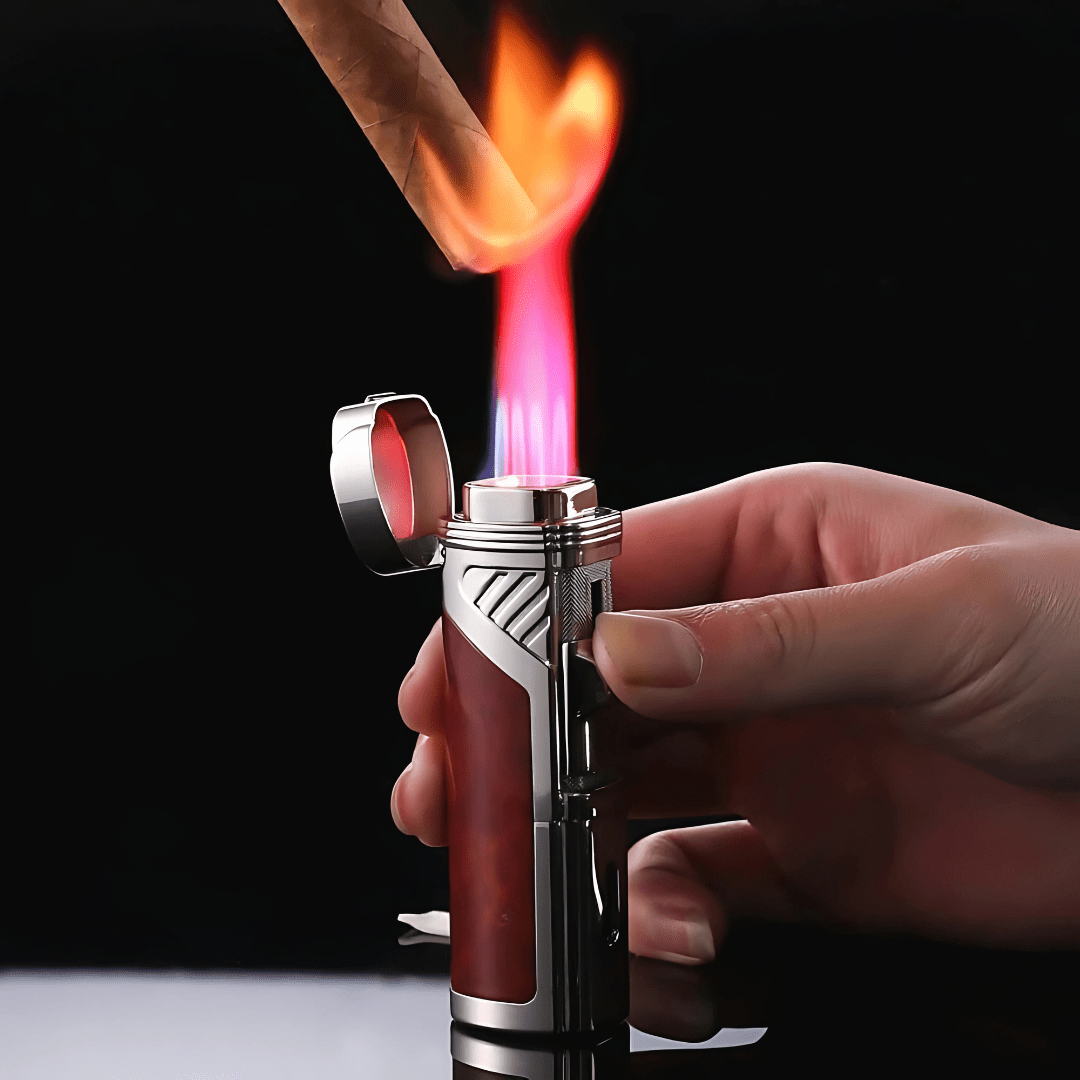
Pro Tip: Cup your hand around the flame when lighting outdoors, even with a torch. It shields against gusts and keeps the flame steady long enough for an even toast.
Whichever method you choose, keep fingers clear of the flame path and never light a cigar in a way that traps your hand against wind. If a torch sputters mid-light, release the trigger, let the fuel line settle for a second, then reignite rather than forcing a weak flame against the wrapper.
When Should You Use Matches Instead of a Lighter?
The choice isn’t philosophical so much as situational. Here’s a practical breakdown.
- Outdoors or windy conditions: reach for a torch or jet lighter. Reliability beats ritual when you’re fighting a breeze.
- Large ring gauge (60+): a torch gives even, fast ignition across the whole foot.
- Flavor purity or a ceremonial occasion: cedar matches, with the chemical burn off given time, deliver the cleanest taste and the slowest, most deliberate light.
- Calm indoor settings where you want gentle control: a soft-flame lighter toasts patiently without the intensity of a torch.
- Everyday carry: one dependable torch for daily smoking, plus a box of cedar matches reserved for special cigars, covers nearly every situation.
| Situation | Best method | Why |
|---|---|---|
| Windy patio or outdoor lounge | Torch/jet lighter | Wind resistance, fast ignition |
| Large ring gauge (60+) | Torch/jet lighter | Even heat across wide foot |
| Ceremonial or flavor-focused smoke | Cedar matches | Clean taste, deliberate ritual |
| Calm indoor smoking | Soft-flame lighter | Gentle, controlled toasting |
How Allurecart’s Lighters Match Real Smoking Situations
Allurecart builds lighters for exactly the situations above, without asking you to choose between performance and design. The JET LIGHTER is described as a reliable outdoor torch for patios, large ring gauges, and breezy conditions. For the ceremonial side, the MATCH LIGHTER offers a special-occasion option reminiscent of a match-style ritual.
Then there’s the SHOTGUN LIGHTER, a distinctive collectible piece balancing design and reliable ignition.
- Free worldwide shipping available on qualifying orders
- Designs ranging from steampunk to modern minimalism, including collectible pieces like the Camel Vintage Lighter
- Ignition designed for both display and regular use
The Environmental Cost of Matches vs Lighters
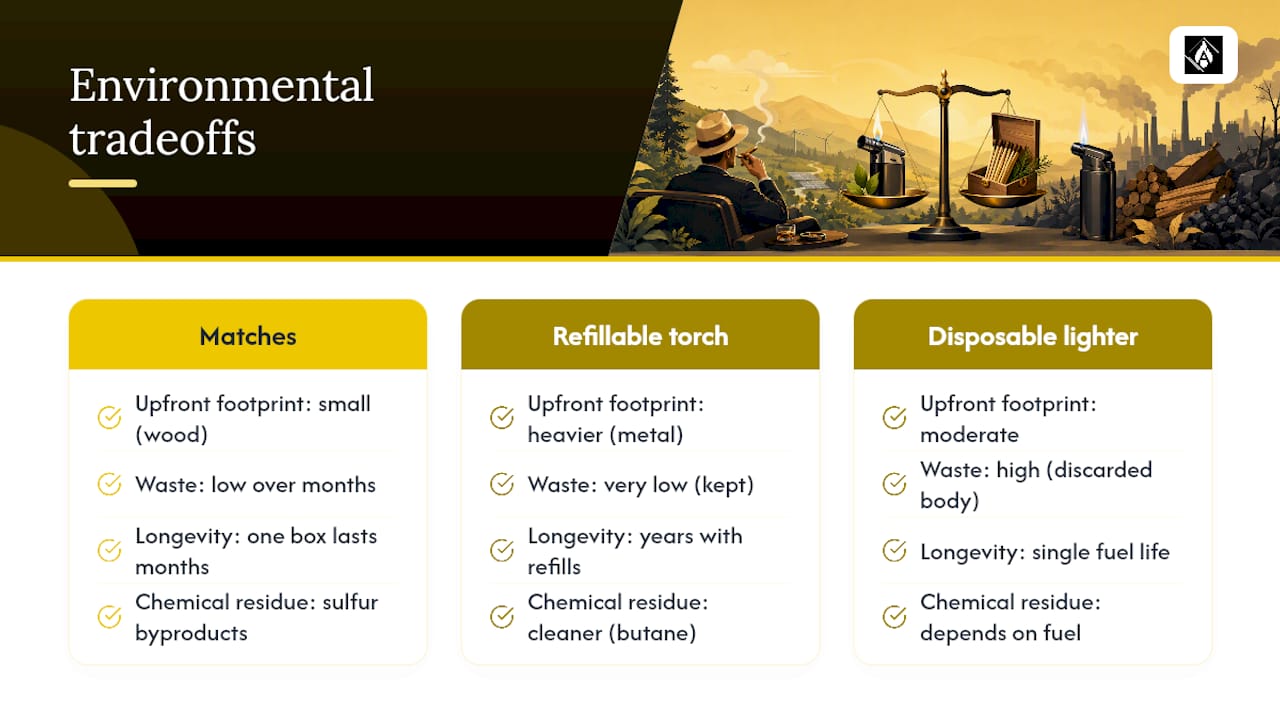
Every match strike burns a small piece of wood and releases its combustion chemicals into the air, a real but modest footprint when spread across a single box lasting months. Butane lighters carry a different kind of impact: manufacturing the metal body creates a heavier upfront footprint than a paper matchbox, but a refillable torch can last years, spreading that cost across thousands of lights.
Disposable lighters generate more waste than refillable ones, since the entire body gets discarded once the fuel runs dry. A refillable torch or jet lighter, kept topped off with butane, avoids that cycle entirely and tends to outlast several boxes of matches in practical terms.
Chemical residue is the other consideration. Sulfur matchheads leave behind trace combustion byproducts, which is exactly why cedar and sulfur-free matches exist as the preferred alternative for lighting anything meant to be tasted. Butane burns cleaner than lighter fluid or paraffin, which is part of why quality butane is favored over cheaper fuel sources, both for flavor and for reducing airborne residue.
Neither method is environmentally neutral, but the more sustainable habit isn’t about choosing matches or lighters outright. It’s about buying a refillable lighter you’ll actually keep for years and reaching for matches sparingly, for the cigars where the ritual earns its cost.
Ritual Matters, But Technique Wins
Here’s the uncomfortable truth buried in this whole debate: the tool matters less than most cigar forums want you to believe. A patient smoker with a cedar match, letting the sulfur burn off and rotating the foot with care, will out-toast an impatient smoker jamming a torch straight into the wrapper. Cigar Aficionado’s own guidance backs this up: correct technique consistently outperforms whatever tool is in your hand.
That doesn’t mean the tool is irrelevant. It means the argument over matches vs lighters for cigars is really an argument about patience. Own a reliable torch for daily smoking and outdoor sessions, keep a box of cedar matches for the cigars that deserve ceremony, and practice the rotation and distance control that actually protects the wrapper. Most smokers who complain about scorched cigars weren’t using the wrong tool. They were rushing the right one.
Try both methods deliberately for a month and pay attention to which cigars taste better lit which way. Then tell us what you found.
— Allurecart
Find the Right Lighter for How You Actually Smoke
Allurecart designs lighters around the real situations this comparison covers, not a single one-size-fits-all torch. If wind and large ring gauges are your daily reality, the JET LIGHTER delivers the concentrated, reliable flame outdoor smoking demands. If you want the ceremonial feel of a match-lit cigar without the upkeep of restocking cedar boxes, the MATCH LIGHTER captures that ritual in a piece built to last.
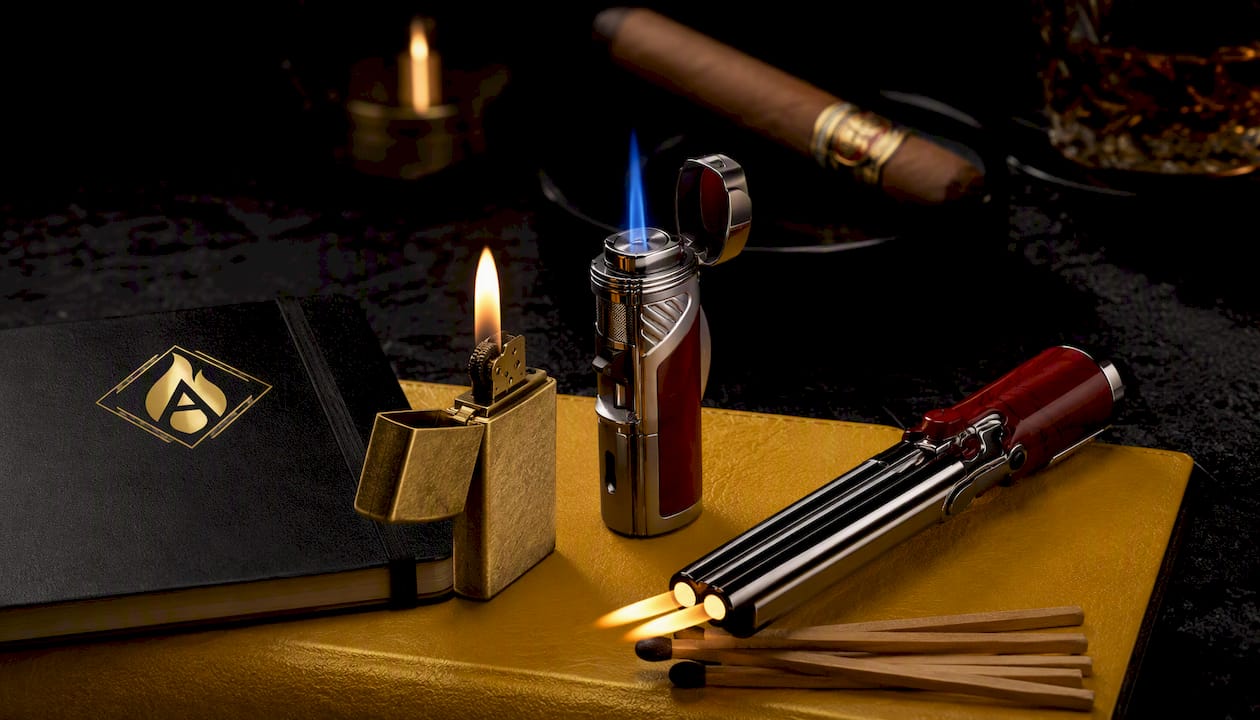
Collectors chasing something with more personality can look to the SHOTGUN LIGHTER, a novelty design that still delivers dependable spark ignition when it’s time to actually light up. Every design ships free worldwide on orders over $70, so building out a proper lighting kit, one for the patio and one for special occasions, costs nothing extra to get to your door. Browse the full lighter collection and pick the piece that matches how you actually smoke.
Sources
The technique and flavor guidance here draws on a handful of sources cigar enthusiasts already trust. Cigar Aficionado supplied the match-length and flavor-purity recommendations, along with the step-by-step lighting method covered in the how-to section. Cigars.com reinforced the fuel-taste comparison between cedar matches and butane lighters. Vdg-cigars provided the temperature and situational breakdown behind the wind resistance and ring-gauge guidance throughout this comparison.
FAQ
Is it better to light a cigar with a match or lighter?
Neither wins outright: cedar matches preserve flavor best for slow, ceremonial smokes, while a torch or jet lighter like the JET LIGHTER performs more reliably outdoors, in wind, and on large ring gauges.
Is it better to smoke with matches or lighters?
For daily smoking, a butane torch offers speed and wind resistance that matches can’t match, but many enthusiasts reserve cedar matches for cigars where flavor purity and ritual matter more than convenience.
Is it better to use matches or a lighter?
It depends on the setting. Use matches for calm, flavor-focused occasions and a torch or soft flame for wind, large gauges, or everyday convenience.
Who came first, matches or lighter?
Friction matches predate modern lighters by several decades, having been developed long before portable butane and gas lighters emerged as refined ignition sources.
What’s the safest way to avoid scorching a cigar’s wrapper?
Keep the flame moving in a slow circular sweep, rotate the cigar every few seconds, and never hold a torch flame directly against the wrapper for more than a moment.