

For tactical carry, reach for the Tactical Grenade Lighter and its rugged, utility-first build, much like a hand forged Damascus folding pocket knife designed for durability and outdoor use. For classic collectors, the Retro Lighter delivers a faithful vintage feel in a pocket-friendly shell. For gift buyers chasing a statement piece, the Grenade Lighter wins on sheer visual drama. All three ship through a curated lighter range, with free worldwide shipping over an order value threshold.
TL;DR:
- Choose a lighter based on your daily carry environment, whether it needs to be rugged, nostalgic, or highly attention-grabbing.
- Materials like brass develop character over time, steel is durable, aluminum is lightweight, and titanium offers a premium balance of weight and scratch-resistance.
- Soft flame lighters require more frequent refilling, while butane torches and rechargeable arc lighters suit infrequent outdoor or indoor use.
- Keep your lighter comfortable for pocket carry by selecting a size, weight, and edge shape that avoids snagging or damage to your gear or clothing.
- Regular refilling, flint replacement, and debris clearing maintain reliability, with subtle styling rules ensuring your lighter complements your overall kit.
Table of Contents
- Three Allure Cart Lighters Built for Everyday Carry
- How Do You Match a Lighter to Your EDC Kit?
- Do Materials and Finish Really Change How a Lighter Carries?
- Soft Flame, Torch, or Arc: Which Fuel Fits Your Habits?
- Will It Actually Fit in Your Pocket?
- How Often Should You Refuel and Repair Your Lighter?
- Three Rules for Styling Your Lighter Within Your Kit
- Allure Cart’s Lineup, Matched to Your Carry Style
- A Design-First Note on Choosing Your Everyday Lighter
- Sources
Three Allure Cart Lighters Built for Everyday Carry
Matching a lighter to your EDC setup isn’t about grabbing whatever’s cheapest at the counter. It’s about finding a piece that earns a permanent spot in your pocket, one that feels intentional next to your knife, your watch, your keys. Three distinct lighters were designed around that idea, and each one solves a different carry problem.
- Tactical Grenade Lighter. Best for the utility-minded carrier who wants something rugged over refined. It leans on a textured, matte metal shell that hides scuffs well, runs on a windproof torch flame, and slips into a coin pocket without printing through denim. Maintenance is minimal, refuel it and go. Designed as an accessible option within design-forward EDC gear, it earns its keep through toughness rather than polish. Check the tactical grenade lighter page for current specs.
- Retro Lighter. Built for the collector who wants nostalgia without fragility. Its brushed metal casing and classic hinge action echo old-school flip-tops, running on naphtha fluid for that warm, wavering flame purists prefer. Expect a weekly top-off with daily use and a light patina that only makes it look more lived-in over time. Browse the retro lighter listing for finish options.
- Grenade Lighter. The one you hand someone when you want a reaction. Heavier and more sculptural than the tactical version, it trades subtlety for presence, an unapologetic conversation starter that still fires a reliable flame. It fits best as a gift or display piece that occasionally rides along in a jacket pocket rather than jeans. See the grenade lighter product page for dimensions.
Each one solves a different question: how tough does it need to be, how nostalgic do you want it to feel, and how much attention should it draw.
How Do You Match a Lighter to Your EDC Kit?
Picking the right lighter comes down to a short list of criteria, the same ones serious EDC reviewers use when testing lighters for everyday carry: intended use, pocket location, grip comfort, weight, materials, finish, flame type, fuel life, maintenance cadence, and price.
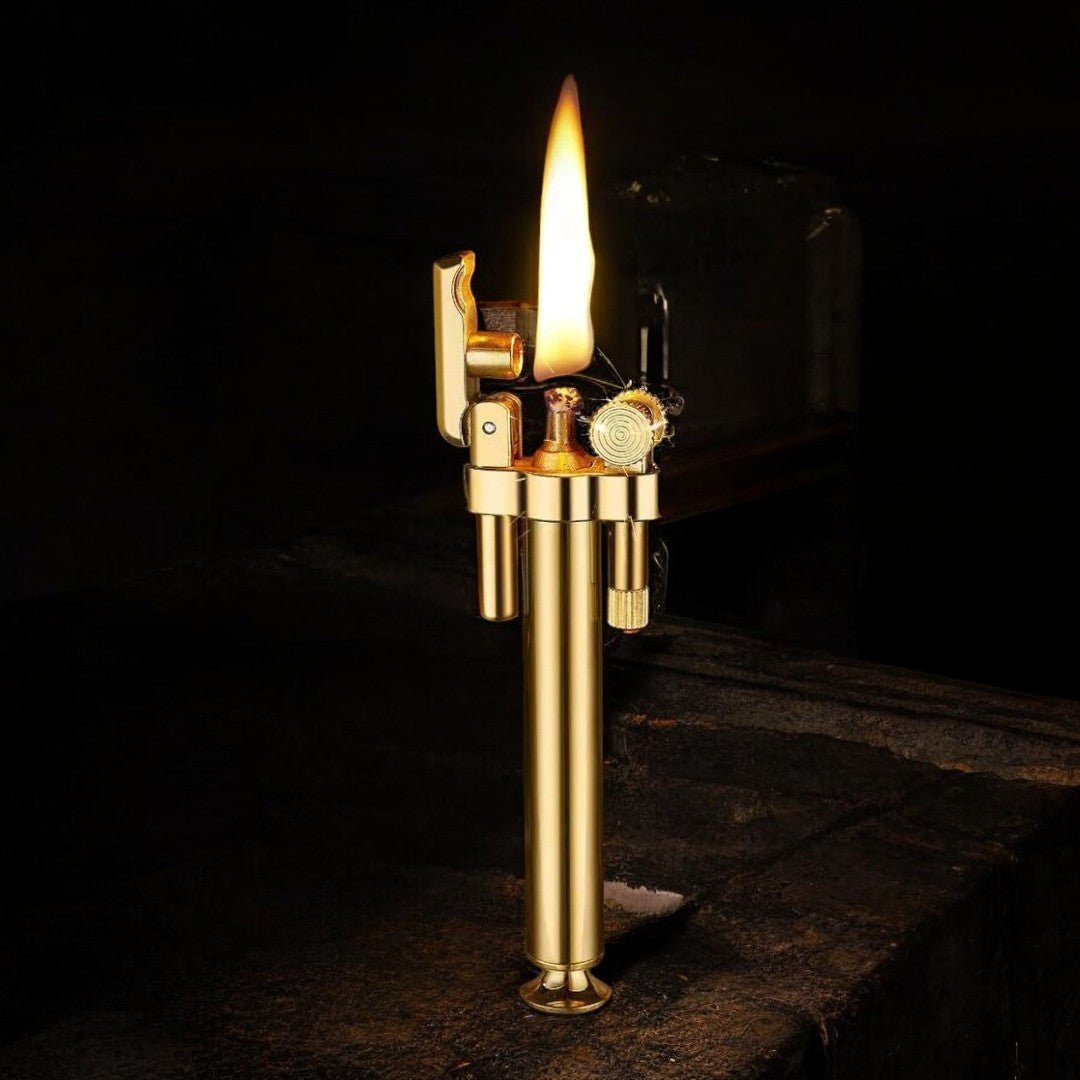
The trade-offs matter more than the specs. A heavier titanium build feels substantial in hand but adds pocket weight you’ll notice by hour six. A torch flame lights fast in wind but sacrifices the romantic flicker of a naphtha flame. A pristine, unblemished finish looks great on day one, but a patina-friendly brass case ages into something you’ll actually want to keep for a decade.
Ask yourself:
- Will this ride in a front pocket, a bag, or a drawer most days?
- Do I want a lighter that shows wear, or one I’ll baby?
- How often do I actually light something, daily or occasionally?
- Does this need to survive a drop onto concrete?
- Am I buying for myself or as a gift someone will display?
- Does the finish need to match a specific watch, knife, or belt hardware?
Pro Tip: Carry your top pick for a full week before committing to a case or sleeve. If it snags on your pocket seam or scuffs your keys, that’s your answer, size down or add protection.
Do Materials and Finish Really Change How a Lighter Carries?
Yes, and the difference shows up faster than you’d expect. Brass ages into a warm patina and shows fingerprints readily. Steel resists dings but runs heavier. Aluminum keeps things light but scratches visibly over months of pocket friction. Titanium splits the difference: light, nearly scratch-proof, but priced accordingly. Polymer-bodied lighters shave weight further but read as less premium next to leather and metal accessories.
- Brass: develops character over time, ideal for collectors who like visible history.
- Steel: tough, cold to the touch, pairs well with utilitarian knives.
- Aluminum: lightweight, best for minimalist carries.
- Titanium: premium feel, resists wear, commands a higher price.
A simple rule of thumb: match tone, not brand. If your watch case or key hardware runs warm-toned brass or gunmetal, a lighter in a complementary metal tone reads as cohesive even without exact matching.
Soft Flame, Torch, or Arc: Which Fuel Fits Your Habits?
Soft flame (naphtha) gives you that classic flicker but drinks fuel fast, expect to top off every one to two weeks with daily use, since naphtha evaporates even when the lighter sits untouched. Butane torches hold fuel far longer and cut through wind, better for infrequent carry or outdoor use. Rechargeable arc lighters skip fuel entirely but need regular battery top-offs.
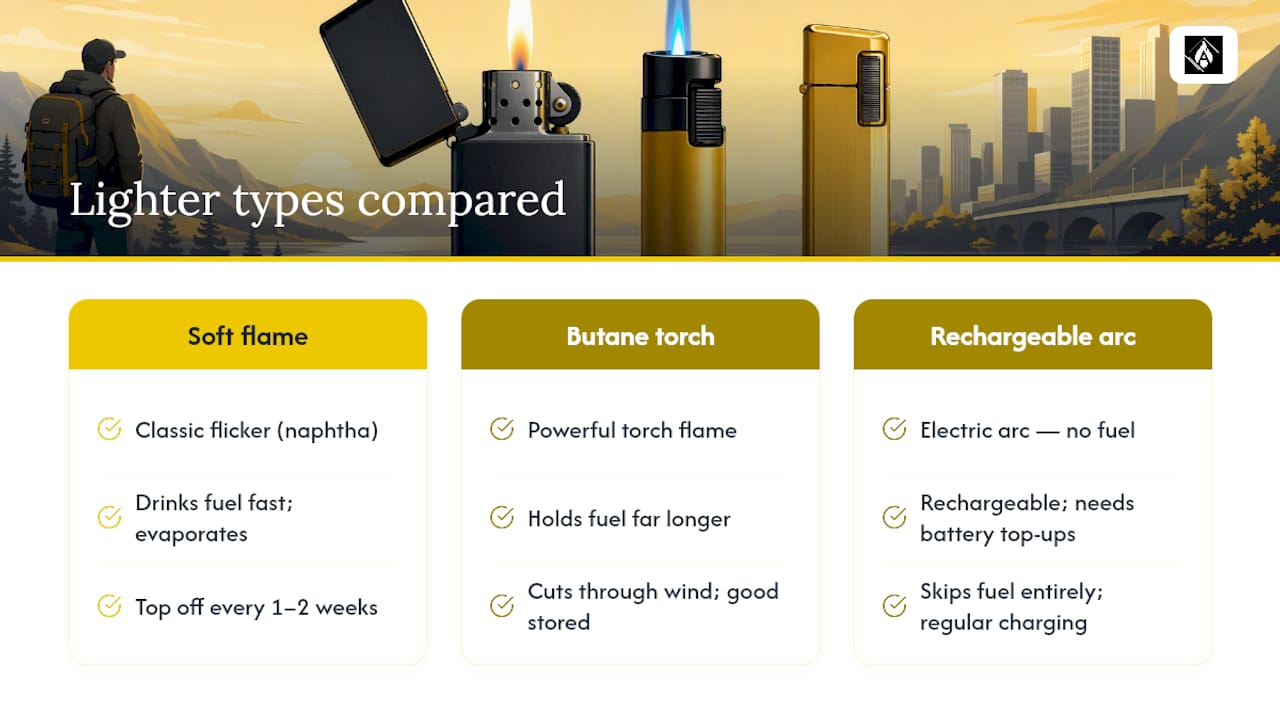
If you smoke daily and enjoy the ritual of refilling, naphtha suits you. If your lighter sits in a drawer most weeks, butane’s slower evaporation means it’s ready when you need it.
Will It Actually Fit in Your Pocket?
A lighter that snags, bulges, or gouges your phone case gets left on the dresser, which defeats the entire point of buying one. EDC comfort determines whether a tool gets carried at all, and lighters are no exception.
- Aim for a size and weight that is comfortable for coin-pocket carry, typically small and lightweight.
- Rounded edges beat sharp corners for daily comfort against fabric and skin.
- Sharp-cornered designs abrade pocket linings and adjacent items faster than rounded shells.
- A leather sleeve or textured case adds grip and protects finish without adding real bulk.
- A keychain tether works for bag carry but adds jingle that pocket carry doesn’t need.
How Often Should You Refuel and Repair Your Lighter?
Keeping a lighter reliable takes almost no effort once you know the rhythm:
- Top off naphtha models regularly with daily use; butane models generally require less frequent refilling.
- Replace the flint when sparks weaken, usually every few hundred strikes.
- Clear lint and pocket debris from the burner or wick with a toothpick or compressed air.
- Store empty lighters with the lid closed to slow fluid evaporation during downtime.
If ignition fails, check fuel level first, then flint wear, then look for a clogged burner port before assuming the unit is defective.
Three Rules for Styling Your Lighter Within Your Kit
Design-minded carry follows a few dependable rules. First, limit your palette, two or three finishes across your whole kit reads intentional, five reads cluttered. Second, use textural echo: a brushed-metal lighter pairs naturally with a brushed-steel knife or matte watch case, since shared material language signals a curated kit rather than a random collection. Third, decide between harmony and contrast on purpose, either blend metals and tones, or pick one bold outlier and let everything else stay quiet.
- Minimalist carry: one matte finish, one accent texture, nothing louder.
- Rugged carry: matte metals, visible wear, function-forward hardware.
- Collector carry: mixed eras and finishes displayed rather than pocketed daily.
Pro Tip: Lay your lighter next to your knife, wallet, and keys before buying. If one piece visually fights the others, that’s the one to swap.
Allure Cart’s Lineup, Matched to Your Carry Style
If pocketability, finish, and fuel type are your buying criteria, Three flagship lighters were built around exactly those questions rather than around trend chasing.
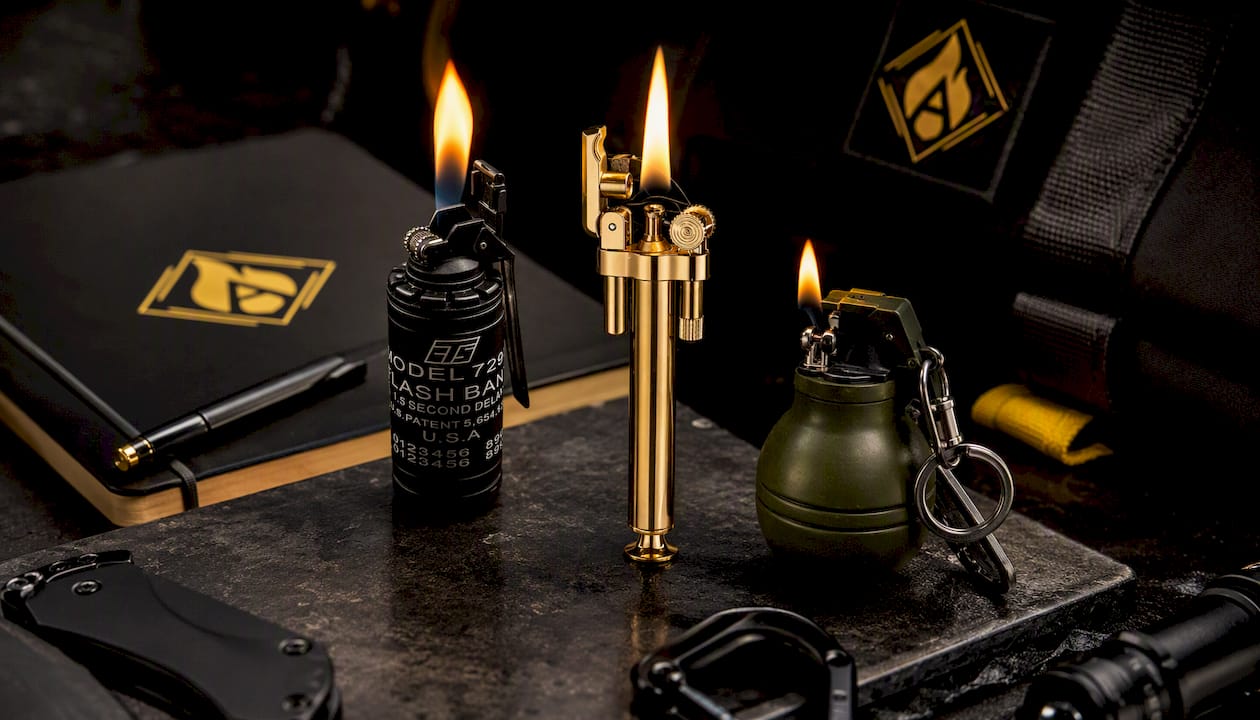
The Tactical Grenade Lighter answers the durability question with a textured shell and windproof flame built for daily abuse. The Retro Lighter answers the nostalgia question with a naphtha-fueled flame and a finish that only improves with age. The Grenade Lighter answers the “will this get noticed” question better than anything else in the lineup, making it the obvious pick when you’re buying a gift rather than a daily tool.
Orders over a certain amount ship free worldwide, and the full collection of lighters is worth browsing if none of these three nail your exact carry style. Pick the one that matches your daily habits, add it to your cart, and let it earn its spot in your pocket.
A Design-First Note on Choosing Your Everyday Lighter
Allurecart builds every lighter around the idea that a tool you carry daily should feel like it belongs to you, not just work for you. Comfort in the hand and pocket matters as much as the finish catching light. Choose the one that feels right in your grip before the one that looks right on a shelf.
— Allurecart
Sources
- Tested: The 5 Absolute Best Lighters For EDC | HiConsumption
- Zippo Lighter Buying Guide (2026) | Mighty Oak Supply
- Lighter fluid vs butane: choosing the right fuel
- Everyday carry (EDC): a good idea for several reasons | US Concealed Carry