

Standard disposable lighters and Zippo-style lighters are allowed in carry-on bags and on your person, but they’re generally forbidden in checked baggage unless completely empty of fuel. Torch, jet, and blue-flame lighters are banned everywhere, cabin and cargo hold alike. Electronic arc and plasma lighters ride in carry-on only, with strict battery limits.
Travelers can carry a lighter per person, and the TSA officer at the checkpoint has final say regardless of what the rulebook says.
Here’s what that usually looks like in practice:
- Keep a standard disposable or Zippo lighter in your pocket or carry-on.
- Leave torch and jet lighters at home entirely.
- Remove the battery or use a protective case for electronic lighters.
- Never pack a fueled lighter in checked luggage unless it’s completely empty.
Pro Tip: If your carry-on gets gate-checked at the last minute, pull your lighter out first and keep it on you. Once that bag disappears down the jetway, a lighter inside it becomes a problem you don’t want.
Key Takeaways
Air travel with a lighter comes down to fuel type: standard disposables and Zippos fly in carry-on, torch lighters never fly at all, and electronic lighters need a dead battery or a locked case.
| Point | Details |
|---|---|
| Standard lighters are carry-on friendly | Disposable and Zippo-style lighters travel in carry-on or on your person, one per passenger. |
| Torch lighters are banned outright | Jet-flame and blue-flame lighters are forbidden in both carry-on and checked baggage. |
| Battery limits apply to electronic lighters | Arc and plasma lighters need batteries under 100 Wh (lithium-ion) or 2 g lithium metal, carry-on only. |
| Officers make the final call | Even a compliant lighter can be flagged if TSA can’t verify it’s safe to fly. |
| AllureCart offers travel-ready designs | Standard-ignition pieces like the Camel Vintage Lighters clear security more easily than torch models. |
A Note From AllureCart
Always double-check your specific lighter’s specs against official TSA and FAA pages before packing it. Questions about a product’s fuel or battery status? Our support team and product pages are ready to help.
Travel-Ready Picks Worth Packing
If you want a lighter that looks as good as it travels, a few of our collections are built with exactly that in mind.
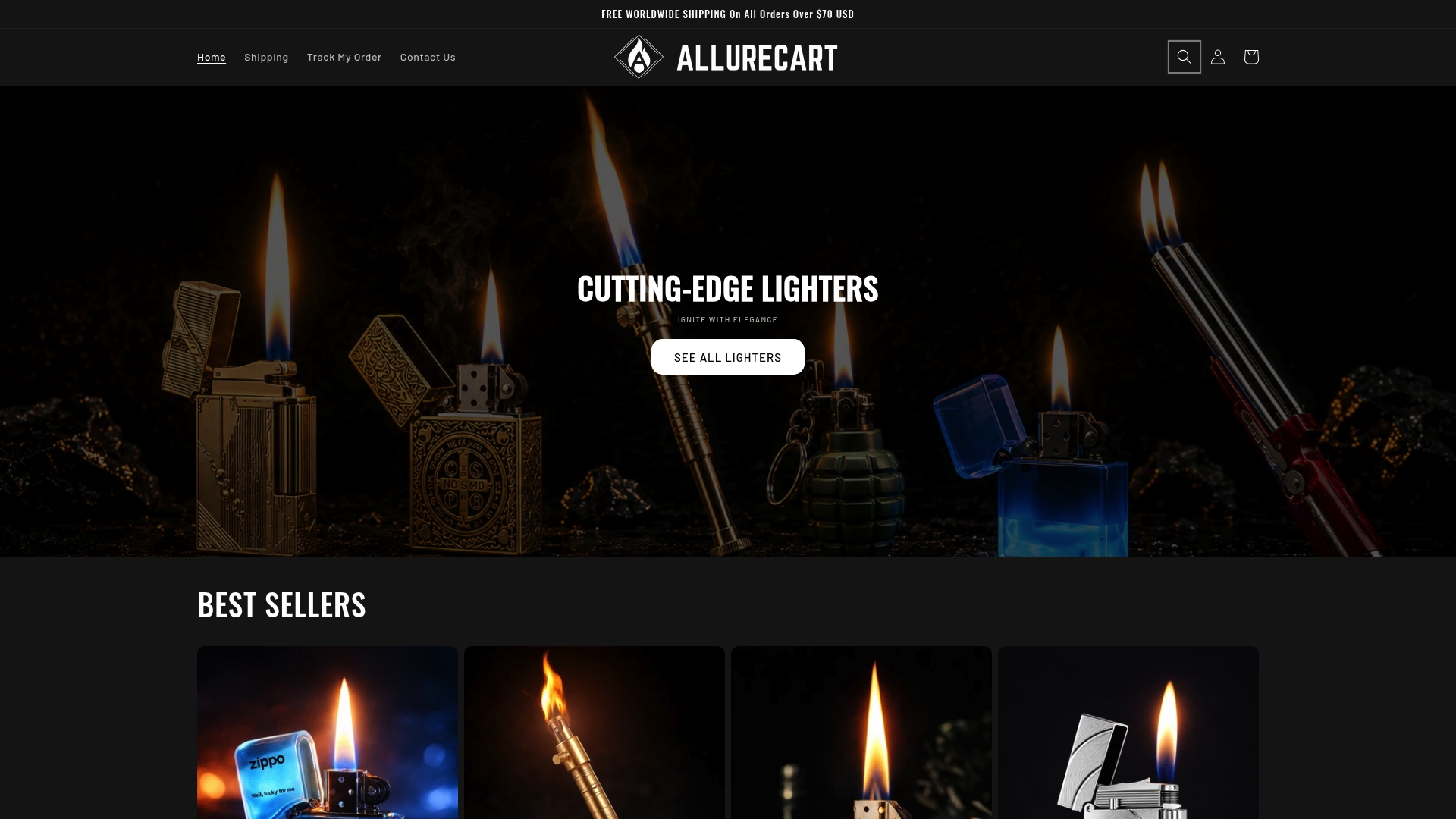
The Camel Vintage Lighters run on standard ignition, the same fuel type TSA clears for carry-on without added scrutiny. Prefer something with no fuel concerns at all? Our Premium Gold Lighter delivers a sleek, minimalist look built around reliable spark ignition rather than a torch flame. And if you’re not sure what fits your travel plans, our full collection of lighters lets you compare designs and specs before you buy. Pick a travel-friendly style now, and you won’t be improvising at the checkpoint later.
Table of Contents
- TSA, FAA, and DOT Rules for Every Lighter Type
- Battery Limits and Activation Safety for Electronic Lighters
- How to Pack a Lighter for a U.S. Flight
- What Happens at the Checkpoint
- Which AllureCart Lighters Travel Well
- Sources
- FAQ
TSA, FAA, and DOT Rules for Every Lighter Type
The federal rules split lighters into three practical categories, and knowing which one your lighter falls into determines where it can legally travel.
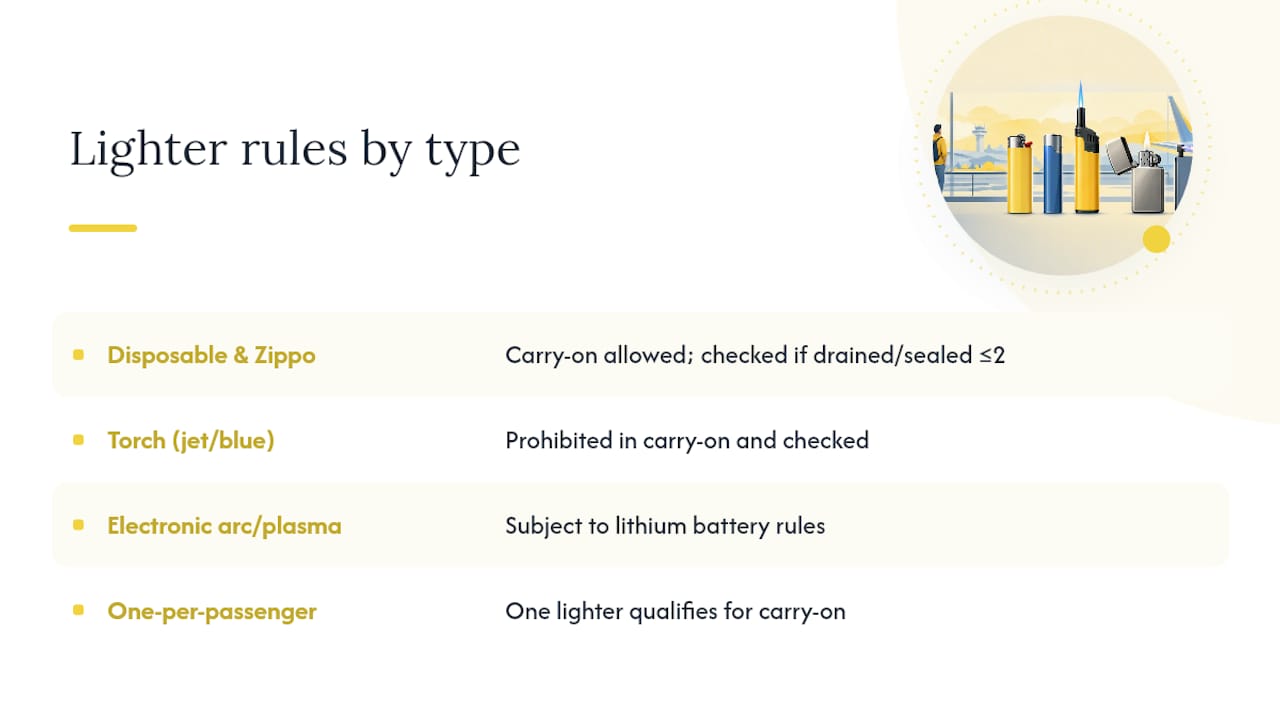
Standard disposable and Zippo-style lighters use absorbed liquid fuel, which is why regulators treat them more leniently than other fuel-based devices. TSA permits them in carry-on bags and on your person without much fuss. Checked baggage is a different story: fueled lighters are generally prohibited there unless the lighter is completely drained of fuel or sealed in a DOT-approved case, capped at two lighters per passenger.
Torch lighters, also sold as jet-flame or blue-flame lighters, don’t get the same benefit of the doubt. TSA and the FAA both classify these as forbidden in carry-on and checked baggage, full stop, because they burn hotter and less predictably than a standard flame.
The one-per-passenger rule: Only one lighter per person qualifies for the carry-on and on-person exception under most circumstances. Pack a spare and expect a conversation with security.
Electronic, arc, and plasma lighters carry their own rulebook tied to lithium battery limits, covered next. The FAA’s classification system hinges on fuel type, absorbed versus unabsorbed liquid, as the deciding factor for where an item can travel. None of this overrides the checkpoint officer, who can flag or confiscate an item they can’t verify as safe.
Battery Limits and Activation Safety for Electronic Lighters
Arc and plasma lighters skip fuel entirely and rely on a battery-driven coil, which puts them under a different set of restrictions. These devices are carry-on only, no exceptions, and recharging one mid-flight is off the table.
- Confirm your lighter’s battery falls under 100 Wh for lithium-ion cells, or 2 grams of lithium content for lithium-metal batteries, per CFR §175.10.
- Prevent accidental activation before you reach security. TSA lists three accepted fixes: remove the battery, use a protective case, or engage a safety lock on the ignition button.
- Never plan on charging the lighter once you’re on board. It’s not permitted, and attempting it is a fast way to draw attention from crew.
Checkpoint agents flag electronic lighters more often than disposables, mostly because a safety button alone doesn’t always satisfy them that the device can’t fire off in a bag. A pulled battery or a hard case removes the guesswork.
Pro Tip: Pull the battery and toss it in a separate pocket of your bag before you even get to the security line. It takes ten seconds and it’s the single fastest way to clear an electronic lighter without a follow-up search.
How to Pack a Lighter for a U.S. Flight
Packing comes down to matching the lighter to the right spot, on your body, in your carry-on, or nowhere near your checked bag.
- Standard disposables and Zippos: pocket or carry-on, limited to one lighter per person.
- Torch and jet lighters: don’t pack them at all.
- Electronic lighters: carry-on only, battery removed or case secured.
- Spare butane or fuel refills: leave these home. They fall outside the exceptions that cover the lighter itself.
If your bag gets gate-checked after you’ve already cleared security, the FAA requires that any lighter be pulled out and kept with you in the cabin, not left in the bag headed for cargo.
Run through this before you leave the house:
- Identify your lighter type: standard, torch, or electronic.
- Confirm it’s not a torch/jet design.
- For electronic models, remove the battery or lock the ignition.
- Keep it on your person or in carry-on, never in checked luggage.
- If gate-checked, retrieve the lighter before the bag goes down the belt.
What Happens at the Checkpoint
TSA sets the federal floor, but individual airlines can layer on stricter policies, particularly for anything that looks unusual. A standard disposable lighter typically clears screening without comment. Electronic or novelty-shaped lighters draw a second look more often, sometimes triggering additional screening, sometimes ending in confiscation if the officer can’t verify it’s safe.
- Standard lighters: usually pass through without incident.
- Electronic lighters: expect occasional extra screening.
- Torch lighters: confiscated on sight, no exceptions.
- Novelty or replica-shaped lighters: higher odds of a manual inspection.
You generally don’t need to declare a lighter at the checkpoint. Just follow the posted airline rules and be ready to answer questions if asked.
Novelty and replica-style lighters, think unusual silhouettes or weapon-like shapes, tend to draw more scrutiny even when they’re fuel-compliant. Officers weigh how a device looks, not just what’s inside it.
Why the Rules Exist in the First Place
Lighter fuel ignites at low temperatures, which is a real liability in a pressurized, hard-to-reach cargo hold. Torch lighters burn hotter still, closer to a small blowtorch than a standard flame, and lithium batteries carry their own thermal runaway risk. That combination is why activation prevention and battery caps aren’t optional details. They’re the whole point.
Which AllureCart Lighters Travel Well
If you’re shopping for something you can actually take with you, stick to fuel-free novelty designs and battery lighters that fall within TSA’s limits. Classic-style pieces like our Camel Vintage Lighters and collectible designs such as the Vintage Watch Lighter are built around standard ignition, the kind that clears security without drama once you confirm fuel status.
What won’t make it past the checkpoint: anything in our Windproof Jet Torch Lighter or TORCH LIGHTER lines. Those are built for performance, not travel.
- Check the product page for fuel type and battery specs before you fly.
- Remove batteries or seal the ignition button on any electronic model.
- Keep travel-friendly picks on your person or in carry-on, never checked.
Pro Tip: Our shipping protection page confirms product condition on arrival, which is worth checking before your trip if you want to verify what you’re packing matches the listing.
Sources
- Lighters (Arc Lighters, Electronic Lighters, E-Lighters) | Transportation Security Administration
- PackSafe - Lighters | Federal Aviation Administration
FAQ
Can you bring a lighter on a plane? Yes. Standard disposable and Zippo-style lighters are allowed in carry-on bags and on your person, one per passenger in most cases.
Can you take a lighter on a plane in checked baggage? Generally no, unless it’s completely empty of fuel or sealed in a DOT-approved case, limited to two lighters.
Are torch lighters allowed on planes? No. Torch, jet, and blue-flame lighters are prohibited in both carry-on and checked baggage under TSA and FAA rules.
What are the TSA rules for electronic lighters? Arc and plasma lighters are carry-on only, with battery limits of 100 Wh for lithium-ion or 2 grams for lithium metal, and you must prevent accidental activation by removing the battery or using a protective case.
Do I need to declare my lighter at security? No, you generally don’t need to declare it, but follow your airline’s specific policies and be ready to show it if asked.