

Use child-resistant lighters, keep them out of children’s reach, store them cool and locked away, never refill disposables, and skip novelty designs that look like toys. Those five rules cover most of what causes lighter accidents. The rest of this guide breaks down exactly how to apply them, from everyday handling to what to do if a flame catches you off guard.
TL;DR:
- Keep lighters stored in a cool, ventilated place away from direct sunlight and out of children’s reach, preferably in a locked cabinet or high shelf.
- Never attempt to refill disposable lighters, as leakage or rupture can cause explosions or fires, and always follow proper procedures for refillable models outdoors.
- Use torch-style or jet lighters with extra caution, maintaining distance from face and flammable vapors, and let them cool fully before storage or handling.
- Remove novelty or toy-shaped lighters from the home, or lock them up, to prevent children from mistaking them for toys and reducing accidental fires.
- Avoid continuous burning longer than ten seconds to prevent overheating, unpredictable flames, and potential failure of the fuel valve or housing.
Table of Contents
- Lighter Safety Tips for Everyday Handling
- Lighter Storage Tips for Home and Travel
- Child Safety and Teaching Kids About Lighters
- Refilling and Maintenance Safety
- Torch and Jet Lighter Precautions
- Design and Safety Aren’t Opposites
- Choosing a Lighter That Looks Good and Behaves Well
- Sources
- FAQ
Lighter Safety Tips for Everyday Handling
Most burns happen in the first three seconds after ignition, not during some dramatic malfunction. The casing heats up fast, the flame reaches higher than people expect, and a shaky grip does the rest. These lighter usage guidelines cover the mechanics of holding and lighting one without turning a routine task into an ER visit.
- Hold the lighter vertically with your hand positioned below the flame, never wrapped around or above it.
- Keep the flame at least a few inches from your face, hair, and any loose clothing or sleeves.
- Light candles, grills, or cigarettes with a quick, deliberate motion rather than holding the flame steady and hoping for the best.
- Stop the moment the metal casing feels hot to the touch. That heat means the fuel valve has been open too long.
- Never light a lighter near aerosol cans, solvents, gasoline, or piles of dry fabric. Move those items away first, not the lighter.
Guidance from international device-safety sources recommends not holding a flame continuously for more than about ten seconds, which lines up with what most manufacturers print (in tiny type) on the packaging nobody reads.
Pro Tip: Test a new lighter outdoors or over a sink the first time you use it. A faulty seal or an uneven flame shows up immediately, and you’d rather find that out over tile than over your sleeve.
Lighter Storage Tips for Home and Travel
Heat is the enemy here, more than moisture or dust. A closed car in direct sun can climb well past the range most lighters are rated for, and that kind of pressure buildup is how a stored lighter becomes a stored problem.
- Keep lighters in a cool, ventilated drawer or cabinet, away from windows, radiators, and stovetops.
- Never leave a lighter in a glove compartment or center console during warm weather. Utah’s Fire Marshal specifically flags hot vehicles as a storage hazard.
- Store lighters out of a child’s sightline entirely. A locked cabinet or a high shelf beats “on top of the fridge.” Curious kids treat that as a challenge.
- Don’t puncture, incinerate, or toss a lighter in the trash while fuel remains. Don’t stockpile a dozen loose lighters in one bin either.
- Pack a backup fire starter for camping trips. Redundancy matters because altitude, cold, and moisture can all knock out a single lighter when you need it most.
Child Safety and Teaching Kids About Lighters
Here’s the part most parents get wrong: they assume “child-resistant” means childproof. It doesn’t. The Consumer Product Safety Commission requires lighters sold in the U.S. to resist operation by at least 85% of children tested under 16 CFR part 1210. That leaves a real margin. Treat the mechanism as one layer of defense, not the whole wall.
- Remove novelty lighters from the house entirely, or lock them up. Designs shaped like toys, cartoon characters, or gadgets get mistaken for playthings, and fire marshal guidance names this confusion as a documented cause of accidental fires.
- Talk to young children directly and often. Tell them a lighter is “not a toy,” the same flat way you’d say it about a knife. Washington State Patrol recommends teaching kids to tell an adult immediately if they find one.
- Rehearse a simple response. Role-play what to do: back away, tell an adult, don’t touch it. Rehearse your home’s fire escape plan alongside it so both lessons stick together.
- If a child finds a lighter, act fast. Remove it from reach immediately, check for any burn or injury, and treat even a small burn seriously. Call 911 for anything beyond a minor mark, or if a fire has started.
Pro Tip: Kids remember demonstrations better than lectures. Show them what a lit match does to a piece of paper outdoors, supervised, once. It lands harder than any warning.
Refilling and Maintenance Safety
Disposable lighters are exactly that. Attempting to refill one with butane risks leakage around a seal that was never designed to reopen, and that leaked gas has caused real explosions in people’s hands and pockets. Skip it entirely.
- If you own a refillable model, follow the manufacturer’s fuel and refill instructions to the letter, and do the refill outdoors, away from any flame or spark source.
- Never overfill. Excess pressure inside the chamber is what turns a small leak into a real hazard.
- Test a freshly refilled lighter outdoors before bringing it back inside.
- Retire a lighter that shows deformation, a fuel odor, an irregular or sputtering flame, or a casing that stays warm long after use. None of those symptoms improve with time.
Torch and Jet Lighter Precautions
Torch lighters run hotter, plain and simple. The jet flame burns at a higher, more concentrated temperature than a standard lighter flame, and the metal housing holds heat longer after you’re done using it.
- Keep more distance between the flame and your hand or face than you would with a standard lighter. A few extra inches matters at these temperatures.
- Let the unit cool fully before pocketing it or setting it on anything flammable.
- Choose a long-reach or torch-style lighter for grills, fireplaces, and candles specifically because the extended distance keeps your hand further from the heat source. The same storage and child-access rules from earlier still apply in full.
- Never run a torch lighter near aerosol cans or solvent fumes. The hotter flame ignites vapors faster than you’d expect.
- Don’t hold the trigger down for extended stretches. Overheating a torch lighter’s casing is a faster process than with disposables.
If you’re weighing a torch lighter for outdoor use, the extra reach is the whole point. Just don’t let it fool you into thinking distance replaces caution.
Design and Safety Aren’t Opposites
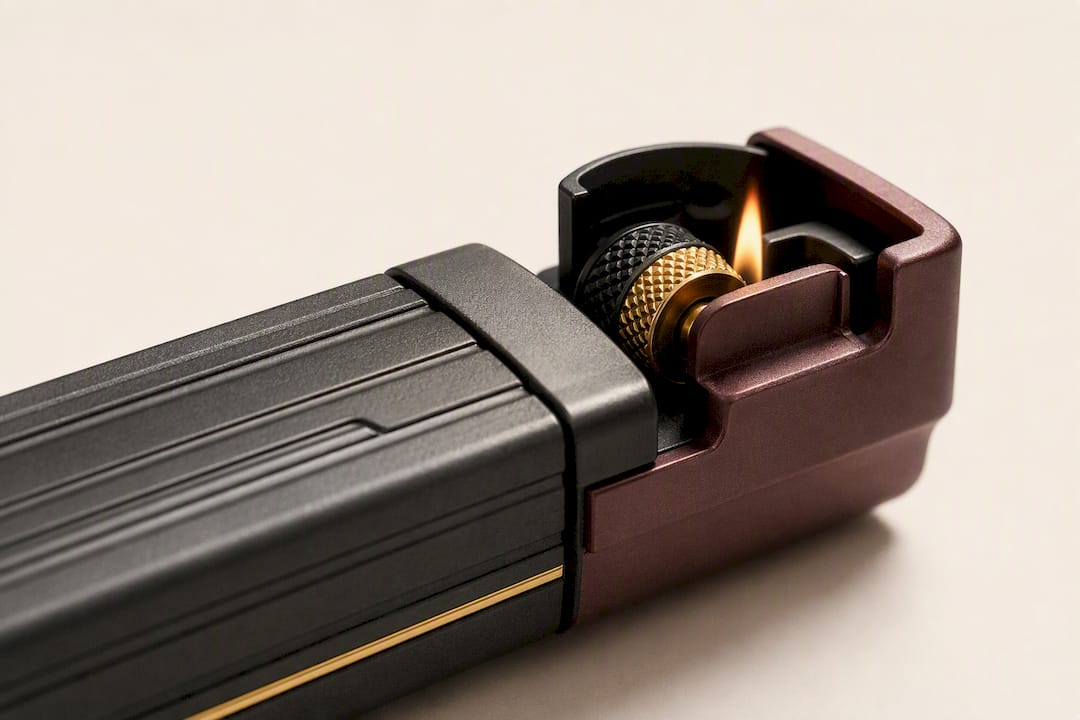
Lighters can be designed to be noticed, from steampunk mechanisms to gas tank replicas modeled after classic motorcycle tanks. None of that changes the physics. A flame is a flame whether it’s housed in brushed steel shaped like a hand grenade or a plain plastic disposable, and the safety rules above apply the same way to every design on our shelves.
What we can control is the mechanism and the materials. What you control is behavior: where you store it, who can reach it, and how long you let it burn. Collectors handling vintage-style pieces should apply the same locked-cabinet thinking they’d use for any small, flame-producing object, regardless of how good it looks on a shelf.
— Allurecart
Choosing a Lighter That Looks Good and Behaves Well
A well-made lighter should earn its place in your pocket or on your shelf, not just its price tag. If you’re shopping for something with more character than a gas station disposable, some designs are worth a look, provided you pair them with the habits covered above.
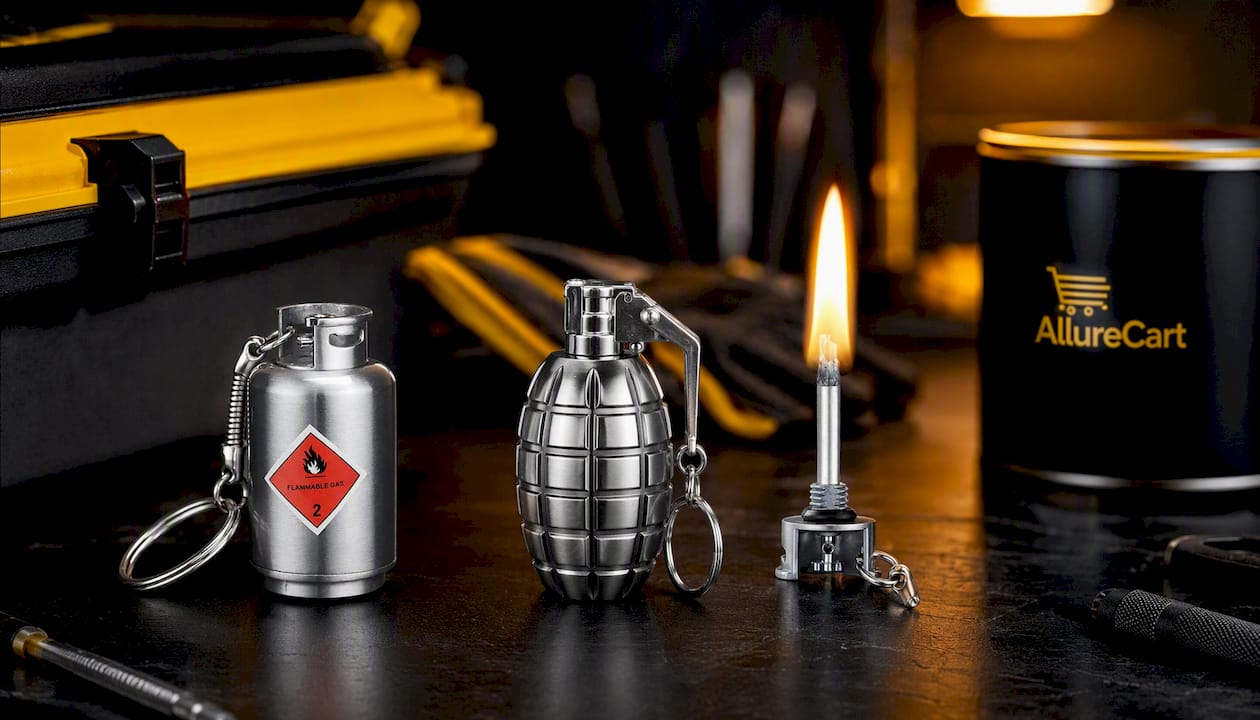
The Extinguisher Lighter is a pocket-sized flame source shaped like a firefighting icon. Follow the same rule you’d apply to any lighter: keep the flame brief, let the casing cool, and store it away from kids when it’s not in hand. The Grenade Lighter has a bold, novelty-adjacent shape that demands extra caution around children specifically because of its toy-like silhouette. Lock it away rather than leaving it on a coffee table. The Gas Tank Lighter features vintage motorcycle style in a compact metal body. Treat the housing like any torch-style unit: let it cool before pocketing it. Some orders may include benefits such as free worldwide shipping, and purchase pages can include handling guidance worth reading thoroughly. Browse the full lighter collection to find a design that fits your style and your storage habits.
Sources
- CPSC — Lighters FAQ
- PART 1210—Safety standard for cigarette lighters (16 CFR part 1210)
- Matches and Lighter Safety - Washington State Patrol
- Match and Lighter Safety — Utah State Fire Marshal
FAQ
What are the basic safety precautions for using a lighter?
Hold it vertically, keep your hand below the flame, avoid loose clothing near the fire, limit continuous burn time, and never light one near aerosols or solvents.
Why do some people remove the child-resistant safety on a lighter?
Some adults find the extra resistance mechanism harder to operate one-handed and disable it for convenience, but doing so removes a federally required safeguard and makes the lighter far more dangerous around children.
What happens if you keep a lighter lit for too long?
The metal casing overheats, the flame can grow unpredictable, and prolonged use raises the risk of the fuel valve failing or the housing burning your hand; guidance generally advises against continuous flames beyond about ten seconds.
How do you avoid getting burned by a lighter?
Keep your fingers below the flame line, hold the lighter at arm’s length when igniting something like a grill, and stop the instant the casing feels warm rather than waiting for it to feel hot.
Are child-resistant lighters completely safe around kids?
No lighter is child-proof. CPSC standards require resistance to at least 85% of tested children, which still leaves a real margin, so storage and supervision matter just as much as the mechanism itself.