

Short answer: there’s no federal minimum age to buy an ordinary lighter in the United States. No nationwide law sets a lighter purchase age the way Tobacco 21 sets one for cigarettes. What actually restricts you at the register is a mix of narrow state statutes, novelty-lighter bans, and store-level policy, not a single federal rule.
That gap between “no federal law” and “still got carded” trips up a lot of buyers. Here’s what actually governs the sale:
- CPSC: The Consumer Product Safety Commission regulates how lighters are built for child resistance, not who can buy them.
- State statutes: Virginia’s Code § 18.2-371.4 bans selling novelty lighters to anyone under 18, and other states have similar carve-outs.
- Retailer policy: Most chains set their own 18+ rule at the register, enforced through point-of-sale prompts rather than law.
Allurecart put this guide together because our own customers, many of them collectors and gift buyers, kept asking why some stores wave them through and others don’t. If you’re heading to the counter today, the safest move is simple: carry a valid ID anyway. It resolves most confusion very quickly.
Key Takeaways
No single federal law sets a lighter age limit; purchase restrictions come from a patchwork of state novelty and fuel statutes plus voluntary retailer policy.
| Point | Details |
|---|---|
| No federal age law | The CPSC regulates lighter design safety under 16 CFR Part 1210, not who can buy one. |
| State rules target products, not ages | Virginia and similar states ban novelty lighter sales to minors; the penalty usually falls on retailers. |
| Fuel gets its own rules | Pennsylvania restricts furnishing butane to minors separately from finished lighter sales. |
| Carding is usually policy, not law | Most 18+ ID checks come from retailer POS systems, not a statute requiring them. |
| Allurecart sells compliant collectibles | Designs like the Match Lighter and Bullet Shell Lighter avoid novelty-shape restrictions while offering genuine collectible appeal. |
Table of Contents
- How U.S. Law Treats Lighters: Federal vs. State vs. Local
- Which States Restrict Novelty or Fuel-Based Lighter Sales?
- Why Do Stores Ask for ID When Buying a Lighter?
- Do Butane and Refill Fuel Have Different Age Rules Than Lighters?
- What To Do If a Store Refuses to Sell You a Lighter
- Publisher Note: Allurecart’s Disclosure and Safety Commitments
- Where Did Lighter Age Limit Laws Come From?
- Why Do These Restrictions Exist in the First Place?
- What Happens If Someone Sells or Possesses a Lighter Underage?
- How Does This Compare to Matches and Fireworks Regulation?
- Do Lighter Restrictions Actually Reduce Youth Smoking or Fires?
- Our Take: Stop Treating This Like a National Age Law
- Skip the Novelty-Ban Guesswork With a Compliant Collectible
- Sources
How U.S. Law Treats Lighters: Federal vs. State vs. Local
Federal law splits the lighter question into two separate lanes, and conflating them is where most confusion starts. The CPSC regulates lighter design, requiring child-resistant mechanisms under 16 CFR Part 1210. It does not regulate who can walk up to a register and buy one.
That standard exists because young children were getting their hands on disposable lighters and starting fires. Under 16 CFR Part 1210, a lighter has to resist activation by most children in the 42 to 51 month age range during standardized testing. It’s a manufacturing and import requirement, enforced against companies that make or sell noncompliant lighters, not a rule that asks a cashier to check a customer’s birth date.
Tobacco 21, the federal law that raised the purchase age for cigarettes, e-cigarettes, and other tobacco products to 18, simply doesn’t mention lighters at all. Lighters aren’t tobacco products, so they fall outside that law’s scope entirely. This is the single biggest source of public confusion on the topic: people assume that because you need to be 18 to buy cigarettes, you must need to be 18 to buy the thing that lights them. Federal law draws no such line.
Where states step in, they tend to regulate one of two things instead of buyer age directly:
- Product type: Banning novelty lighters shaped like toys, cartoon characters, or guns, regardless of who’s buying.
- Fuel type: Restricting sale of butane or refill canisters to minors, separate from the finished lighter itself.
Pennsylvania’s Title 18 § 6315 is a good example of the second approach. It targets furnishing butane to minors specifically, which is a different legal question than “how old do you have to be to buy a lighter.”
The result is a genuine patchwork. A shape that’s perfectly legal to sell in one state might trigger a civil penalty for the retailer in another. If you’re buying online and having something shipped across state lines, or you’re a retailer stocking novelty items, checking your specific state and municipal code is the only way to get a reliable answer. National guides, including this one, can only describe the pattern. They can’t substitute for reading your own state’s statute.
Which States Restrict Novelty or Fuel-Based Lighter Sales?
Most of the meaningful legal action on lighter age limits happens at the state level, and it clusters around two categories: lighters that look like something other than a lighter, and the fuel that refills them. Here’s how several commonly cited states approach it.
Virginia treats novelty lighters as a distinct legal problem. Under Va. Code § 18.2-371.4, selling a novelty lighter, one designed to look like something appealing to children, to a person under 18 is a civil violation, with penalties that fall on the retailer rather than the buyer. The law isn’t about age-gating lighters generally. It’s about keeping child-attractive designs out of young hands.
Pennsylvania takes a fuel-focused approach. Its statute, 18 Pa.C.S. § 6315, restricts furnishing butane to minors, which means the age gate sits on the refill canister, not necessarily on every finished lighter sold in the state.
Several other states have adopted what’s often called a “shape-blind” safety standard, meaning the rule applies based on the product’s design or resemblance to a toy, independent of the purchaser’s age entirely. Novelty lighter restrictions in states like California, Connecticut, Wisconsin, Tennessee, Illinois, and New York generally fall into this category, following patterns tracked by the Lighter Association’s state law summaries. California’s own legislature continues to update relevant statutory language, visible in current bill text on novelty and safety standards.
Here’s a simplified breakdown of what each type of state rule actually targets:
| State/Approach | What It Restricts | Who Faces Penalty |
|---|---|---|
| Virginia | Sale of novelty lighters to under-18 buyers | Retailer (civil violation) |
| Pennsylvania | Furnishing butane fuel to minors | Person who furnishes the fuel |
| California, Connecticut, Wisconsin | Novelty/shape-based lighter designs regardless of buyer age | Manufacturer or retailer of noncompliant product |
| Tennessee, Illinois, New York | Similar shape-blind novelty restrictions | Manufacturer or retailer of noncompliant product |
A few things stand out once you line these up side by side. First, none of these statutes create a universal “you must be 18 to buy any lighter” rule. They target specific product categories, novelty shapes or refill fuel, and leave standard butane and refillable lighters largely untouched by state age law. Second, the penalty structure usually lands on the seller, not the buyer, which is a meaningful distinction if you’re a retailer trying to understand your own liability.
It’s also worth remembering that state statutes aren’t the end of the story. Cities and counties can layer additional restrictions on top of state law, particularly around fire safety ordinances in areas with elevated wildfire risk. If you’re stocking a store or running an online shop that ships into multiple states, checking your specific municipal code matters just as much as checking the state statute. A rule that’s silent at the state level might still exist at the city level, and there’s no single national database that captures every local ordinance.
Why Do Stores Ask for ID When Buying a Lighter?
Retailers card for lighters far more often than any law requires, and the reason comes down to internal policy rather than statute. A store can lawfully refuse to sell almost any product for non-discriminatory business reasons, and many corporate chains have simply decided that a blanket 18+ policy is easier to enforce consistently than trying to track which specific lighter shapes trigger which specific state law.
This is where most of the public confusion actually originates: people get carded, assume there’s a law behind it, and repeat that assumption online. In reality, point-of-sale systems at many chains are programmed to prompt a cashier for ID verification on lighter purchases automatically, the same way they’d flag alcohol or certain over-the-counter medications. It’s a loss-prevention and liability-management decision, not a legal mandate.
Policy varies noticeably by retailer type:
- Convenience stores tend to have the strictest and most consistent carding practices, often tied directly to their POS software.
- Big-box retailers sometimes apply the policy unevenly across locations, depending on local management and state.
- Online retailers generally rely on age-verification checkboxes or billing information rather than a physical ID check at delivery.
None of this means the practice is arbitrary or something to fight at the counter. Store policy exists because a retailer would rather lose one sale than face liability questions down the line, especially with novelty items that resemble toys.
Pro Tip: Keep a photo ID in your wallet even for routine purchases like lighters. It costs you nothing, and it eliminates the single most common reason a legal purchase gets held up at checkout.
Do Butane and Refill Fuel Have Different Age Rules Than Lighters?
Yes, and this is one of the more overlooked distinctions in lighter law. Refill fuel, particularly butane canisters, sometimes carries its own separate age restriction even in states where the finished lighter itself faces no age-based sale rule at all.
Pennsylvania’s statute is the clearest example: 18 Pa.C.S. § 6315 restricts furnishing butane to minors specifically, independent of whether the lighter it fuels is legal to sell to any age. The logic behind fuel-specific rules generally traces back to inhalation-abuse concerns rather than fire risk from the lighter itself. Butane has a history of misuse when inhaled directly, which is a very different hazard profile than a child accidentally triggering a lighter’s flame.
Novelty-lighter bans work on an entirely separate axis. States that restrict novelty lighters, as cataloged across multiple state law pages, are reacting to shape and design, not the buyer’s age. A lighter shaped like a toy gun or cartoon character can be prohibited from sale entirely in some jurisdictions, meaning no amount of ID at the register would make that specific product legal to sell there. The restriction sits on the product category, not the transaction.
Collectible and refillable metal lighters generally sit outside both of these special categories. A well-made refillable lighter, the kind built for durability and repeated use rather than disposal, typically doesn’t resemble a toy and doesn’t ship pre-filled with butane in a way that triggers refill-fuel statutes. That’s a meaningful distinction for anyone shopping for a lighter as a collectible piece rather than a disposable convenience-store item: the design itself keeps it out of the categories most states actually regulate.
What To Do If a Store Refuses to Sell You a Lighter
Getting stopped at the register over a lighter purchase is rarely about you personally, and there’s a straightforward sequence for handling it without friction.
- Present valid ID immediately. This resolves the overwhelming majority of holdups, since most carding is routine policy rather than a response to anything specific about your purchase.
- Ask what policy or law is being enforced. A manager can usually tell you whether it’s a corporate 18+ rule, a state statute tied to the specific product, or a local ordinance.
- If refused outright, try a different retailer or buy online. A compliant, non-novelty lighter shipped directly to your address sidesteps most in-store policy variation entirely.
- If the refusal feels discriminatory rather than policy-based, document the interaction (time, location, what was said) and raise it with the store’s corporate customer service line.
Whatever the outcome at the counter, the safety reminder underneath all of this doesn’t change: keep any lighter, novelty or otherwise, away from young children. That’s the actual public safety concern the CPSC’s child-resistance standard was built to address, and it matters regardless of who bought the lighter or how old they were at checkout.
Pro Tip: If you’re buying a collectible or gift lighter and want to avoid any register-side uncertainty entirely, ordering online from a retailer that ships compliant, non-novelty designs removes the guesswork completely.
Publisher Note: Allurecart’s Disclosure and Safety Commitments
Allurecart wrote this guide, and we’re also a seller of collectible and novelty-styled lighters, so it’s worth being direct about that. This article is meant to give you clear legal information, not a neutral vendor roundup of every lighter brand on the market. We have a stake in the category we’re explaining.
That said, the products we design are built with compliance in mind, not around evading the novelty restrictions detailed above. Three pieces from our current lineup illustrate the range:
- The Match Lighter, a design that channels vintage match-strike aesthetics into a modern refillable format.
- The Bullet Shell Lighter, a firearm-inspired collectible built for enthusiasts who want something with genuine presence.
- The Vintage Trench Lighter, a durable, refillable design rooted in wartime lighter history rather than toy-shaped novelty.
We believe collectors and gift buyers deserve pieces that are as reliable in the hand as they are striking to look at, without the ambiguity that comes with a shape a retailer might flag.
Orders over $70 ship free worldwide, a policy detailed on our shipping protection page.
If you’re shopping for something that pairs solid craftsmanship with a design unlikely to trip novelty-lighter statutes, our full lighter collection is where to start.
Where Did Lighter Age Limit Laws Come From?
Lighter regulation in the U.S. didn’t start with age at all. It started with fire. Early federal attention in the late 20th century focused almost entirely on child-resistance design after a string of house fires traced back to young children playing with disposable lighters. That pressure led directly to the CPSC’s child-resistance mechanism requirements, finalized under 16 CFR Part 1210, which targeted manufacturers rather than buyers.
Novelty-lighter concerns emerged as a separate, later wave of legislation. Lawmakers in states like Virginia noticed that lighters shaped like toys, cartoons, or everyday objects were especially appealing to children and harder for parents to identify as fire hazards in the home. That’s what produced statutes like Va. Code § 18.2-371.4, which target the seller’s conduct rather than setting a blanket purchase age.
Fuel-specific rules, like Pennsylvania’s butane restriction, developed along yet another track tied to inhalation-abuse concerns among teens rather than fire safety at all. Each of these three regulatory threads, design safety, novelty shape, and fuel access, evolved somewhat independently, which explains why the resulting law never coalesced into one clean federal purchase age the way tobacco regulation eventually did.
Why Do These Restrictions Exist in the First Place?
Every restriction discussed in this guide traces back to one of two concerns: accidental fire risk or intentional misuse. Child-resistance design standards exist because young children, curious and imitative, can and do activate ordinary lighters if the mechanism is too easy to operate. The CPSC’s testing threshold reflects a specific, studied risk window in early childhood development, not a general assumption that children are dangerous around fire.
Novelty-lighter bans address a related but distinct problem: a lighter that looks like a toy gets treated like a toy, especially by kids too young to understand what it actually is. A cartoon-shaped lighter left on a coffee table reads very differently to a four-year-old than a plain metal one does. States that ban these designs are targeting that misidentification risk directly.
Fuel restrictions sit on different ground entirely. Butane misuse among teens, particularly inhalation, is a documented pattern that has nothing to do with fire risk and everything to do with substance access. Restricting who can buy refill canisters addresses that specific harm without needing to touch the finished lighter market at all.
None of these rationales support the popular assumption that a general “lighter age limit” law exists nationwide. They support narrow, purpose-built restrictions on specific products and specific harms.
What Happens If Someone Sells or Possesses a Lighter Underage?
Consequences depend entirely on which specific rule got broken, since there’s no uniform underage-possession offense tied to ordinary lighters anywhere at the federal level. Where Virginia’s novelty-lighter statute applies, the penalty falls on the retailer as a civil violation, not on the minor who attempted the purchase. That’s a meaningful structural choice: lawmakers built the deterrent around the seller’s compliance, not the buyer’s conduct.
Pennsylvania’s fuel-furnishing statute works similarly, placing legal exposure on whoever supplies butane to a minor rather than on the minor receiving it. Simple possession of an ordinary lighter by a minor isn’t a criminal offense in the vast majority of states, since lighters aren’t classified as contraband the way alcohol or tobacco are.
Where things escalate is when a lighter, of any age or design, gets used to start a fire that causes property damage or injury. At that point, the legal exposure shifts entirely away from purchase-age questions and into arson, reckless endangerment, or juvenile justice territory, governed by an entirely different body of law than anything discussed in this guide. The purchase-age question and the fire-outcome question are legally separate, even though they get conflated constantly in casual conversation.
How Does This Compare to Matches and Fireworks Regulation?
Lighters sit in noticeably lighter regulatory territory than two products people often mentally group them with: matches and fireworks. Matches face essentially no federal or widespread state age restriction at all, treated as an everyday household item with no purchase gate in nearly every jurisdiction. If lighters seem loosely regulated, matches are regulated even less.
Fireworks sit at the opposite end of the spectrum entirely. Most states that allow consumer fireworks sales impose explicit purchase age minimums, commonly 18, enforced directly at the point of sale with far more consistency than anything in lighter law. Several states ban consumer fireworks outright regardless of age. That’s a fundamentally different regulatory posture: fireworks carry acute, immediate injury risk from the product itself during use, which justifies a more direct age-based gate than anything lighters present.
The comparison is useful precisely because it shows how the regulatory response tracks the actual risk profile of the product. Matches present minimal packaged risk, so they get minimal regulation. Fireworks present significant acute risk during use, so they get direct age-based purchase restrictions. Lighters present a specific, narrower risk profile centered on child access and novelty misidentification, which is exactly why the resulting laws target design and shape rather than a universal buyer age.
Do Lighter Restrictions Actually Reduce Youth Smoking or Fires?
The honest answer is that lighter-specific restrictions were never primarily designed to curb youth smoking at all. That job belongs to Tobacco 21 and related nicotine-product laws, which regulate cigarettes, vapes, and other tobacco items directly. Lighter law operates on a parallel but separate track focused on fire safety rather than substance access.
Where lighter regulation does show a clearer connection is fire-related injury prevention, particularly among young children rather than teens. The CPSC’s child-resistance standard was built specifically to reduce accidental fires started by children under five, a population that isn’t buying lighters at all but is gaining access to them left around the house. The design standard, not a purchase-age law, is doing the heavy lifting on that specific outcome.
Novelty-lighter bans occupy a middle ground, aimed at reducing the odds that a child mistakes a lighter for a toy in the first place, which indirectly supports the same fire-prevention goal the CPSC standard targets through a different mechanism. Whether these combined measures meaningfully move youth smoking rates specifically is a much harder claim to support with the tools lighter law actually uses. The regulatory design here targets fire safety and product misidentification, not adolescent tobacco access, and it’s worth being skeptical of anyone who frames a lighter law as a smoking-prevention measure.
Our Take: Stop Treating This Like a National Age Law
The most common mistake people make on this topic is assuming a lighter purchase age works like the drinking age or Tobacco 21, one clean national number everyone can cite. It doesn’t, and treating it that way is what generates most of the online confusion.
What the research actually supports is narrower and more useful: check the specific product category (novelty shape or not), check the specific fuel type (butane refill or finished lighter), and check your specific state. Federal safety standards and state purchase restrictions are answering completely different questions, and conflating them gets you nowhere at the register.
If we had to prioritize one thing for readers to take away, it’s this: carrying ID costs nothing and resolves almost every register-level holdup, regardless of whether a law actually requires it. Beyond that, if you’re buying a lighter as a collectible rather than a convenience item, choosing a refillable, non-novelty design sidesteps nearly every state restriction covered in this guide entirely.
— Allurecart
Skip the Novelty-Ban Guesswork With a Compliant Collectible
If everything above made one thing clear, it’s that novelty shapes are where lighter law actually gets complicated, not the purchase itself. Allurecart’s collectible lighters are designed around striking aesthetics, steampunk, firearm-inspired, vintage military, without leaning on the cartoon or toy-shaped forms that trigger state novelty restrictions.
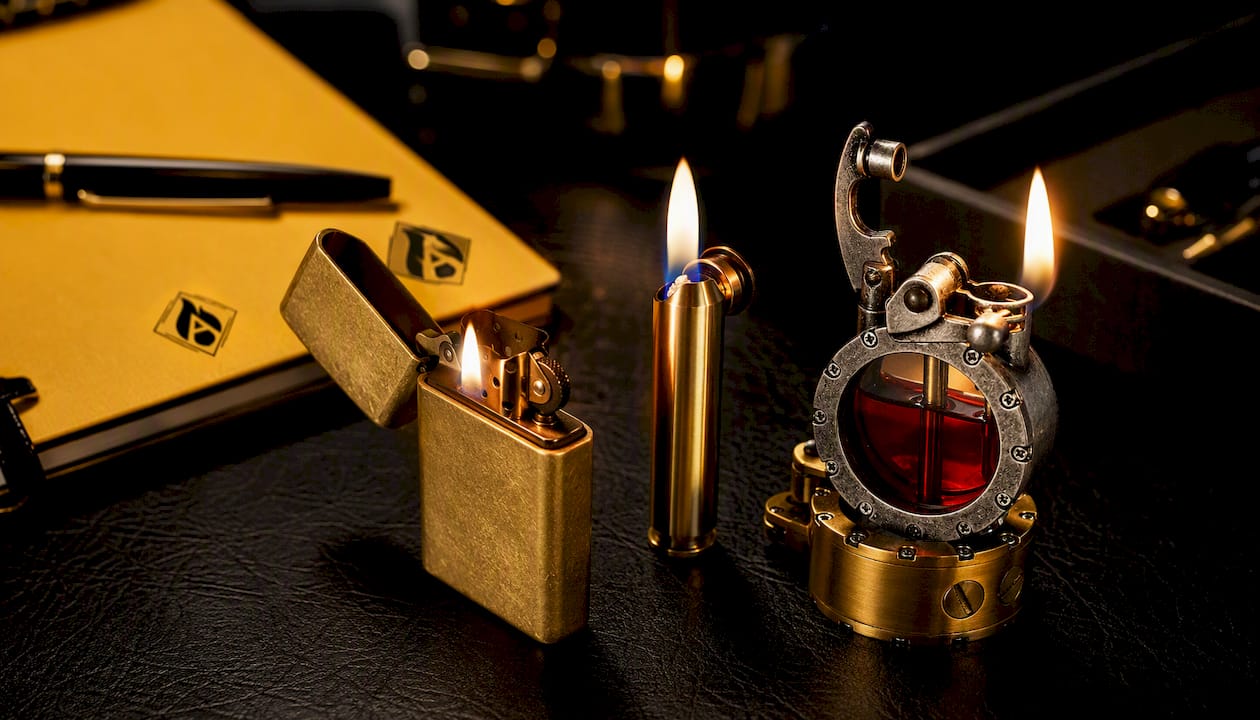
That’s the practical advantage for anyone reading this guide because they want a gift or a personal piece without wondering whether a specific design might get flagged somewhere. The Bullet Shell Lighter and Vintage Trench Lighter both lean into bold, adult-oriented design language rather than anything that reads as a toy, and every piece is built refillable rather than disposable, so it holds up as a genuine keepsake rather than a convenience-store impulse buy. Orders over $70 ship free worldwide, making it straightforward to build out a small collection in one order.
Browse the full lighter collection and pick a design that fits your style, then check out with confidence that you’re buying a piece built for durability and display, not a shape that’s going to raise questions at a register anywhere in the country.
Sources
For readers who want to verify anything in this guide against the primary source rather than a summary, these are the documents worth bookmarking:
- U.S. Consumer Product Safety Commission — Lighters FAQ
- Virginia Code § 18.2-371.4
- 18 Pa.C.S. § 6315 — Pennsylvania statute (butane/fuel restrictions)
- Lighter Association — State Laws
- LegalClarity — Do You Have to Be 18 to Buy a Lighter? (Apr 5, 2026)
- California legislative bill text (example state-level regulation)
State statutes change, and municipal ordinances aren’t always indexed in these state-level summaries, so checking your specific local code before making assumptions is always the safer move.