

Yes, you can insure a lighter collection, and most collectors underuse coverage that already fits their needs perfectly. Whether it is scheduled items, blanket coverage, a homeowners endorsement, or a standalone collectible policy, insurers have built products around exactly this kind of assortment. Before you call anyone, take three steps in the next 24 to 72 hours:
- Photograph and inventory every piece, front, back, and maker’s mark.
- Get a preliminary value estimate, even a rough one, so you know your total exposure.
- Check your current homeowners or renters policy for its stance on itemizing collectibles. Most cap unscheduled personal property far below what a serious collection is worth.
Do this correctly and you unlock agreed-value settlements, transit and exhibition coverage, and automatic protection for new acquisitions for a limited window. Skip it, and a fire or theft claim turns into a negotiation over receipts you never saved.
Key Takeaways
Insuring a lighter collection works best when detailed documentation, the right coverage structure, and agreed-value settlements on top pieces come together before a loss occurs.
| Point | Details |
|---|---|
| Insurance is available now | Scheduled items, blanket coverage, endorsements, and standalone policies all cover collectible lighters. |
| Build your inventory first | Photos, provenance, and purchase records speed up claims and support agreed-value negotiations. |
| Know your appraisal threshold | Formal appraisals are commonly required only above roughly $25,000 per item or set. |
| Report new acquisitions fast | Automatic coverage often lasts up to 90 days and caps near 25% of your itemized limit. |
| Shop with Allurecart in mind | Allurecart’s collectible lighters, from vintage to novelty designs, are pieces worth documenting and scheduling from day one. |
Resources Worth Sharing With Your Broker
- Personal collections insurance overview — Chubb
- Collector Insurance brochure — CollectInsure
- Private collections insurance — AXA XL
Table of Contents
- Types of Insurance That Can Protect a Lighter Collection
- How Insurers Value Collectible Lighters and When You Need an Appraisal
- What Drives the Cost of Lighter Collection Insurance
- Building an Inventory Documentation System That Survives a Claim
- Handling New Acquisitions Without Losing Coverage
- Buying Coverage: Brokers, Carriers, and What to Ask
- Claims, Exclusions, and Protecting Your Payout
- Protect Your Collection While You Keep Adding to It
- Frequently Asked Questions
- Sources
Types of Insurance That Can Protect a Lighter Collection
Four structures cover collectible lighters, and picking the right one comes down to how many pieces you own and how much any single item is worth. Scheduled (itemized) coverage lists each lighter individually with its own agreed value, ideal for rare or high-dollar pieces where you want a guaranteed payout, not a negotiation. Blanket coverage insures the whole collection under one limit, which suits collectors with dozens of modest pieces and no single standout. Endorsements or riders added to an existing homeowners policy work for smaller collections but often carry lower sublimits and stricter appraisal demands. Standalone specialty policies built for collectors, personal collections insurance among them, combine both blanket and scheduled options in a single contract.
The real decision is agreed value versus market or replacement cost. Agreed value locks in a payout amount before loss occurs, which matters enormously for a discontinued vintage piece with no clean market comparable. Market or replacement cost settlements depend on what a similar item sells for at claim time, which can shortchange you if the secondary market has cooled.
- Worldwide transit and exhibition coverage often comes standard.
- Some carriers offer $0-deductible options on collector policies.
- Specialist claims handlers understand collectible valuation better than general adjusters.
Pro Tip: If you display pieces at collector meetups or lend them for exhibitions, confirm transit coverage applies before the item leaves your house, not after something happens to it.
How Insurers Value Collectible Lighters and When You Need an Appraisal
Three valuation methods drive every claim payout, and knowing the difference before you file matters more than knowing it after. Agreed value fixes a dollar amount both you and the insurer accept upfront. Market value tracks what buyers are actually paying right now. Replacement cost covers what it takes to find a comparable item today, which for a rare Zippo variant or a discontinued novelty design might mean nothing is available at any price.
Appraisal thresholds vary by insurer, but a common pattern requires formal appraisals only above a set dollar amount per item or per set, sometimes around $25,000, while everything below that runs on your own documentation and purchase records. Specialty carriers tend to apply these liberal appraisal rules specifically so routine collections do not drown in paperwork over modest pieces.
- Single lighters approaching five figures in value.
- Matched sets or limited-run series with rising secondary-market demand.
- Any piece with documented provenance tied to a notable maker or event.
Pro Tip: Choose an appraiser with actual experience in vintage lighters or smoking memorabilia, not a general antiques generalist. Condition assessment on flints, hinges, and finish requires category-specific knowledge.
What Drives the Cost of Lighter Collection Insurance
Premiums come down to a handful of variables, and understanding them helps you negotiate rather than just accept the first quote. Total insured value sets the baseline, but the deductible you choose, blanket versus scheduled structure, home security measures, and how often you travel or exhibit pieces all move the number up or down.
- Total insured value and how it splits across scheduled versus blanket limits.
- Deductible choice, with some collector policies offering $0 options.
- Security features like safes, alarm systems, and monitored storage.
- Frequency of transit or public exhibition.
- Geographic risk factors, including local theft rates and flood exposure.
Scheduling your priciest individual lighters adds a little administrative work upfront but tends to reduce claim friction later, since the payout amount is already agreed rather than argued over. Optional riders for transit, exhibition, or off-site storage facility coverage add modest cost but close gaps that a standard blanket policy leaves open.
Building an Inventory Documentation System That Survives a Claim
A detailed inventory is the single most valuable asset you can build for your collection, and it costs nothing but time. Maintaining photos, acquisition dates, purchase prices, and provenance documentation speeds up claims dramatically and gives you real leverage when negotiating agreed value with an insurer.
Here’s what belongs in every entry:
- High-resolution photos from multiple angles, including close-ups of maker marks and serial numbers.
- Acquisition date, purchase price, and seller name.
- Provenance documents or certificates of authenticity, if any exist.
- Condition notes covering finish, mechanism function, and any repairs.
- Storage location and original receipts.
For a spreadsheet or inventory app, track these fields per item: title, maker, model, serial number, date acquired, purchase price, current estimated value, appraisal reference, photo link, and condition notes. A piece like a Camel Vintage Lighter or a Vintage Antique Bullet Shell Lighter deserves the same level of documentation as a high-end scheduled item, because insurers judge your record-keeping habits across the whole collection, not just the expensive pieces.
Pro Tip: Timestamp every photo automatically through your phone’s metadata, back up the full inventory to cloud storage, and keep one printed copy in a fireproof safe. A claim adjuster trusts a dated paper trail more than a memory.
Handling New Acquisitions Without Losing Coverage
Most specialty policies extend automatic coverage for newly acquired items for up to 90 days, capped at roughly 25% of your total itemized limit. Miss the reporting window and that new piece sits uninsured.
- Report high-value acquisitions to your insurer as soon as you can, not at renewal.
- Use a midterm endorsement if you add several pieces at once and exceed the automatic cap.
- Save routine, lower-value additions for your annual policy review.
If you’re buying frequently, ask your broker about a temporary limit increase rather than scrambling to schedule each item individually.
Buying Coverage: Brokers, Carriers, and What to Ask
Start by gathering your inventory and a preliminary valuation, then decide whether scheduling or blanket coverage fits your collection better. From there, request quotes from at least two specialty insurers or a broker who works with collector policies regularly, and compare wording line by line, not just price.
- Compile your full inventory with photos and estimated values.
- Get a preliminary or formal valuation depending on item thresholds.
- Decide on scheduled versus blanket structure, or a mix of both.
- Request quotes from specialty insurers and independent brokers.
- Compare policy language on agreed value, exclusions, and claims process.
Ask every broker or insurer directly: Do you offer agreed-value settlements? What triggers a formal appraisal requirement? Is transit and exhibition coverage included or an add-on? What sublimits apply to theft or mysterious disappearance? What deductible options exist?
- A specialty collector insurer usually makes sense once your collection tops a few thousand dollars in value or includes rare pieces.
- A homeowners endorsement can work for smaller, lower-value assortments, but check its sublimits carefully first.
Claims, Exclusions, and Protecting Your Payout
When you file a claim, expect a reporting deadline, a request for your inventory and receipts, an adjuster inspection or review, and a settlement based on whichever valuation method your policy specifies. This is where your documentation habits pay off directly.
Watch for these common exclusions and limits:
- Wear-and-tear and gradual deterioration, which most policies exclude outright.
- Mysterious disappearance clauses, which some carriers limit or exclude entirely.
- Transit exclusions that only kick in without prior notice to the insurer.
- Storage facility exclusions unless you’ve added specific off-site coverage.
Pro Tip: Keep original packaging when you can, never alter or annotate provenance documents, and always notify your insurer before shipping a high-value piece anywhere. That single phone call can be the difference between a covered claim and a denied one.
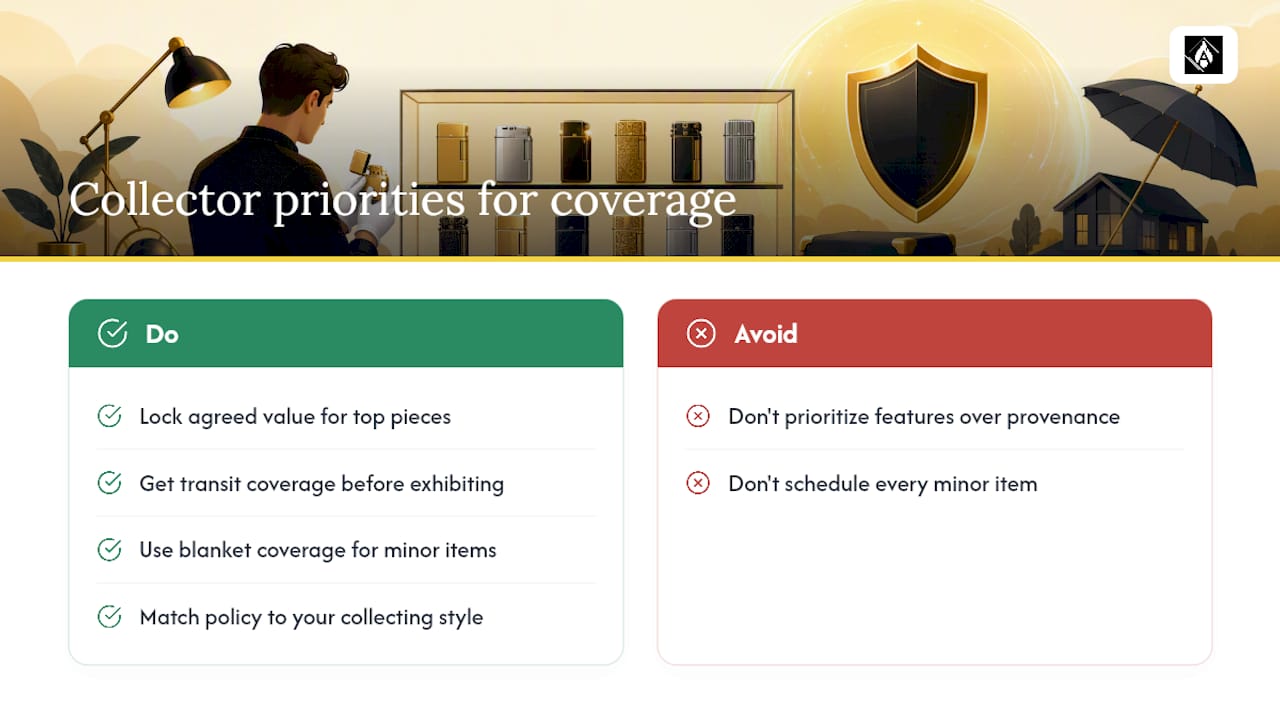
A Collector’s Priorities When Choosing Coverage
Proof of value and provenance matters more than any policy feature. Get agreed value locked on your top-tier pieces, secure transit coverage before you exhibit anything, and use blanket coverage for the rest rather than scheduling every minor item. Match your policy to how you actually collect, whether that’s display, trade, or long-term hold.
Protect Your Collection While You Keep Adding to It
Building a lighter collection worth insuring usually starts with pieces that stand out, not just accumulate. Allurecart’s catalog runs from steampunk mechanics to novelty firearm replicas to clean modern minimalism, giving collectors items with real character and resale interest rather than mass-produced filler.
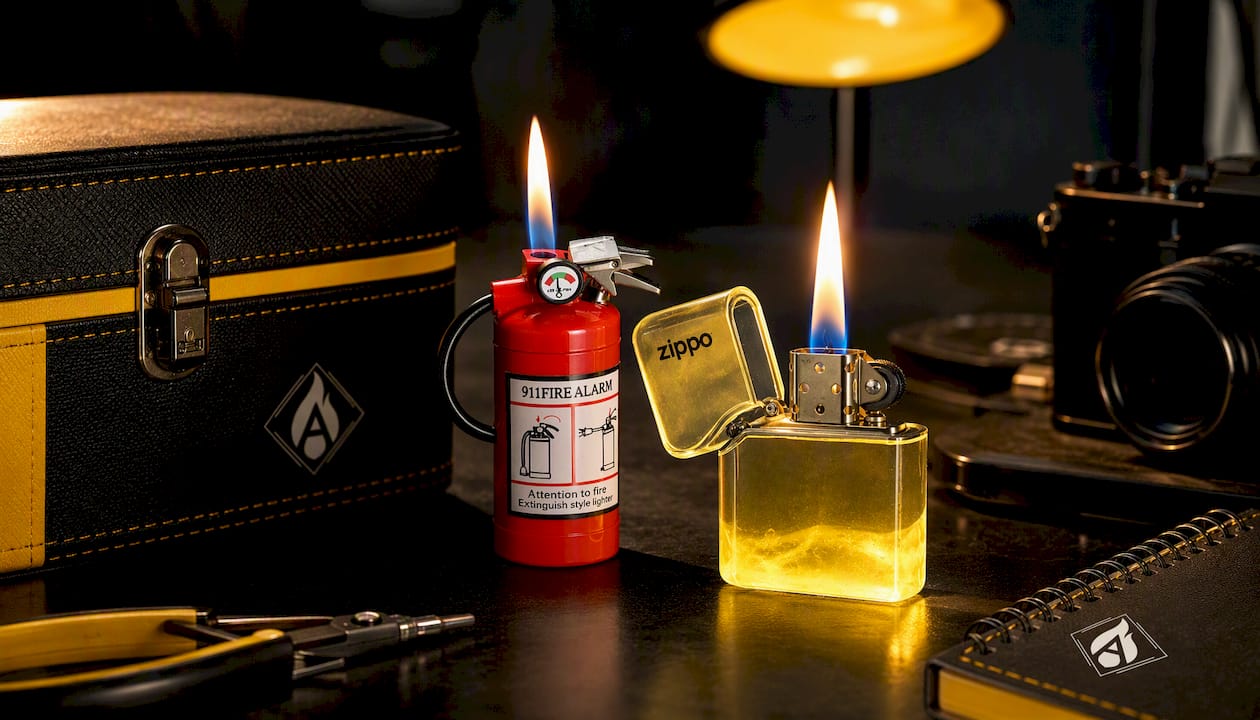
If you’re documenting a collection for appraisal purposes, pieces like the Classic Gold Lighter, the Ace of Spades Lighter, or the Camel Vintage Lighter make strong additions worth scheduling individually once your inventory is built. For collectors who exhibit pieces and need proper storage between showings, a display case setup from a specialist like Thor’s Cigar Vault pairs well with humidity and dust control for delicate mechanisms. Browse the full Allurecart collection to find your next piece, then log it, photograph it, and get it on your policy before it ever leaves the box.
Frequently Asked Questions
Can you really insure a lighter collection like fine art or jewelry? Yes. Specialty collector policies treat lighters the same way they treat coins, watches, or art: through scheduled items, blanket limits, or a hybrid of both.
Do I need a professional appraisal for every lighter I own? No. Most insurers only require formal appraisals above a set value threshold, often around $25,000 per item or set, with everything below relying on your own purchase and condition records.
What happens if I buy a rare piece mid-policy year?
Is blanket coverage or scheduling individual lighters better? Blanket coverage suits a large collection of moderate-value pieces, while scheduling makes sense for your rarest or most valuable items where you want a guaranteed agreed-value payout.
What’s excluded from most collectible lighter policies? Wear-and-tear, mysterious disappearance in some cases, and unreported transit or off-site storage are the most common gaps, so read your policy’s sublimits closely.

This article is general information, not a substitute for advice from a qualified financial advisor. Consult a qualified financial professional about your own circumstances before acting on anything here.
Sources
- Personal collections insurance — Chubb
- Does homeowners insurance cover collectibles? — Distinguished
- Collector Insurance brochure — CollectInsure (Feb 2025)