

An arc (plasma) lighter produces a high-voltage electrical discharge that ionizes the air between electrodes to form a hot plasma arc that ignites nearby material. That single mechanism replaces the fuel and flint of a traditional lighter with electronics, and understanding how arc lighters work means understanding four components working in sequence:
- A rechargeable lithium battery that stores the energy
- Boost/step-up circuitry (a driver IC, a MOSFET, and a transformer or coil) that multiplies voltage
- Electrodes with a precisely engineered gap where the arc actually forms
- Safety interlocks that keep the high-voltage circuit from firing accidentally
The payoff for all this engineering is simple: no fuel to run out, an arc that shrugs off wind, and a battery you charge instead of a canister you refill. The tradeoff is proximity. The plasma arc only spans a few millimeters, so whatever you’re lighting has to sit almost inside the device, not a few inches away like it can with a flame.
Key Takeaways
Arc lighters replace fuel and flame with a high-voltage electronic circuit that ionizes air into a conductive plasma channel across a millimeter-scale electrode gap.
| Point | Details |
|---|---|
| Core mechanism | A boost circuit steps a 3.7V battery up to thousands of volts, which ionizes air into plasma at the electrode gap. |
| Proximity is the limit | The arc spans only a few millimeters, so materials must sit almost against the electrodes to ignite. |
| Charge and ignition expectations | Most models recharge in under an hour and deliver a substantial number of candle ignitions per full charge. |
| Multi-electrode designs improve reliability | Crossed or redundant arcs reduce wandering and keep working if one electrode path degrades. |
| Allurecart maps design to function | The LUMINO LIGHTER, GLOW LIGHTER, and CLOCK LIGHTER apply these same electrode and battery principles in distinct housing styles. |
Table of Contents
- What Is Plasma, and Why Does This Type of Ignition Need High Voltage?
- How an Arc Lighter Actually Generates and Sustains the Arc
- Why Some Arc Lighters Use Two or Three Arcs Instead of One
- What to Realistically Expect From Charge Time and Ignition Count
- Handling an Arc Lighter Safely Day to Day
- Where Allurecart’s Lighters Fit Into This Engineering Picture
- Why the Physics Matters More Than the Marketing
- Find an Arc Lighter Built Around These Exact Principles
- Sources
What Is Plasma, and Why Does This Type of Ignition Need High Voltage?
Plasma is a gas that has been stripped of enough electrons to conduct electricity, sometimes called the fourth state of matter alongside solid, liquid, and gas. A candle flame is a chemical reaction releasing heat and light as a byproduct; an arc lighter skips the chemistry entirely and heats a channel of air directly with electric current. That channel only exists because the surrounding air has been forced to break down electrically.
Dry air is normally an excellent insulator. It resists electrical current until the voltage across a gap gets high enough to tear electrons off air molecules, a process called dielectric breakdown. At sea level, breakdown typically requires around 3,000 volts per millimeter of gap, which is why the electrodes in an arc lighter sit only a few millimeters apart. Widen that gap and the voltage requirement climbs fast, which is a core reason arc lighters can’t ignite anything more than a fraction of an inch away.
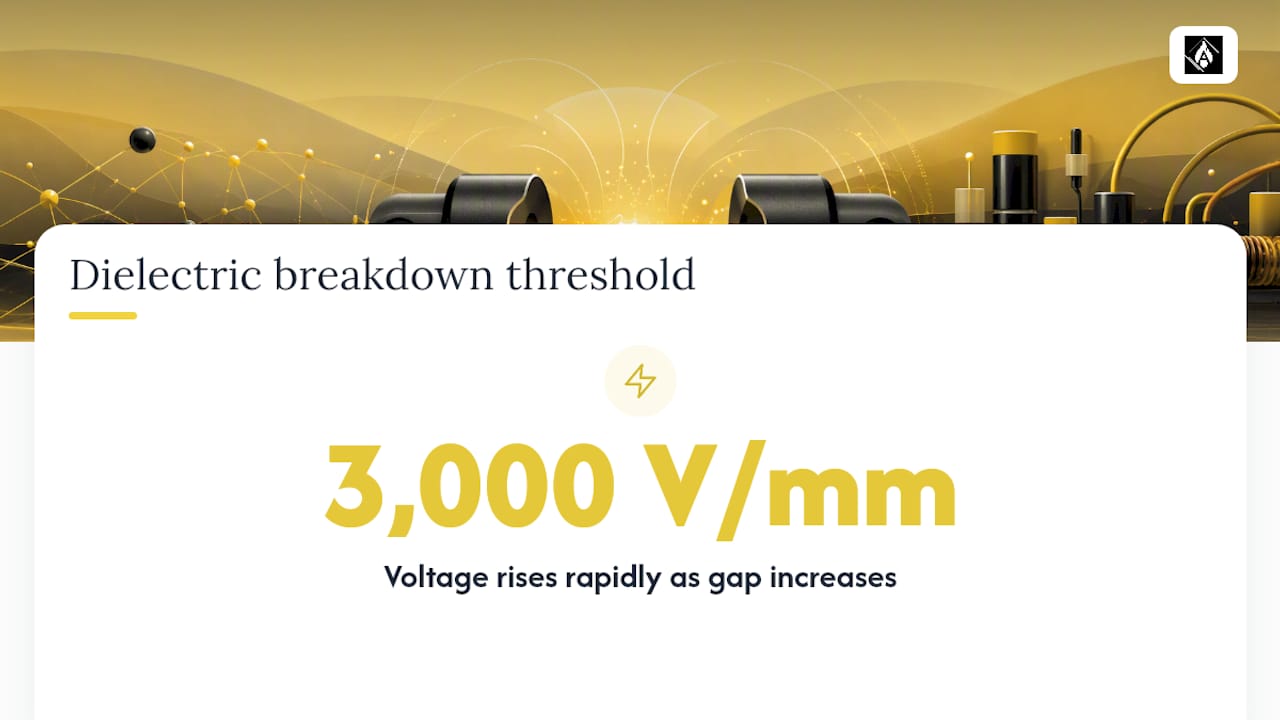
Lightning works on the identical principle at a wildly different scale. A thunderstorm builds up millions of volts across a gap measured in miles between cloud and ground, and when the air finally gives way, you get a flash you can see from ten miles off. An arc lighter produces the same physical event, just compressed into a gap smaller than a pencil eraser and a voltage low enough to run off a battery you charge over USB.
How an Arc Lighter Actually Generates and Sustains the Arc
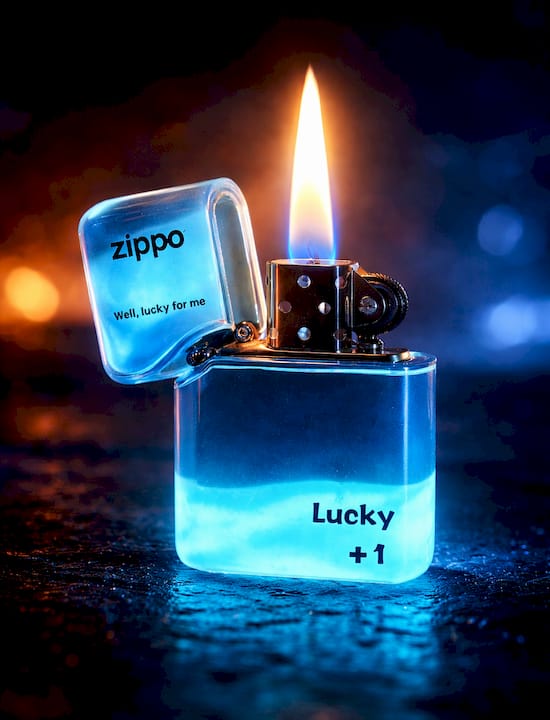
Here’s the part that trips people up: the battery inside a typical arc lighter is a standard 3.7-volt lithium cell, the same chemistry found in phone batteries and vape pens. That voltage alone cannot ionize air. You would need to hold two electrodes millimeters apart and somehow coax a spark out of 3.7 volts, and it simply won’t happen. Getting from “enough power to run an LED” to “enough voltage to ionize air” is the entire engineering problem, and it’s solved with a boost converter.
The circuit path looks like this: a driver IC generates a rapid switching signal, that signal drives a MOSFET on and off at high frequency, and the MOSFET’s switching pushes current through a ferrite-core step-up transformer. Every time the MOSFET interrupts current through the transformer’s primary winding, the collapsing magnetic field induces a much higher voltage spike on the secondary winding. Do that thousands of times a second and you get a train of high-voltage pulses instead of one flat DC voltage, which is exactly what breaking down air requires.
A teardown of a typical USB arc lighter documented on EDN found exactly this stack: a 3.7V flatpack lithium battery, a charging IC (commonly an LTC4054-type chip) managing the recharge cycle, a MOSFET switching at high frequency, and a small ferrite transformer stepping that switching action up into the multi-kilovolt range needed to jump the electrode gap. An oscilloscope capture of the driver output shows short, sharp voltage pulses rather than a smooth waveform, confirming the circuit isn’t holding a constant high voltage. It’s hammering the gap with repeated pulses until one clears the dielectric breakdown threshold.
The moment breakdown occurs, the physics changes completely. Ionized air is a far better conductor than neutral air, so once the arc strikes, it needs much less voltage to keep going than it needed to start. That’s why arc lighters can sustain a visible, buzzing arc on a battery that could never have started one from a cold, non-ionized gap.
Pro Tip: If your arc lighter starts firing weaker or more erratic arcs before it dies completely, check the electrode contacts first. Oxidation or a thin film of residue on the electrode tips raises the effective breakdown voltage needed, and that’s often the difference between a clean snap and a sputtering half-arc.
Failure modes generally trace back to one of three causes, according to EDN’s teardown analysis:
- Battery voltage sag under load, common as lithium cells age or discharge deeply, which starves the driver circuit of the power it needs to reach full pulse amplitude
- Electrode oxidation or contamination, which increases the effective gap resistance and raises the voltage needed to break down the air
- Driver component wear, where a degrading MOSFET or transformer can no longer deliver clean, high-amplitude pulses
None of this makes arc lighters fragile. It does mean the electronics are doing continuous, real-time work every single time you press the trigger, unlike a flint wheel that just needs a mechanical spark.
Why Some Arc Lighters Use Two or Three Arcs Instead of One
A single pair of electrodes works, but it has a quirk: the arc doesn’t always take the shortest, most predictable path. Air currents, tiny surface imperfections, and residual ionization from the last use can make a single arc wander or attach inconsistently. Engineers borrowed a fix from a much older field, classical spark-gap radio transmitters, where crossed or multiple electrode arrangements were used to stabilize discharge behavior long before plasma lighters existed.
- Crossed-arc geometry. Two or more electrode pairs are angled so their arcs intersect rather than run in parallel, which steers the discharge into a more repeatable path and reduces wandering.
- Redundant ionization paths. Wikipedia’s overview of lighter mechanisms notes that upgraded arc lighters commonly run two or three intersecting arcs so that if one electrode path degrades or fouls, another can still fire reliably.
- Form factor follows function. Wand-style arc lighters put the electrode tip at the end of a long stick, trading pocketability for reach, which matters for lighting gas stove burners or grill grates without hovering your hand over open flame. Pocket “crown” designs cluster the electrodes at the top of a compact body, prioritizing portability over reach, which works well for cigars and candles but struggles with recessed openings.
Housing design also has to account for child safety. Exposed electrodes carry a high-voltage arc, so most consumer models add a two-stage trigger, a button press followed by a slide or a second button, that makes accidental activation by small hands significantly less likely. Shielding around the electrode tips reduces the odds of brushing skin against a live contact without blocking access to whatever you’re trying to light.
What to Realistically Expect From Charge Time and Ignition Count
Most consumer arc lighters recharge over USB in under an hour, and Consumer Reports’ testing settled on a practical rule of thumb: expect at least 100 candle ignitions from a full charge. That number moves depending on how long you hold the trigger per use and whether the model runs a higher-power driver for a thicker, more forceful arc; more power per ignition means fewer ignitions per charge, the same tradeoff you’d see in any battery-powered tool.
What an arc reliably lights: exposed wicks, the edge of a piece of paper, the tip of a cigarette or cigar, dry kindling held close. What gives it trouble: recessed votive candle wicks sitting below a rim the electrodes can’t clear, and some gas stove burners where the ignition point sits deeper than the arc’s reach allows.
- Arcs are essentially unaffected by wind, since there’s no flame for moving air to disturb or blow out, which is the single biggest functional advantage over a fuel lighter outdoors.
- The tradeoff for that wind resistance is reach. An arc’s range is measured in millimeters, not the inch or two of clearance a torch flame gives you.
- Consumer Reports also found that lid shape and electrode placement, not raw arc power, usually decide whether a given model can reach a recessed wick at all.
For anyone lighting cigars outdoors where wind is a constant nuisance, that resistance advantage is a genuine reason to make the switch. Retailers like Thor’s Cigar Vault cater to exactly that use case, where a consistent light matters as much as the smoke itself.
Handling an Arc Lighter Safely Day to Day
Touching an arc lighter’s electrodes while it’s firing will sting and can burn, but it isn’t comparable to a self-defense stun device. The waveform, current profile, and design intent are completely different, and treating one like the other is a mistake worth correcting early.
- Never use an arc lighter to ignite an open gas or propane stream directly. The proximity required to strike the arc puts your hand closer to an uncontrolled ignition than a flame-based lighter ever would.
- Look for models with two-stage triggers if kids are anywhere in the house. A single exposed button next to a high-voltage arc is not something you want within reach of small hands.
- Store charged units away from metal objects that could bridge the electrode contacts, and charge on a stable surface rather than in a bag where the cable could get pinched.
- Wipe electrode tips clean periodically. EDN’s teardown coverage notes that oxidation and residue buildup raise the voltage needed to strike a clean arc, which is usually the first sign a unit needs cleaning rather than replacing.
Pro Tip: If an arc starts looking thin, orange, or hesitant instead of a crisp blue-white snap, that’s early oxidation talking. A quick wipe with a dry cloth or a soft brush on the electrode tips usually restores full performance before you’d ever need to consider the lighter worn out.
Where Allurecart’s Lighters Fit Into This Engineering Picture
Every design tradeoff covered above shows up somewhere in Allurecart’s catalog, because building a lighter that looks like a statement piece and fires reliably means respecting the same electrode geometry, battery management, and safety interlocks discussed throughout this piece.
- The GLOW LIGHTER pairs its illuminated housing with the multi-electrode reliability principles covered in the design section above.
- The LUMINO LIGHTER uses visible charge indication, a direct, practical answer to the “how much battery life do I have left” question every arc lighter owner eventually asks.
- The CLOCK LIGHTER folds working timepiece styling into the same electrode-and-driver architecture, proof that collectible design and functional plasma ignition aren’t mutually exclusive.
If you want to see the electrode gap and housing shielding discussed above in a physical product, the vintage watch lighter collection is a good starting point for comparing form factors side by side.
Why the Physics Matters More Than the Marketing
Most arc lighter marketing leans hard on “no fuel, no flame, works in wind,” and all three claims are true. What gets skipped is the honest tradeoff: you’re swapping fuel logistics for battery logistics, and swapping flame reach for millimeter-scale proximity. Neither is a downside if you know it going in. Both become annoyances if you expected an arc lighter to behave exactly like the butane torch it’s replacing.
The conventional advice treats charge time and ignition count as the only specs worth comparing. They matter, but electrode geometry matters just as much and gets almost no attention in casual buying guides. A single-electrode design and a crossed-arc design can carry identical battery specs and still behave completely differently in the wind or after six months of pocket lint exposure. That’s an engineering distinction, not a marketing one, and it’s the one Allurecart weighs heavily when sourcing designs for the catalog.
If you’re choosing an arc lighter for anything beyond novelty, prioritize electrode design and build quality over headline ignition counts. A lighter that strikes clean on ignition 400 beats one that hits a flashy number on the box but fouls after a season of real use.
— Allurecart
Find an Arc Lighter Built Around These Exact Principles
Everything covered above, the step-up circuitry, the electrode geometry, the tradeoffs between reach and portability, isn’t abstract engineering trivia. It’s the design brief Allurecart works from for every lighter in the catalog. Where a generic plasma lighter treats the electronics as a commodity part, Allurecart treats the housing, the electrode shielding, and the charge indicator as design elements worth getting right, not just functional enough.
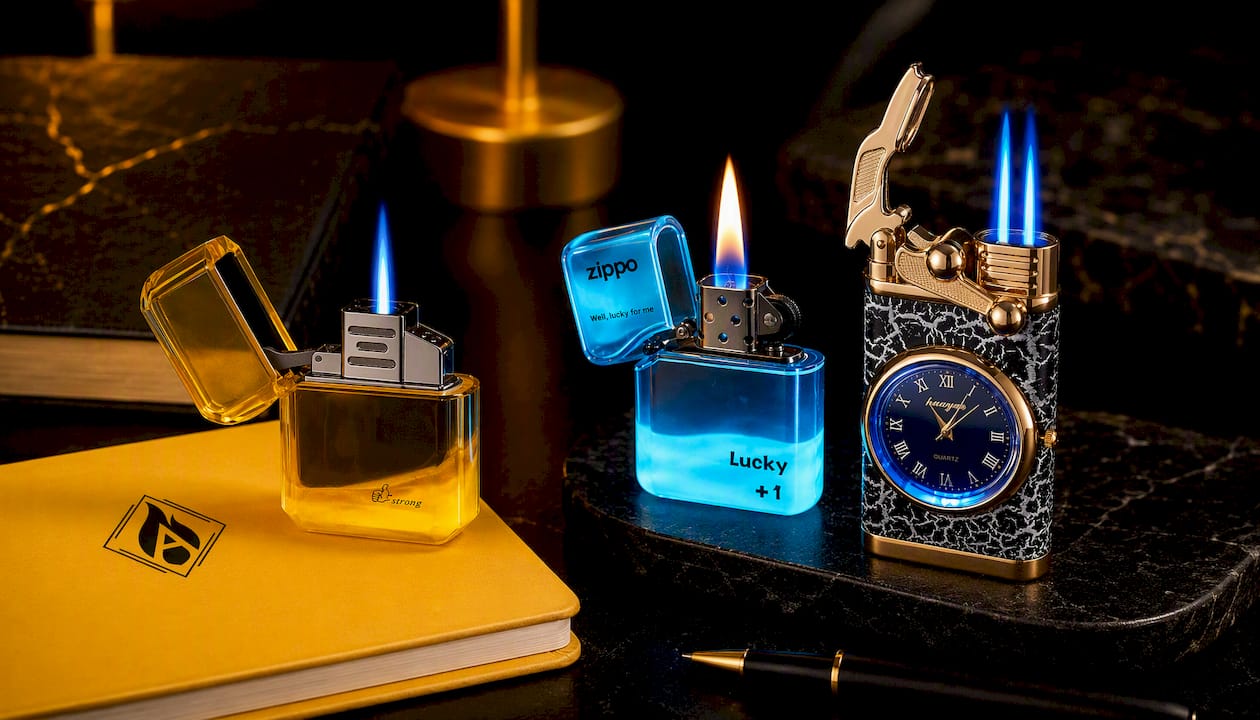
That shows up concretely in the lineup: the LUMINO LIGHTER gives you a visible charge readout so you’re never guessing how many ignitions you have left, and the GLOW LIGHTER applies the multi-electrode stability principles covered above without sacrificing a design that looks intentional in your hand rather than purely utilitarian. Every order over $70 ships free worldwide, so building out a small collection or picking up a gift alongside your own pick doesn’t add a shipping penalty at checkout. Browse the current lineup and pick the design that matches how you’ll actually use it, wand-style for reach or a compact crown for your pocket, and check out today.
Sources
- USB Arc Lighter - EDN
- 4 Best Plasma Lighters, Tested by Our Experts — Consumer Reports
- What is the working principle of electric arc lighters? — Physics Stack Exchange