

For a style-first everyday lighter, choose a metal flip-top with a soft flame; for outdoor or cigar use, choose a windproof torch; for a modern, minimalist statement, choose a plasma arc. The two criteria that decide everything else are material (weight and finish signal quality) and ignition type (matched to where you’ll actually use it). Once those two are locked in, the rest of choosing a stylish lighter is just matching a design language to your life, which is what the guide below walks through.
TL;DR:
- The choice of material affects weight and finish, with solid brass and stainless steel signaling higher quality than lightweight alloys.
- Ignition type should match your primary use, with soft flames for indoor and personal use, torch for outdoor or cigar use, and plasma arc for windproof, tech-savvy convenience.
- Refill and maintenance routines vary, with butane refillable in seconds, fluid models needing regular wicks and flint replacements, and plasma models requiring only occasional charging.
- Finish options like chrome and brass age differently, and maintenance should avoid abrasive polishes to preserve appearance.
- Price differences mainly reflect craftsmanship and materials, not ignition reliability, making affordability less of a performance factor.
Table of Contents
- What to Check Before You Choose a Stylish Lighter
- Which Lighter Style Actually Fits Your Aesthetic?
- How to Match a Lighter to the Occasion
- What Allurecart Looks for in a Well-Designed Lighter
- Three Allurecart Picks Mapped to How You’ll Use Them
- Sources
- FAQ
What to Check Before You Choose a Stylish Lighter
A lighter is one of the few objects you carry every day that people actually notice, which means the decision deserves more thought than grabbing whatever sits by the register. Six factors separate a lighter you’ll love in five years from one you’ll lose in five days.
Material and hand-feel. Solid brass and stainless steel carry real weight in the palm, and that heft is exactly what signals quality to collectors and casual owners alike. Lightweight zinc alloys cut cost and cut heft, which is fine for a spare but disappointing as a signature piece.
Flame and ignition type. Soft flame suits candles, indoor use, and pocket carry. Torch or jet flames burn hotter and resist wind, which matters for cigars and outdoor sessions. Plasma or arc ignition skips fuel entirely, using an electric current across two or four points, and it’s become the go-to for buyers who want a windproof, tech-forward tool with a rechargeable USB core.
Refill and maintenance. Butane lighters refill in seconds at any gas station. Fluid (naphtha) flip-tops need lighter fluid and occasional wick and flint swaps, a small ritual some owners genuinely enjoy. Plasma models just need a USB cable and a few minutes of charge time.
Finish and durability. Polished chrome, brushed steel, antique brass, and laser engraving all age differently. Plated finishes can wear at contact points over years; anodized aluminum resists scratching better but needs a soft cloth rather than abrasive polish to stay bright, according to maintenance guidance from The Fred Kiosk.
Price and what it buys. Roundups that survey the market consistently find Zippo sitting at the affordable end while specialist Japanese and European makers command premium pricing, and the gap between them is almost always about materials and finish, not core reliability. A $200 lighter isn’t lighting your cigarette better than a $30 one. It’s doing it in solid brass with a hand-polished case.
Safety basics. Look for a visible refill port you can inspect for leaks, a flame guard that prevents accidental contact, and, for households with kids, a resistant catch mechanism rather than a hair-trigger flip action.
- Weight in hand should feel deliberate, not hollow.
- Ignition type should match your primary use, not your fantasy use.
- Refill convenience matters more once the novelty wears off.
- Finish choice should account for how often it’ll be handled.
- Price premiums buy craftsmanship, not necessarily better sparks.
- Visible refill ports and sturdy catches matter more than they look.
Pro Tip: Buy for the use case you have this year, not the one you imagine having. A collector-grade flip-top that sits in a drawer does less for you than a $25 torch you actually reach for on camping trips.
Which Lighter Style Actually Fits Your Aesthetic?
Five stylistic categories cover almost every option on the market, and each one carries its own trade-off between looks and function.
Flip-top classics. The hinged metal case with a wind guard and exposed wheel is the most recognizable lighter silhouette in the world, and it earns its spot in nearly every best lighters roundup for good reason: durable construction, endless refillability, and a design language that hasn’t needed updating in decades. The trade-off is upkeep. Fluid evaporates even when unused, so these lighters require periodic refilling to remain ready for use.
Butane torch and jet. These push a concentrated, wind-resistant flame that cuts through gusty patios and cigar lounges alike, and manufacturers increasingly pair that performance with premium metal bodies suited for gifting rather than just utility. If you spend real time outdoors or you’re buying for a cigar habit, this is the category to shortlist first.
Plasma and arc. No fuel, no flame in the traditional sense. Just an electric arc that ignites almost anything in wind that would snuff out a match. The rechargeable, multi-spark design reads as minimalist and modern, which is why it’s become the default pick for buyers who want their lighter to look like a piece of tech rather than a piece of Americana.
Inverted and specialty grips. Angled nozzles and ergonomic bodies exist for a reason: lighting a pipe or a candle at an angle without burning your fingers. These are task-specific tools first, style objects second.
- Flip-top: best for collectors and daily ritual, needs regular fluid refills.
- Torch/jet: best for cigars and wind, rugged and gift-ready.
- Plasma/arc: best for modern minimalists, USB rechargeable.
- Inverted/specialty: best for pipe or candle tasks, ergonomic first.
- Novelty/themed: best for display and gifting, less ideal for daily pocket wear.
Novelty and themed pieces trade some daily practicality for personality. A steampunk gear-and-rivet design or a firearm-replica case makes a statement on a shelf or as a conversation-starting gift, though heavier ornamentation sometimes means a slightly bulkier carry than a plain flip-top.
How to Match a Lighter to the Occasion
Matching style to occasion keeps you from overpaying for features you won’t use, or underpaying for a piece that can’t handle the job.
- Everyday carry: Prioritize balanced weight (not so light it feels cheap, not so heavy it drags your pocket), a scratch-resistant finish, and butane refill convenience over fluid rituals.
- Formal occasions and gifts: Favor polished brass or chrome, engraving options, and presentation-ready packaging. A classic gold finish reads as intentional in a way a plain disposable never will.
- Outdoors and travel: Choose a windproof torch or plasma arc in a rugged metal shell built to survive drops and moisture.
- Collecting: Look at limited production runs, solid metal construction, and provenance. Heavier brass and steel bodies hold perceived value better over time than lightweight alloys, and design commentary has long noted that owning several lighters for different contexts is common among serious collectors and design-conscious buyers.
Maintenance is the part most buyers skip until something stops working. Fluid flip-tops need a refill every one to three weeks depending on use, plus wick and flint replacement every few months. Butane torches need refilling less often but benefit from an occasional purge-and-refill to clear air bubbles. Plasma models just need a charge before a trip, since a dead battery is the only real failure point.
Pro Tip: Polish plated or brass finishes with a gentle metal polish and a soft cloth. Never use abrasive polish on anodized coatings; it strips the color instead of restoring shine.
What Allurecart Looks for in a Well-Designed Lighter
Allurecart builds around one belief: a lighter should hold its own as a design object, not just a tool you’re embarrassed to pull out. That means steampunk gear work, modern minimalist lines, and engraved novelty pieces sit in the same catalog, each held to the same standard of reliable spark ignition regardless of how ornate the case gets.
Every piece is meant to double as a statement, something you’d display as readily as carry, whether it’s a bullet-shell antique design or a clean chronometer face. Orders over a certain amount ship free worldwide, and purchases carry a warranty against manufacturing defects, so the aesthetic risk associated with bold designs doesn’t extend to reliability risk.
— Allurecart
Three Allurecart Picks Mapped to How You’ll Use Them
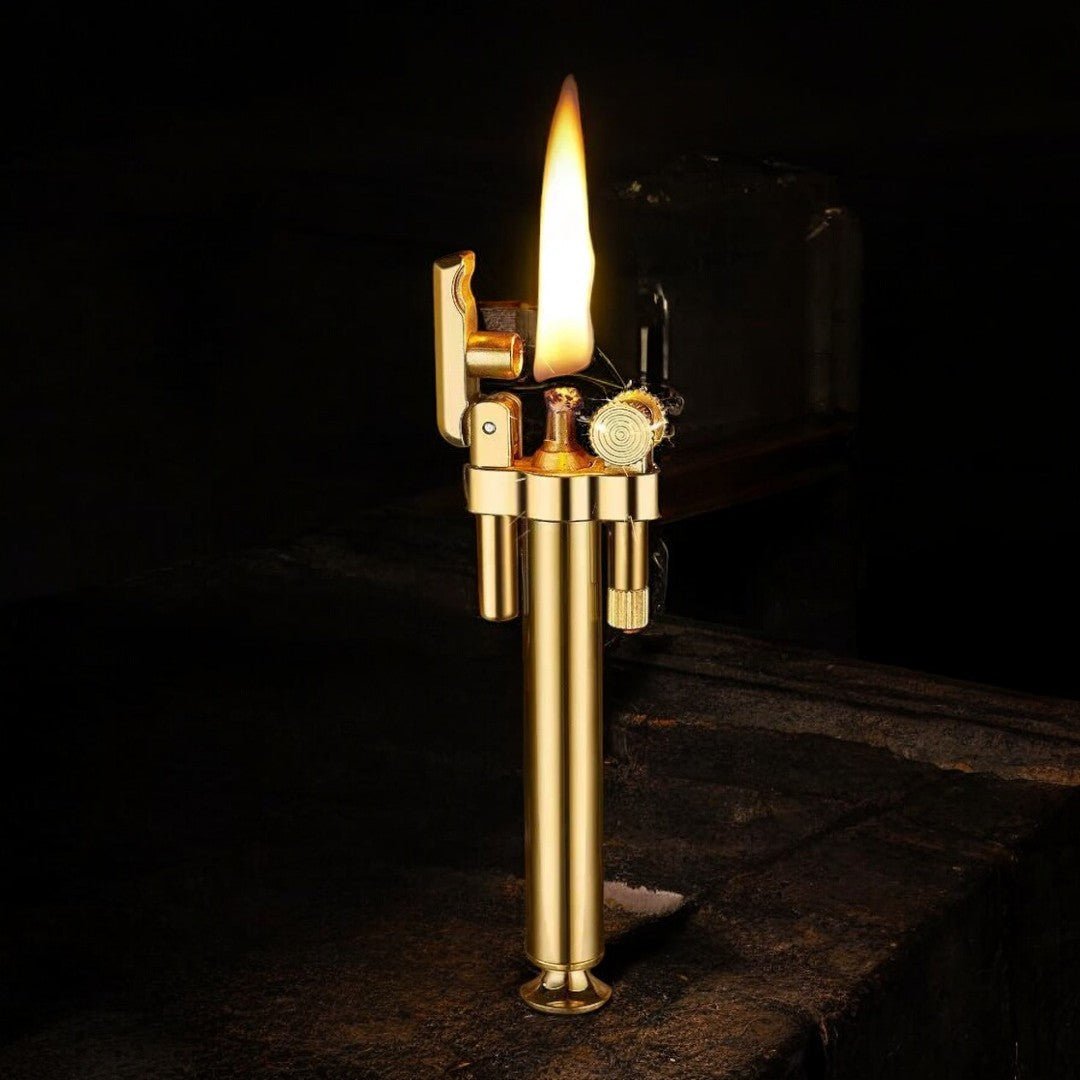
If you want a vintage statement piece that reads as collectible the moment someone sees it, the Retro Lighter is built for that role. Its aged metal casing and classic silhouette work equally well tucked into a formal jacket pocket or displayed on a shelf between other finds, the kind of piece that turns “just a lighter” into a small piece of personal history.
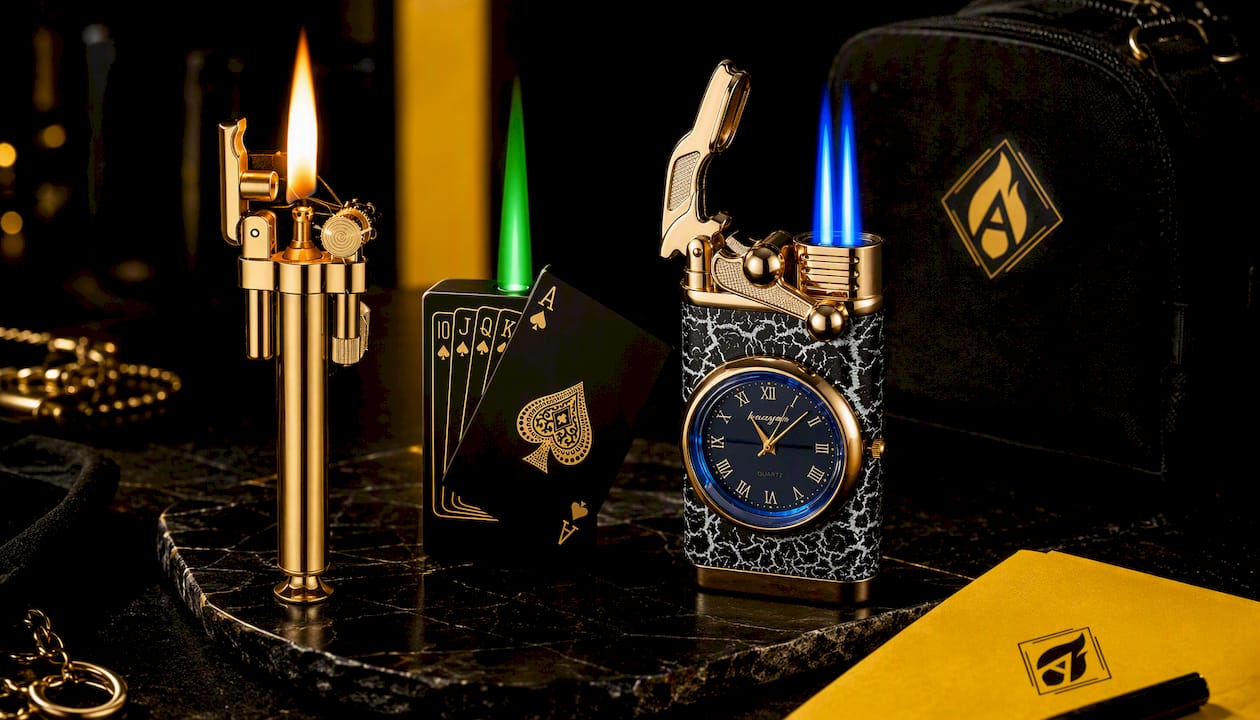
For gifting, the Ace of Spades Lighter does something a plain gift card never will: it arrives with an engraved card motif that gives the recipient an instant story to tell. Novelty pieces like this earn their keep at presentation, whether it’s a birthday, a groomsman gift, or a “just because” gesture that needs to look considered rather than last-minute.
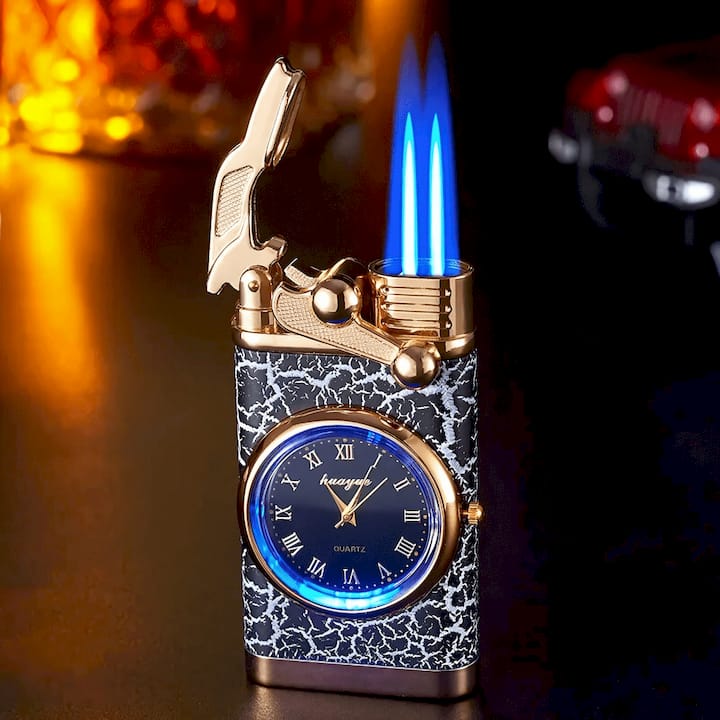
If you want something that balances daily function with a design flourish, the Clock Lighter splits the difference. Its chronometer-inspired face gives it a refined, almost horological presence, while the mechanism underneath stays as dependable as anything in a plainer case. It’s the pick for someone who wants their EDC item to look deliberate without tipping into full collector-piece territory.
Browse the full lighter collection to compare cases side by side, or check the accessories line for cases and refill tools that keep a favorite piece looking sharp. Orders over $70 ship free worldwide, so building out a small collection or picking up a gift alongside your own EDC piece costs nothing extra to get to your door. Pick the design that matches your use case above, add it to your cart, and check out; that’s the whole process.
Sources
This guide draws on lighter testing and design coverage from HiConsumption’s EDC lighter roundup, Men’s Journal’s lighter buying guide, Man of Many’s everyday carry picks, and maintenance guidance from The Fred Kiosk. Visit Allurecart’s product pages directly for full specs on any piece mentioned above.
- Tested: The 5 Absolute Best Lighters For EDC | HiConsumption
- Best lighters (MensJournal)
- Best everyday carry lighters (Man of Many)
FAQ
What’s the most stylish type of lighter to buy?
Flip-top metal lighters remain the most universally recognized stylish option thanks to their collectible history and durable design. Plasma arc lighters are the closest modern rival if you want a sleeker, tech-forward look instead.
Are expensive lighters actually better than cheap ones?
Not dramatically, in terms of raw ignition performance. Higher prices typically buy better materials and finish work rather than a meaningfully more reliable flame, so pay more when you want craftsmanship, not just a spark.
How often do I need to refill a flip-top lighter?
Fluid evaporates even when the lighter sits unused, so most flip-tops need a refill every one to three weeks. Wicks and flints are routine replaceable parts and should be swapped every few months with regular use.
Does Allurecart offer stylish lighters for gifting?
Yes. Pieces like the Ace of Spades Lighter and the classic gold finish lighter are designed with presentation and engraving appeal in mind; current pricing details can be found on the product pages.
Is a plasma or arc lighter worth choosing over a butane one?
If wind resistance and a rechargeable, fuel-free design matter more to you than a traditional flame, yes. Plasma arc models are windproof and rechargeable with multi-spark lifecycles, making them a strong pick for outdoor EDC use.