

Butane is the correct fuel for pressurized gas lighters and torches; lighter fluid, meaning naphtha, belongs in wick-fed Zippo-style lighters. That single line settles most of the confusion, but the right answer changes with the flame you’re chasing.
- Cigars, pipes, culinary torches: refined butane is typically recommended
- Camping, wind, cold weather: naphtha wick lighters are generally preferred
- Everyday carry, jet lighters: butane is commonly used
- Vintage or collectible wick designs: naphtha remains the traditional fuel
Never cross the streams. Pouring one fuel into a lighter built for the other risks a jammed valve, a soaked wick, or worse. Check the compatibility section below before you refill anything.
Key Takeaways
Matching fuel to lighter type, butane for pressurized gas and torch models, naphtha for wick-based designs, prevents most refill failures and safety issues.
| Point | Details |
|---|---|
| Match fuel to design | Butane fits pressurized valve lighters; naphtha fits wick-and-chimney lighters. |
| Never substitute fuels | Wrong fuel causes clogging, poor ignition, or lighter damage. |
| Refined butane performs better | Higher-purity butane reduces nozzle clogging and extends lighter life. |
| Store fuels properly | Keep both away from heat, sealed tightly, and out of children’s reach. |
| AllureCart covers both systems | Torch models like the JET LIGHTER need butane; vintage pieces like the RETRO LIGHTER run on naphtha. |
Table of Contents
- Butane vs Lighter Fluid: What Each Fuel Actually Is
- Key Differences Between Butane and Naphtha
- How to Tell Which Fuel Your Lighter Needs
- What Happens If You Use the Wrong Fuel
- Safety and Storage Rules for Both Fuels
- Choosing the Right Fuel for Your Use Case
- Quick Refill and Maintenance Steps
- Find the Lighter That Matches Your Fuel of Choice
- Frequently Asked Questions
- Sources
Butane vs Lighter Fluid: What Each Fuel Actually Is
Butane is a liquefied hydrocarbon gas, chemically known as C4H10, stored under pressure inside a sealed canister until you release it through a valve. It vaporizes the instant it hits open air, which is why gas and torch lighters spark a controlled, adjustable flame rather than an open drip. Butane is the standard fuel for jet lighters, refillable EDC lighters, and culinary torches.
“Lighter fluid” almost always means naphtha, a volatile petroleum distillate that stays liquid at room temperature and soaks upward through a cotton wick. It’s the fuel Zippo-style lighters were built around a century ago.
A few variants matter here. Isobutane and highly refined butane are purer grades meant for torch lighters, while charcoal lighter fluid is a different, heavier petroleum product never meant for pocket lighters. Mixing those up is one of the most common mistakes new lighter owners make.
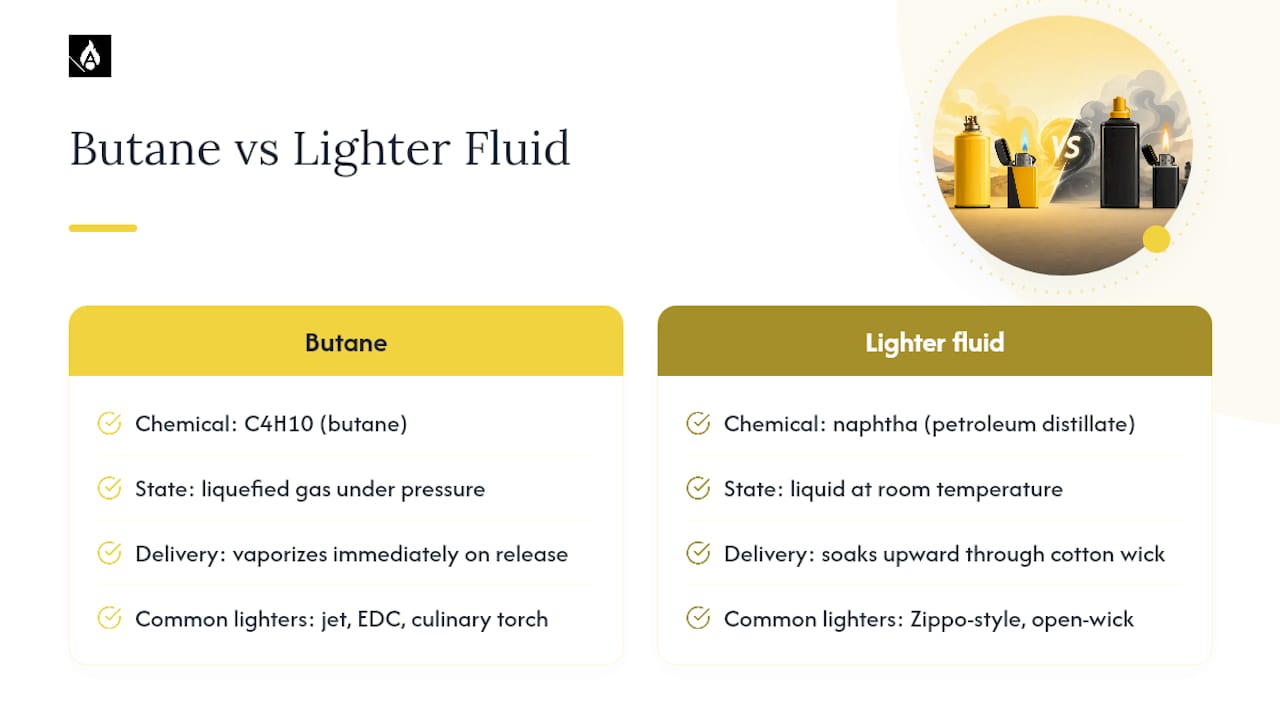
Quick fact: naphtha evaporates from an open wick lighter within weeks of a fill, while sealed butane cartridges hold their charge indefinitely until used.
Key Differences Between Butane and Naphtha
Flame temperature, cleanliness, and wind tolerance separate these two fuels more than anything else.
- Flame and heat: Butane torches burn hotter and more controllably; wick flames run cooler and softer.
- Odor and residue: Refined butane burns clean, leaving almost no soot or smell, while naphtha has a distinct petroleum odor that lingers on fingers and fabric.
- Volatility: Naphtha evaporates readily from an unsealed reservoir; butane stays sealed until the valve opens.
- Wind and cold: Wick-and-chimney designs resist wind far better than a soft butane flame, though butane in a proper torch nozzle can outperform both.
- Storage: Butane cartridges are stable for years; naphtha reservoirs need refilling more often.
If odor matters, like when you’re about to smoke a cigar, butane wins outright. If wind matters more than smell, naphtha still has the edge.
How to Tell Which Fuel Your Lighter Needs
Most lighters give away their fuel type if you know where to look.
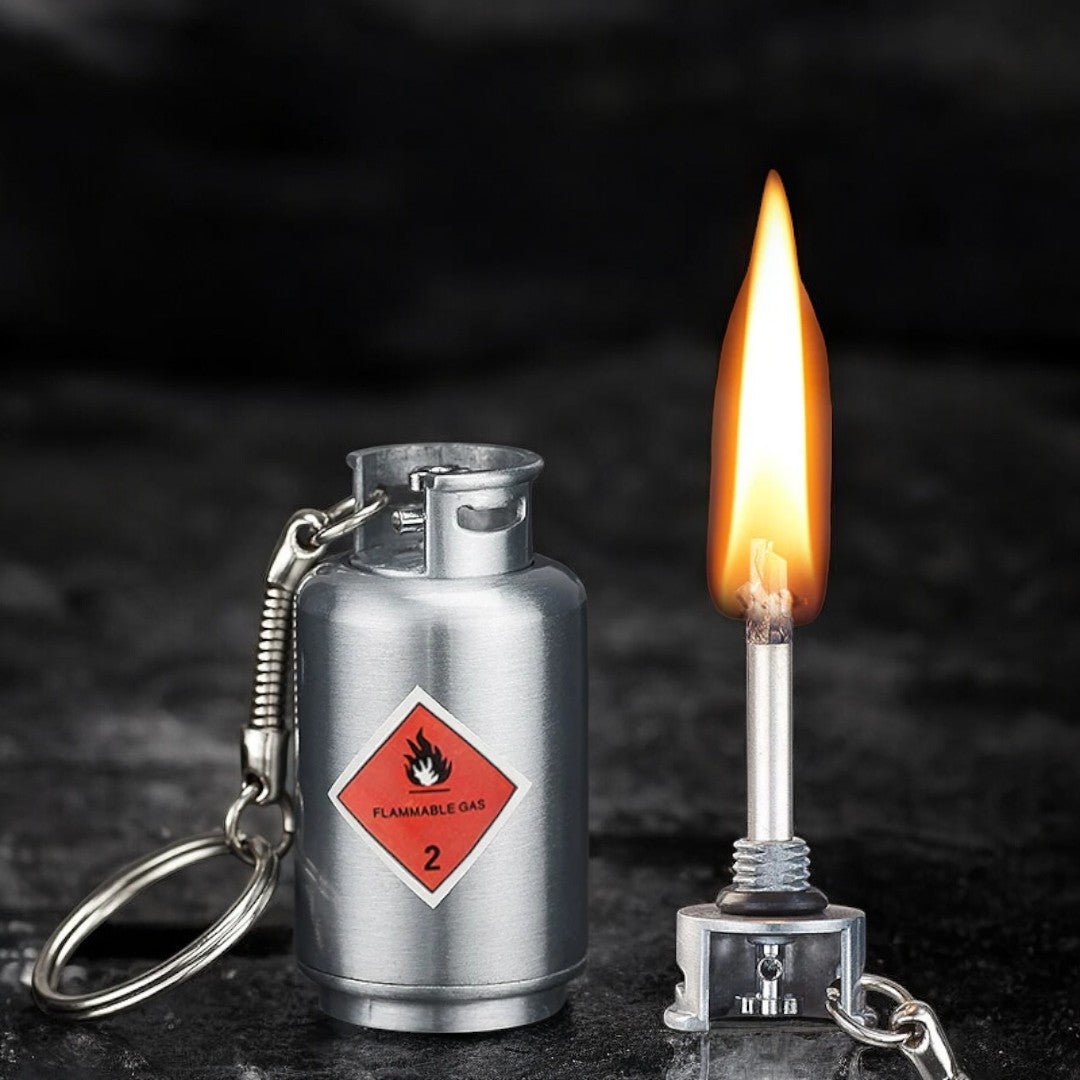
- Check for a wick. A visible cotton wick poking through a metal chimney means naphtha. No wick, and instead a small rubber-tipped valve on the bottom, means butane.
- Look for a fill valve. A pinhole valve near the base or side is a butane refill port; a felt pad under a removable insert signals a naphtha reservoir.
- Inspect the flame outlet. A narrow nozzle designed to shoot a jet or torch flame is built for pressurized butane, not liquid fuel.
- Find the model markings. Most manufacturers stamp a model number on the bottom plate; a quick search confirms fuel type in seconds.
AllureCart’s own Windproof Jet Torch Lighter is a good example of the pressurized, nozzle-style build that takes butane exclusively, while a piece like the Vintage Watch Lighter uses the classic wick-and-insert system built for naphtha.
Pro Tip: Snap a photo of your lighter’s base and valve, then compare it against the product page or manual before you buy fuel. Thirty seconds of checking beats a ruined lighter.
What Happens If You Use the Wrong Fuel
Butane and lighter fluid are not interchangeable, and substituting one for the other tends to cause immediate, obvious problems rather than a slow decline.
- Naphtha in a butane lighter: clogs the valve, fouls the internal seals, and often stops the lighter from igniting at all.
- Butane in a Zippo-style wick lighter: the gas simply evaporates without soaking the wick, leaving you with no flame and a wasted canister.
- Old or low-grade butane: leaves residue that clogs the nozzle, producing a weak, sputtering flame even with correct fuel type.
If you’ve already made the mistake, stop trying to light it. Let the lighter air out for several hours in a ventilated space, then flush the reservoir or valve with the correct fuel before your next attempt.
Pro Tip: If a torch lighter still sputters after a fresh fill of quality butane, the nozzle likely needs a professional clean or replacement, not another refill.
Safety and Storage Rules for Both Fuels
Both fuels are flammable liquids or gases, and both deserve the same basic respect: away from heat, sealed when not in use, and out of reach of kids.
- Store canisters and bottles in a cool, ventilated space, never near a stove, heater, or car dashboard.
- Keep caps and valves tightly closed between uses to slow evaporation and prevent leaks.
- Butane cartridges are sealed and stable for long-term storage; naphtha bottles should stay upright and tightly capped, since fumes escape faster than you’d expect.
- Don’t toss empty canisters in household trash if your municipality flags them as hazardous waste. Use up remaining fuel safely or drop the canister at a hazardous-waste collection point.
| Point | Details |
|---|---|
| Sealed vs. open storage | Butane stays stable in sealed canisters; naphtha bottles need tight caps to slow evaporation. |
| Heat is the enemy | Keep both fuels away from stoves, radiators, and direct sun exposure. |
| Dispose responsibly | Empty containers fully or take them to a hazardous-waste site if local rules require it. |
Choosing the Right Fuel for Your Use Case
Match the fuel to the job, not the other way around.
- Cigars and pipes: refined butane burns without altering the tobacco’s flavor, which is why serious cigar smokers avoid naphtha entirely.
- Culinary torches: high heat and a clean flame make butane the only sensible option here.
- Camping and outdoor emergencies: naphtha wick lighters handle wind and cold with fewer failures than a basic soft-flame butane lighter.
- Everyday carry: butane wins on odor and reliability for most people, though a naphtha lighter still has charm and simplicity going for it.
Quick Refill and Maintenance Steps
Refilling either fuel type takes under two minutes once you know the sequence, and doing it outdoors or near an open window keeps fumes from building up.
Refilling a butane lighter:
- Purge the lighter first by pressing the fill valve to release trapped air.
- Hold the butane canister upside down and press its nozzle firmly into the lighter’s valve.
- Fill for 3 to 5 seconds until you feel resistance or hear the flow stop.
- Wait two full minutes before testing the flame, letting the gas settle and warm slightly.
Topping a wick lighter:
- Remove the insert from its case.
- Lift the felt pad and add naphtha slowly into the cotton packing, never straight onto the wick.
- Stop as soon as the pad looks saturated. Overfilling just wastes fuel and risks leaks.
Replace a flint when sparks weaken, and swap a wick once it turns black and stiff rather than soft and white. Choosing highly refined butane extends nozzle life considerably compared to bargain-bin gas full of impurities.
A Practical Note From AllureCart
We build across both fuel systems because both have earned their place. For jet torch models, refined butane is the only fuel we recommend, full stop. For vintage wick-style pieces, naphtha is what the design was built around, and it still performs beautifully. Match the fuel to the lighter you actually own, and the flame takes care of itself.
Find the Lighter That Matches Your Fuel of Choice
If you already know you prefer a clean, hot, odorless flame, a butane jet lighter is where to look. AllureCart’s JET LIGHTER delivers exactly that windproof, torch-style performance for cigars, culinary use, or everyday carry.
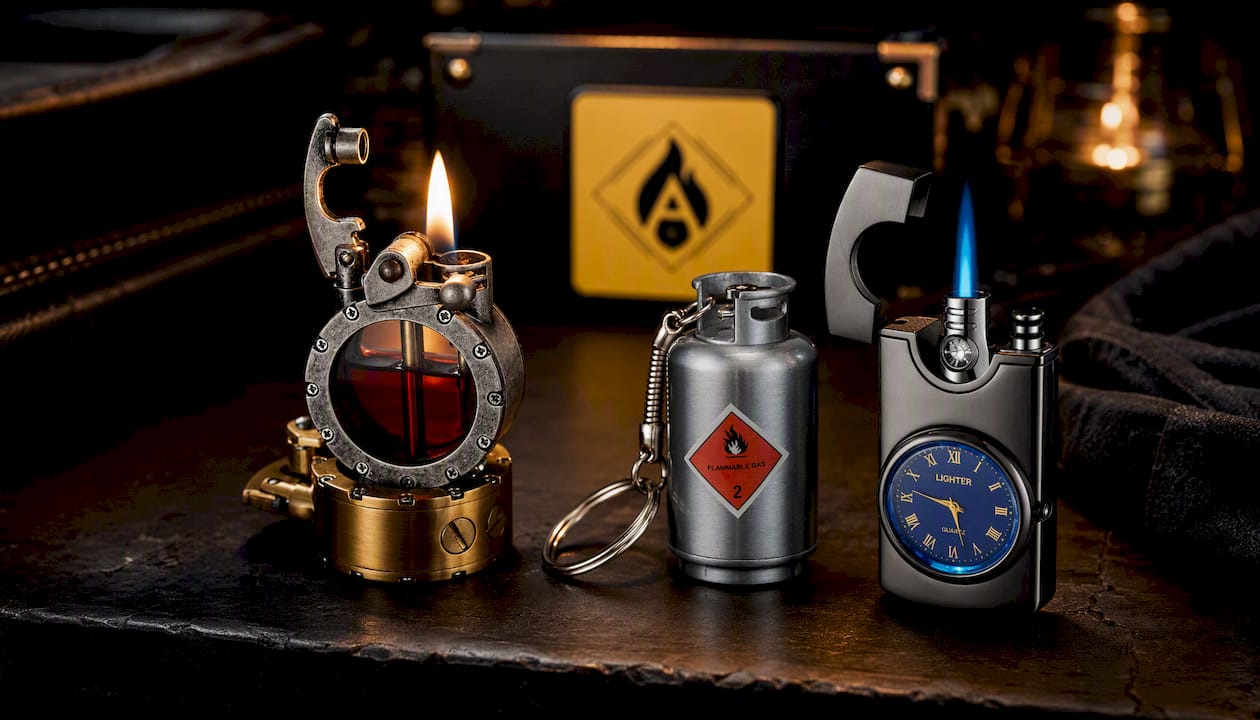
Prefer the nostalgic click of a wick lighter instead? Pieces like the RETRO LIGHTER and the CAMEL VINTAGE LIGHTER run on naphtha and carry the classic look collectors and everyday smokers both love. Every AllureCart design, from the ACE OF SPADES LIGHTER to the BULLET SHELL LIGHTER, the LOST SOULS LIGHTER, the LUMINO LIGHTER, and the CLOCK LIGHTER, lists its fuel type clearly on the product page, so you know exactly what to buy before it arrives. Orders over $70 ship free worldwide, no barrier between you and a lighter that actually fits your fuel and your style. Browse the current collection and check compatibility before you check out.
Frequently Asked Questions
Can I put lighter fluid in a butane lighter? No. Naphtha will not vaporize the way a pressurized valve system needs, and it can foul the internal seals, leaving the lighter unable to spark.
Can I substitute butane for Zippo fluid? No. A wick lighter needs liquid fuel to soak into the cotton packing; butane gas simply escapes without saturating the wick.
Which lasts longer in storage, butane or lighter fluid? Butane, by a wide margin. A sealed canister holds its charge indefinitely, while naphtha evaporates from an open wick reservoir within weeks.
Is butane or lighter fluid better for cigars? Refined butane is the clear choice, since it burns without adding any petroleum taste or odor to the tobacco.
What’s the best fuel for camping and windy conditions? Naphtha wick lighters handle wind and cold more reliably than a basic soft-flame butane lighter, thanks to their chimney design.
Sources
The technical claims in this guide draw from a handful of reliable references worth bookmarking if you want to dig deeper.
- Butane — Wikipedia
- The Difference Between Butane and Zippo Lighter Fluid — EatHealthy365
- Zippo lighter vs. Butane: Which is better? — EatHealthy365
- Is Butane Fuel The Same As Lighter Fluid? — UtilitySmarts
For product-specific fuel guidance, AllureCart’s own pages for the Windproof Jet Torch Lighter (butane) and the Camel Vintage Lighter (naphtha) list compatibility directly. When in doubt, the manufacturer’s manual always has the final word over any general guide, including this one.