

Yes, plasma lighters are safe when charged, stored, and handled the way manufacturers intend, though they carry real risks tied to their lithium-ion batteries and electrical arcs. The TSA permits arc and electronic lighters in carry-on bags with precautions, bans them from checked luggage, and every rechargeable cell inside one is expected to meet the UN 38.3 transport testing standard. That safety record depends entirely on conditions: a lighter charged on an approved USB source and stored away from heat behaves nothing like one left in a hot car or handed to a curious toddler.
Three risks deserve your attention before anything else:
- Electrical shock from touching the arc directly, especially with wet hands or against a conductive surface.
- Battery thermal runaway triggered by physical damage, overcharging, or extreme heat exposure.
- Fire or burns from using the arc near flammable vapors, loose fabric, or gas leaks.
None of these risks are exotic. They are the same categories of hazard that apply to any rechargeable electronic device, just concentrated into something you carry in a pocket.
Key Takeaways
Plasma lighters are safe for regular use when charged with approved equipment, stored below 122°F, and kept away from gas, water, and children, because the documented risks come almost entirely from battery misuse and improper handling rather than the arc mechanism itself.
| Point | Details |
|---|---|
| Shock risk is low | High voltage paired with low, brief current rarely causes fatal shock outside wet-skin or prolonged-contact scenarios. |
| Battery handling matters most | Use only approved chargers, avoid overnight charging, and store below 122°F (50°C) to prevent thermal runaway. |
| Travel rules are strict but workable | TSA allows carry-on with precautions and bans checked baggage; use a case or safety latch. |
| Arcs don’t make smoking safer | Tobacco combustion, not the lighter type, produces the carcinogens tied to smoking. |
| Choose certified, feature-rich models | Allurecart’s GLOW LIGHTER, GAS TANK LIGHTER, and LUMINO LIGHTER list safety-lock and battery details on each product page. |
Table of Contents
- Is a Plasma Arc the Same as a Flame?
- How Dangerous Is Electric Shock From an Arc Lighter?
- Are Lithium-Ion Batteries in Plasma Lighters a Fire Hazard?
- Can a Plasma Lighter Start a Fire by Accident?
- Do Plasma Lighters Produce Carcinogens or Toxic Fumes?
- What’s the Safest Way to Charge, Store, and Use One?
- How Long Do Plasma Lighters Last Compared to Butane?
- What to Do If a Plasma Lighter Overheats or Malfunctions
- What Do Manufacturers and Regulators Actually Require?
- Who Actually Benefits From Switching to a Plasma Lighter?
- Find a Plasma Lighter Built With Safety Features You Can See
- Where to Verify These Safety Rules Yourself
- Sources
Is a Plasma Arc the Same as a Flame?
A plasma lighter has no flame at all. It fires an electric current across two or more electrodes, ionizing the air between them into a glowing filament of plasma that reaches high temperatures at a focused point. That concentrated heat ignites paper, wicks, or tobacco on contact, without burning fuel of any kind.
The voltage running through the arc is high, often in the thousands of volts, but the current is deliberately kept low and brief. That combination is what makes the arc capable of lighting a cigarette without behaving like household wiring. Manufacturer manuals, including the Tescoma GrandChef plasma lighter guide, specify continuous activation limits precisely because the circuit is built for short bursts, not sustained output.
Compared with a flame, an arc trades range for reliability. Independent testing from Wirecutter found electric lighters stay lit in wind that would snuff a butane flame instantly, but the arc only works at near contact distance. A few practical distinctions:
- Wind resistance: arcs are effectively immune to wind; flames are not.
- Reach: flames extend an inch or more from the nozzle; arcs require near-contact ignition.
- Fuel: arcs need only stored electricity; flame lighters need butane or lighter fluid.
Picture two thin metal prongs a few millimeters apart. Press the button, and a small crackling bridge of light jumps between them, more like a tiny lightning bolt than a candle.
How Dangerous Is Electric Shock From an Arc Lighter?
Electrocution from a plasma lighter is very unlikely under normal use, because the arc combines high voltage with extremely low current delivered for a fraction of a second. Fatal shock generally requires enough current to disrupt the heart’s rhythm, along with a path that runs through the chest. A brief zap to a fingertip from a consumer lighter doesn’t meet either condition. Voltage measures electrical pressure; current measures the actual flow of charge, and sustained current over time can cause damage to cardiac tissue.
That said, a handful of situations raise the risk meaningfully:
- Touching the arc with wet or sweaty skin, which lowers your body’s electrical resistance.
- Pressing the arc against a conductive surface like a metal ring or watchband.
- Prolonged contact rather than the quick touch the device is designed for.
- Using a unit with damaged insulation or a cracked housing.
- Deliberately testing the arc on skin as a dare or a party trick.
If you have a pacemaker or another implantable electronic device, talk to your cardiologist before using a plasma lighter regularly, and avoid holding an active arc close to your chest. There’s no established body of clinical guidance specific to consumer arc lighters and cardiac implants, so the sensible move is caution rather than assumption.
Are Lithium-Ion Batteries in Plasma Lighters a Fire Hazard?
The single biggest safety concern with any plasma lighter is thermal runaway, a chain reaction where a damaged or overheated lithium-ion cell generates its own heat faster than it can dissipate, sometimes ending in fire. It’s the same failure mode that occasionally makes headlines with e-bikes and laptops, just at a much smaller scale in a lighter-sized battery.
Reducing that risk comes down to a short list of habits manufacturers spell out consistently:
- Charge only with the cable and power source the manufacturer supplies or approves.
- Avoid charging unattended or overnight, especially on soft or flammable surfaces like a bed.
- Keep the lighter away from heat above roughly 122°F (50°C), a threshold the Tescoma manual cites explicitly.
- Store it with its safety lock engaged and out of reach of children or vulnerable persons.
Air travel adds another layer. The TSA allows arc lighters in carry-on bags with precautions against accidental activation, but prohibits them in checked baggage entirely, and the FAA reinforces that damaged batteries are a recognized transport risk. Pack the lighter in a protective case, engage the safety latch, or remove the battery if the design allows it.
Pro Tip: Check your lighter monthly for a swollen or bulging body, unusual warmth when it isn’t in use, or a faint chemical smell near the charging port. Any of those signs means the cell may be degrading, and you should stop charging it and contact the manufacturer rather than keep using it.
Can a Plasma Lighter Start a Fire by Accident?
Yes. An electric arc ignites flammable material just as effectively as a flame does, and the danger increases sharply anywhere vapors or loose fibers are present. The arc doesn’t care that it isn’t a flame; it only cares whether it’s hot enough to ignite what it touches, and it usually is.
The scenarios that cause most real-world accidents are predictable:
- Using the lighter near an open gas burner or a suspected gas leak.
- Igniting near aerosol sprays or other pressurized flammable products.
- Holding the arc close to loose sleeves, scarves, or synthetic fabric.
- Lighting paper or tinder in windy conditions where sparks scatter unpredictably.
- Leaving the device where children can find and activate it.
Keep the arc pointed away from your face and clothing, and if you smell gas, ventilate the area completely before attempting to relight anything. A flexible-neck model helps here by keeping your hand farther from the ignition point. Treat the lighter the way you’d treat any small torch: store it locked, use a safety latch if the model has one, and make clear to kids that it’s a tool, not a toy.
Do Plasma Lighters Produce Carcinogens or Toxic Fumes?
No, the arc itself doesn’t combust fuel, so it doesn’t generate the carbon monoxide, tar, or particulate byproducts that come from burning butane or lighter fluid. That’s a genuine point in favor of arc lighters from a pure emissions standpoint, and it’s part of why some manufacturers market them as the cleaner option for everyday kitchen use.
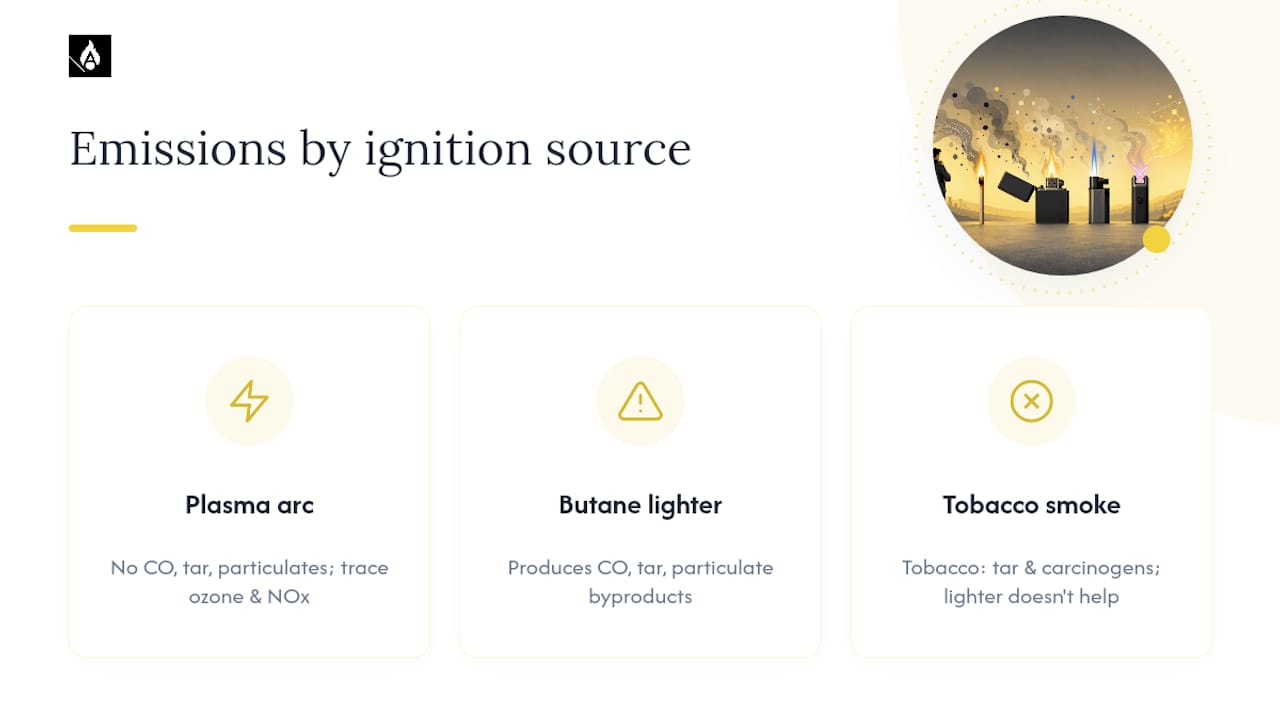
That claim has a limit worth stating plainly: an electrical arc passing through air can generate trace amounts of ozone and nitrogen oxides at the point of the spark. The quantities involved are tiny and dissipate quickly compared with sustained combustion, and there’s no evidence of significant carcinogen output from the arc mechanism itself.
Here’s the part smokers should not misread: for guidance on vaping equipment and accessories, see our liquidi pronti per chi inizia a svapare guide. If you use a plasma lighter to light a cigarette, the lighter changes nothing about what you inhale afterward. Tobacco combustion is what produces the tar and carcinogens associated with smoking-related disease, not the ignition source. Switching from a butane lighter to an arc lighter doesn’t make smoking safer in any measurable sense; it just changes how the tobacco gets lit.
What’s the Safest Way to Charge, Store, and Use One?
Follow this sequence every time you charge, store, or use the lighter, and most of the realistic risk disappears.
- Charge with the manufacturer’s cable on a stable, non-flammable surface, and avoid leaving it plugged in overnight.
- Store below about 122°F (50°C), away from direct sunlight, with the safety lock engaged and out of children’s reach.
- Use the arc at arm’s length from your face, hair, and loose clothing, and never near an open gas source.
- Dispose of a worn-out unit through a battery recycling program rather than a household trash bin, since lithium-ion cells are considered hazardous waste in most municipalities.
Stop using the lighter and plan to replace it if you notice visible cracks or swelling, charging times that stretch far longer than they used to, or a body that stays warm even when it’s sitting idle. None of those symptoms improve on their own, and continuing to charge a compromised cell is how minor defects turn into real incidents.
How Long Do Plasma Lighters Last Compared to Butane?
A quality plasma lighter typically holds up for hundreds of charge cycles before the battery noticeably degrades, which in practical terms often translates to a few years of regular use, though manufacturers rarely commit to an exact cycle count. Butane lighters carry no battery at all, so they sidestep degradation entirely but depend on a steady fuel supply. Disposable lighters sit at the opposite end, built for weeks or months before the fuel runs dry and the whole thing gets tossed.
Each type trades convenience differently:
- Weather performance: arc lighters shrug off wind; butane models struggle in it but throw a longer flame.
- Maintenance: arc lighters need occasional electrode cleaning and dry storage; butane needs refilling.
- Longevity: arc batteries eventually degrade; butane lighters simply run out of fuel and get refilled or replaced.
If you’re shopping for one, Allurecart’s GLOW LIGHTER and LUMINO LIGHTER are worth examining directly on their product pages for battery capacity and safety-lock details before you buy.
What to Do If a Plasma Lighter Overheats or Malfunctions
Stop using it immediately, move it away from anything combustible, and never attempt to pry open or disassemble a battery that feels hot.
- Disconnect the charging cable if it’s plugged in.
- Relocate the device to a non-flammable surface, outdoors if it’s safe to do so.
- Smother any small flame with a non-flammable cover, or use an extinguisher rated for electrical fires, never water.
- Call emergency services immediately if the fire spreads or anyone is injured.
Seek medical attention for any burn larger than a coin or any shock that causes numbness, chest discomfort, or muscle spasm. A damaged battery, even one that never ignited, should go to a local hazardous-waste or battery recycling center rather than a regular trash can. Allurecart lists model-specific handling notes on each product page, including the GAS TANK LIGHTER listing, for exactly this kind of situation.
What Do Manufacturers and Regulators Actually Require?
Regulators treat arc lighters as carry-on friendly but checked-baggage prohibited, and that single distinction shapes most of the official guidance you’ll encounter. The TSA permits them in carry-on luggage provided you take steps against accidental activation, while the FAA’s packsafe guidance reinforces that damaged lithium batteries are a recognized hazard during transport and that recharging devices mid-flight isn’t permitted.
Manufacturer manuals fill in the everyday details regulators don’t cover. The Tescoma GrandChef manual instructs users to engage the safety lock when not in use, avoid submerging the unit in water, limit how many times you activate the arc consecutively, and keep it below roughly 50°C in storage. Most reputable brands include similar usage guidelines, because the physics of a small lithium cell is consistent across products.
Battery certification matters more than most buyers realize. UN 38.3 is the transport testing standard rechargeable lithium cells must pass, covering conditions like altitude, thermal stress, and vibration, and it’s a reasonable baseline to look for when you’re comparing options.
- Travel: carry-on yes, checked baggage no, protective case or safety latch recommended.
- Storage: below 122°F (50°C), safety lock engaged.
- Certification: look for UN 38.3 compliance on the battery.
Allurecart publishes safety instructions specific to each model, including the GLOW LIGHTER, GAS TANK LIGHTER, and LUMINO LIGHTER, on their individual product pages, so check those before your first charge.
Who Actually Benefits From Switching to a Plasma Lighter?
Plasma lighters make the most sense for people who light things outdoors, in wind, or in wet conditions where a flame struggles, and for anyone who’s tired of buying fluid refills. If you smoke cigars indoors and want a broad, sustained flame, or you’re lighting a gas grill from a distance, a butane torch still does that job better. The single most useful habit we hear about from support questions is simple: if you’re tossing the lighter into a bag or pocket regularly, choose a model with a physical safety latch, not just a touch-button lock, since bags compress buttons more often than you’d expect.
Find a Plasma Lighter Built With Safety Features You Can See
Allurecart designs every lighter with the safety details this article covers built in from the start, not bolted on as an afterthought. Where a generic import lighter might skip a proper safety latch or leave charging specs vague, Allurecart lists battery details, safety-lock mechanisms, and build materials directly on each product page, so you’re never guessing what you’re buying.
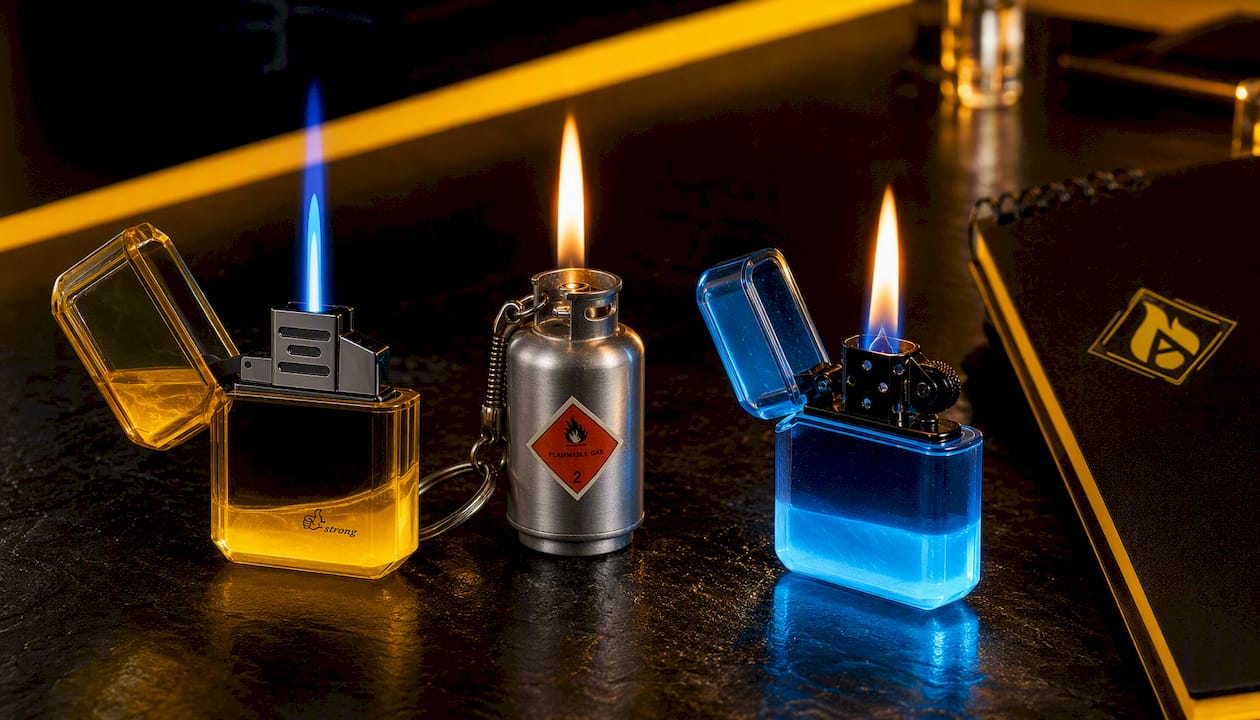
Collectors and everyday carriers alike gravitate toward pieces like the GLOW LIGHTER for its rechargeable simplicity, the GAS TANK LIGHTER for its distinctive build, and the LUMINO LIGHTER for buyers who want a design piece that still meets the same safety standards outlined above. Orders over $70 ship free worldwide, so pairing a lighter with a protective case costs you nothing extra in shipping. Browse the current collection and check the safety specifications listed on each product page before you decide which model fits how you actually use it.
Where to Verify These Safety Rules Yourself
- TSA lighter rules: the definitive word on what you can carry on a plane and how to pack it.
- FAA packsafe hazmat guidance: federal aviation rules on lithium batteries and lighters in transit.
- Tescoma GrandChef manual: a real-world example of manufacturer-specified charging and storage limits.
- Wirecutter’s electric lighter review: independent testing perspective on windproof performance and safety switches.
- Butane vs electric grill lighter comparison: practical trade-offs between arc and flame ignition outdoors.
Allurecart’s own product pages for the GLOW LIGHTER, GAS TANK LIGHTER, and LUMINO LIGHTER list model-specific battery and safety-lock information worth checking before purchase.
This article is general information, not a substitute for advice from a qualified doctor. Consult a qualified healthcare professional about your own circumstances before acting on anything here.
Sources
- Lighters (Arc Lighters, Electronic Lighters, E-Lighters) | Transportation Security Administration
- Hazmat: Lighters | Federal Aviation Administration
- Tescoma GrandChef - Plasma lighter Manual | ManualsLib
- I Was Surprised by How Much I Liked These Electric Lighters | Reviews by Wirecutter
- Grill Lighter Buyer’s Guide: Electric vs Butane