

Expensive lighters earn their price with frequent smokers, collectors, and anyone who wants a repairable heirloom instead of disposable clutter. Allure Cart’s take: the deciding factors are how often you strike a flame, whether you’ll actually service the mechanism, and how much a lost lighter would sting. Occasional users chasing the lowest sticker price are usually better off with a cheap disposable and a warranty they’ll never use.
TL;DR:
- Premium lighters offer increased durability, wind resistance, and repairability, making them ideal for daily use and outdoor activities.
- Higher upfront costs are offset over time by refillable fuel and lifetime warranty options, reducing long-term expenses compared to disposables.
- Material quality, such as brass or stainless steel, significantly impacts corrosion resistance and mechanical reliability, especially in windy conditions.
- Fuel purity influences ignition performance, with high-quality butane preventing clogging and ensuring consistent flames in premium models.
- Buyer needs, including usage frequency, maintenance willingness, and loss risk, determine whether a premium lighter provides worthwhile value.
Table of Contents
- Are Expensive Lighters Worth It Compared to Cheap Ones?
- Who Actually Benefits From a Premium Lighter?
- How Do Materials and Fuel Affect Performance?
- What Does a Premium Lighter Actually Cost to Own?
- How Do You Choose the Right Lighter for You?
- Which Allure Cart Lighter Fits Your Use Case?
- Why Buyer Type Matters More Than Brand Prestige
- Ready to Find Your Match?
- Sources
Are Expensive Lighters Worth It Compared to Cheap Ones?
The honest answer depends less on price and more on what you’re actually buying. A premium refillable lighter typically justifies its cost through better machining, tighter tolerances, and parts that can be repaired instead of replaced. A disposable buys you convenience and nothing else. Neither is objectively “better.” They solve different problems.
Advantages of paying more:
- Durability from solid brass, stainless steel, or reinforced housings that survive drops and years of pocket wear
- Consistent ignition, especially in wind, thanks to tighter valve tolerances
- Refillability, which cuts long-term waste and cost per light
- Repairability through manufacturer parts and service programs
- A noticeably better tactile experience: solid hinges, satisfying click, real weight in the hand
- Warranty or aftercare support that disposables never offer
Trade-offs to accept:
- Higher upfront cost, significantly more than a gas-station lighter
- A need for quality fuel, which may add a recurring cost
- A bigger loss when the lighter goes missing or gets stolen
- Some of that premium buys branding and collectibility, not better function
Retailer reviews of cigar lighters note that mid-tier brands under $100 often perform reliably for most daily needs, while the jump past that price point tends to buy heavier chassis, distinctive finishes, or a stronger warranty rather than a proportionally bigger flame. If you’re buying purely for function, that’s the ceiling where returns start flattening out.
Who Actually Benefits From a Premium Lighter?
Ownership math changes dramatically depending on how you use the thing. Four buyer types tend to see real value from spending more:
- Daily smokers and cigar or pipe enthusiasts who need a flame that survives wind and repeated daily use without failing mid-light.
- Collectors and gift buyers who care about finish, rarity, and the keepsake factor a mass-produced disposable can never offer.
- Outdoor and utility users who need a rugged design and the option to repair rather than replace when something breaks in the field.
- Anyone gifting or commemorating something where the object itself carries meaning beyond striking a flame.
Skip the upgrade if you use a lighter a few times a month, tend to misplace small items, or simply want the lowest possible upfront cost. A $5 disposable does the job fine for that person, and no amount of brushed steel changes that math.
How Do Materials and Fuel Affect Performance?
Cheap lighters and premium ones diverge mostly in what’s under the shell. Body construction matters first: solid brass and stainless steel resist corrosion and dents far longer than the thin plated metals used in budget models, which scratch and tarnish within a year or two of pocket use.
Mechanically, the difference shows up in flints, piezo igniters, torch jets, valves, and hinges. Tighter valve tolerances mean steadier flame output and better wind resistance, which is exactly why premium models justify their price through build quality and serviceability rather than raw flame size.
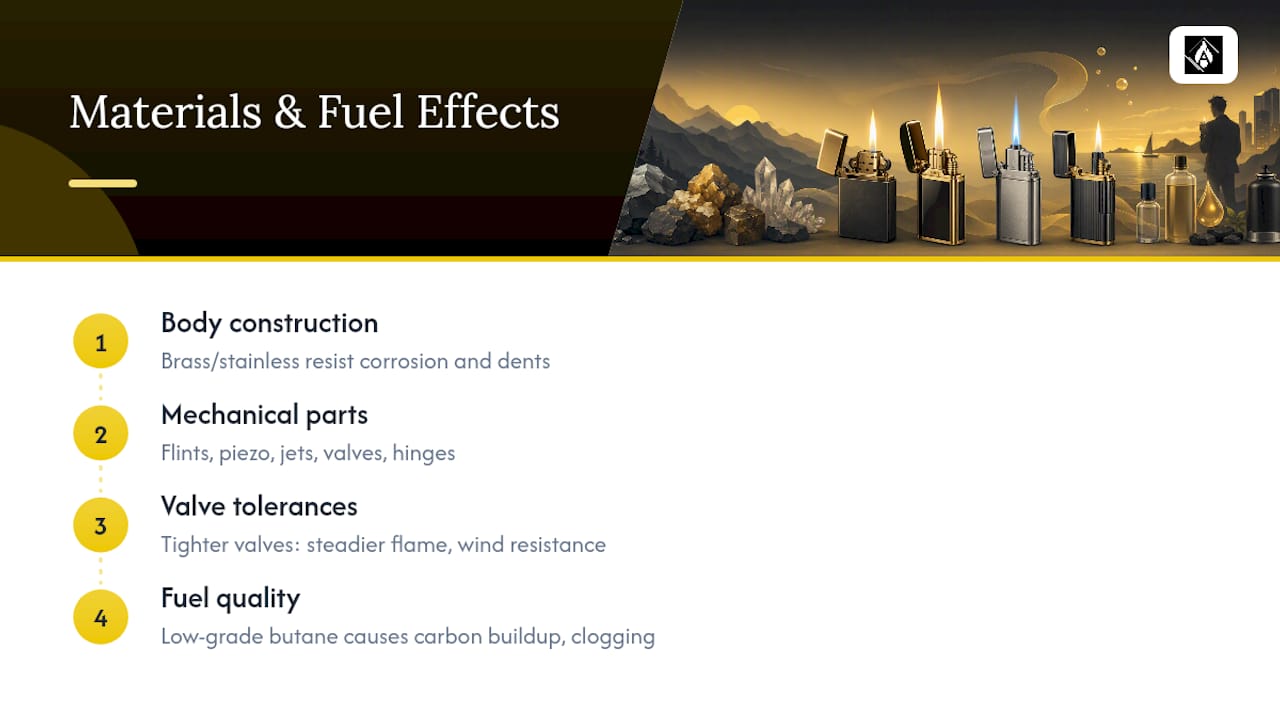
Fuel quality plays a bigger role than most buyers expect. High-end torch and jet mechanisms often need high-purity butane, and running low-grade fuel through them causes carbon buildup and valve clogging that permanently degrade ignition reliability, even in a $200 lighter.
Pro Tip: Always run at least one full purge-and-refill cycle with high-purity butane before judging a new lighter’s flame quality. A lot of “bad” units are actually just full of factory-test gas residue.
What Does a Premium Lighter Actually Cost to Own?
Refillable lighters need butane roughly every one to four weeks depending on use, and a can of quality fuel typically lasts through several refills. Compare that against replacing a $5 disposable every few weeks, and the gap closes faster than most buyers assume, especially once a lighter is used daily.
Warranty coverage is the real lever here. A $200 lighter backed by a lifetime repair program can end up cheaper than a decade of disposables, since a worn flint or valve gets serviced instead of triggering a full replacement.
Travel adds another wrinkle. TSA guidance treats disposable and refillable torch-style lighters differently for carry-on and checked baggage, so frequent flyers should check the current rules before assuming a premium torch travels the same way a basic Bic does.
How Do You Choose the Right Lighter for You?
Run through these before buying anything above the disposable tier:
- How often will you actually use it? Daily use justifies more spend than occasional use.
- What flame type do you need? Standard flint suits most smokers; torch jets suit wind and cigars.
- Are you willing to maintain it? Refilling and occasional servicing isn’t optional with premium models.
- Does it carry a real warranty? Vague “satisfaction guaranteed” language isn’t the same as a repair policy.
- Can you get replacement parts? Flints, wicks, and valves should be available, not discontinued.
- Does the finish matter to you? Collectors should weigh resale and display value, not just function.
- What’s your loss risk? If you misplace lighters often, don’t sink money into one you’ll leave at a bar.
Red flags worth walking away from: a seller who can’t describe the warranty terms, claims that only their proprietary fuel canister works, or no mention of parts availability anywhere on the product page.
Pro Tip: Email the seller one direct question before buying: “What happens if the ignition fails in year two?” Their answer tells you more about long-term value than any spec sheet.
Which Allure Cart Lighter Fits Your Use Case?
Some brands build lighters as functional pieces first and statement objects second, which is exactly the standard this article has been holding every product to. Reliable spark ignition matters as much as the finish, and the catalog is built around distinct buyer profiles rather than one generic design.
- Gift buyers and collectors: the Classic Gold Lighter delivers a sleek, traditional finish suited to display and keepsake value.
- Everyday, style-conscious users: the Glow Lighter pairs consistent ignition with a distinctive look for daily carry.
- Novelty and collector buyers: the Bullet Shell Lighter combines a striking design with dependable function rather than form over performance.
Orders over $70 ship free worldwide, so it’s worth comparing these pages against the checklist above before you decide.
Why Buyer Type Matters More Than Brand Prestige
Most lighter buying guides frame the decision as a spec-sheet contest: whose torch burns hottest, whose hinge feels sturdiest. That misses the actual question. The research here points somewhere more useful: value is a function of you, not the lighter. A daily cigar smoker and an occasional birthday-candle lighter are shopping in two different markets that happen to sell the same-shaped object.
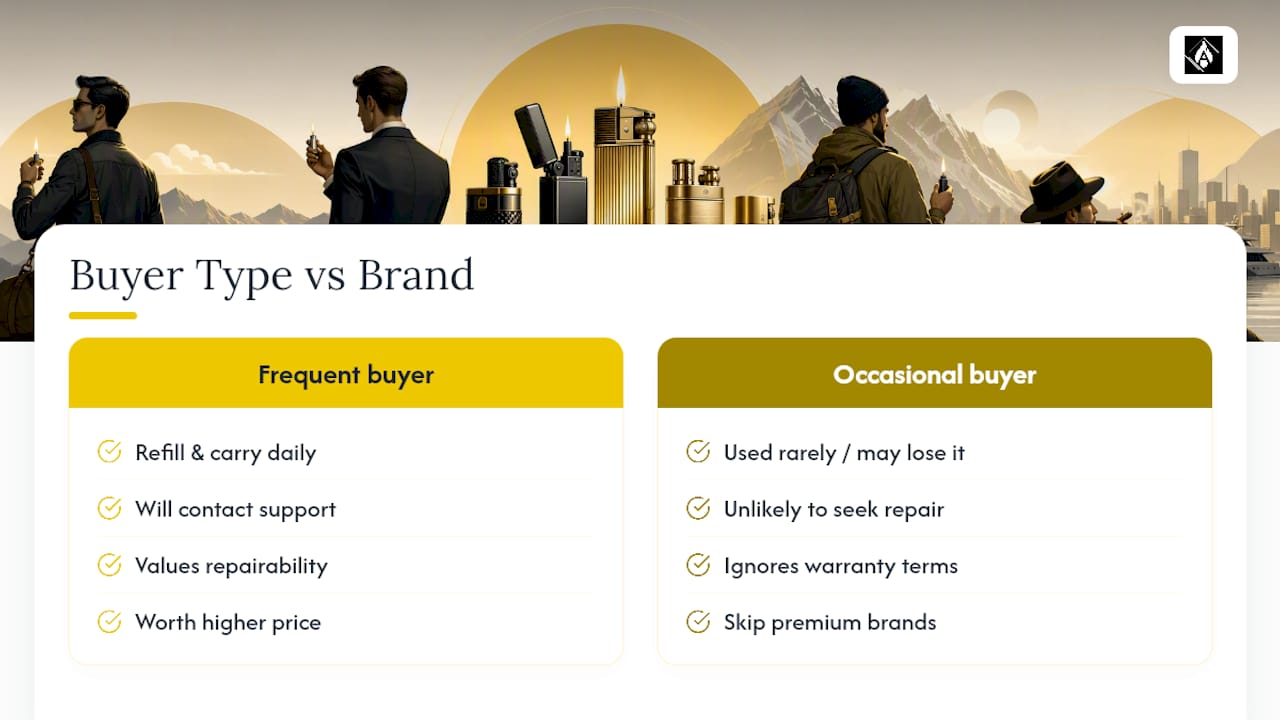
The overlooked nuance is repairability. Buyers fixate on flame performance and ignore warranty terms, yet a serviceable lighter with a real repair pathway often outperforms a flashier one on pure lifetime cost. That’s a maintenance decision disguised as a purchase decision.
Prioritize honesty about your own habits before you prioritize brand names. If you’ll refill it, carry it daily, and actually contact support when something jams, spend the money. If you’ll lose it at a party in three months, you already have your answer, and it doesn’t involve brushed steel.
— Allurecart
Ready to Find Your Match?
Skip the guesswork of comparing a dozen tabs of generic torch lighters. Allure Cart’s catalog is built specifically around the buyer profiles covered above: gift-driven collectors, daily style-conscious users, and novelty enthusiasts who still want dependable ignition every time.
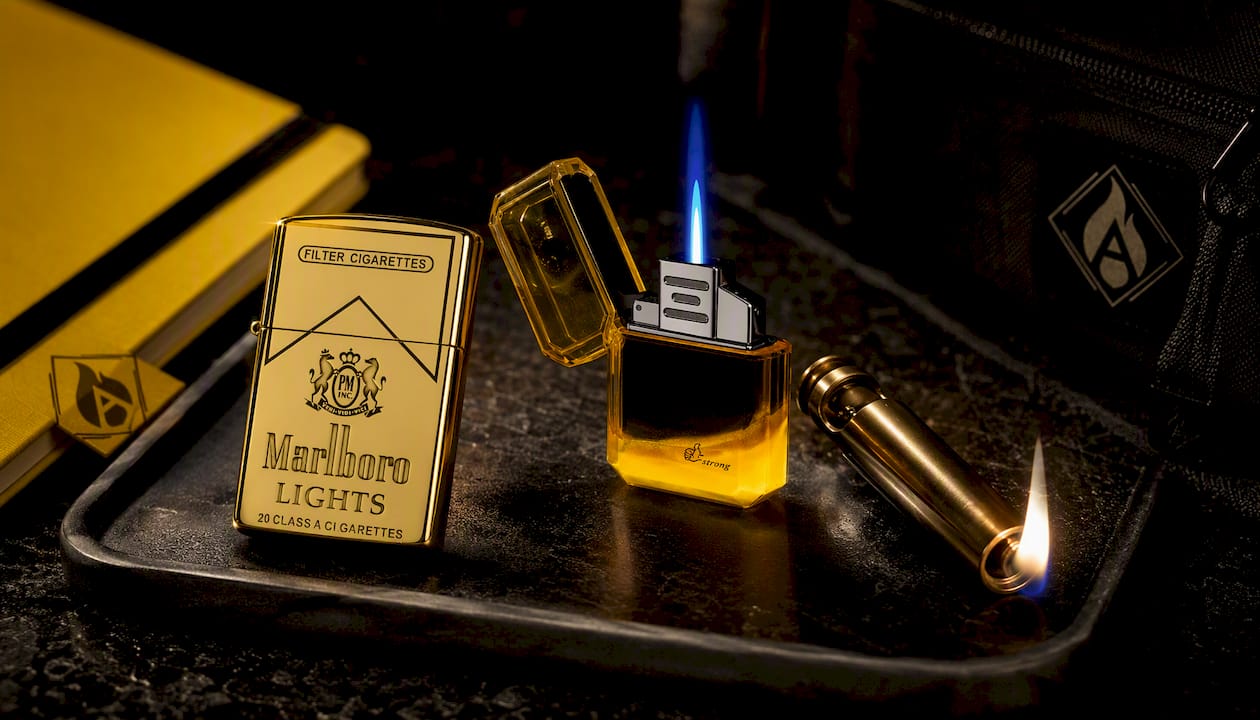
Each product page lists the materials and finish details you need to run through the checklist yourself, no vague marketing copy required. Start with the Classic Gold Lighter if display value matters most, the Glow Lighter for daily reliability with real style, or the Bullet Shell Lighter if novelty design with dependable function is the goal. Orders over $70 ship free worldwide, so it’s worth browsing the full collection before you check out.
Sources
- TSA — Lighters: disposable and Zippo
- The Cost of Quality: Are Premium Lighters Worth It - Info Net Insider
- Are Expensive Cigar Lighters Worth It? | Holt’s Clubhouse